
Mountain Bike Helmet vs. Road Bike Helmet: Key Differences

PAGE
By PAGE Editor
Choosing the right bike helmet can significantly impact both your safety and comfort while cycling. When it comes to specialized head protection, mountain bike and road bike helmets serve distinct purposes, each optimized for their respective riding environments and challenges.

Continue reading to understand the crucial differences between these two helmet types and make an informed decision for your riding style.
Design Philosophy and Overall Structure
Mountain and road bike helmets come from fundamentally different design philosophies, shaped by decades of understanding cyclist needs in their respective terrains.
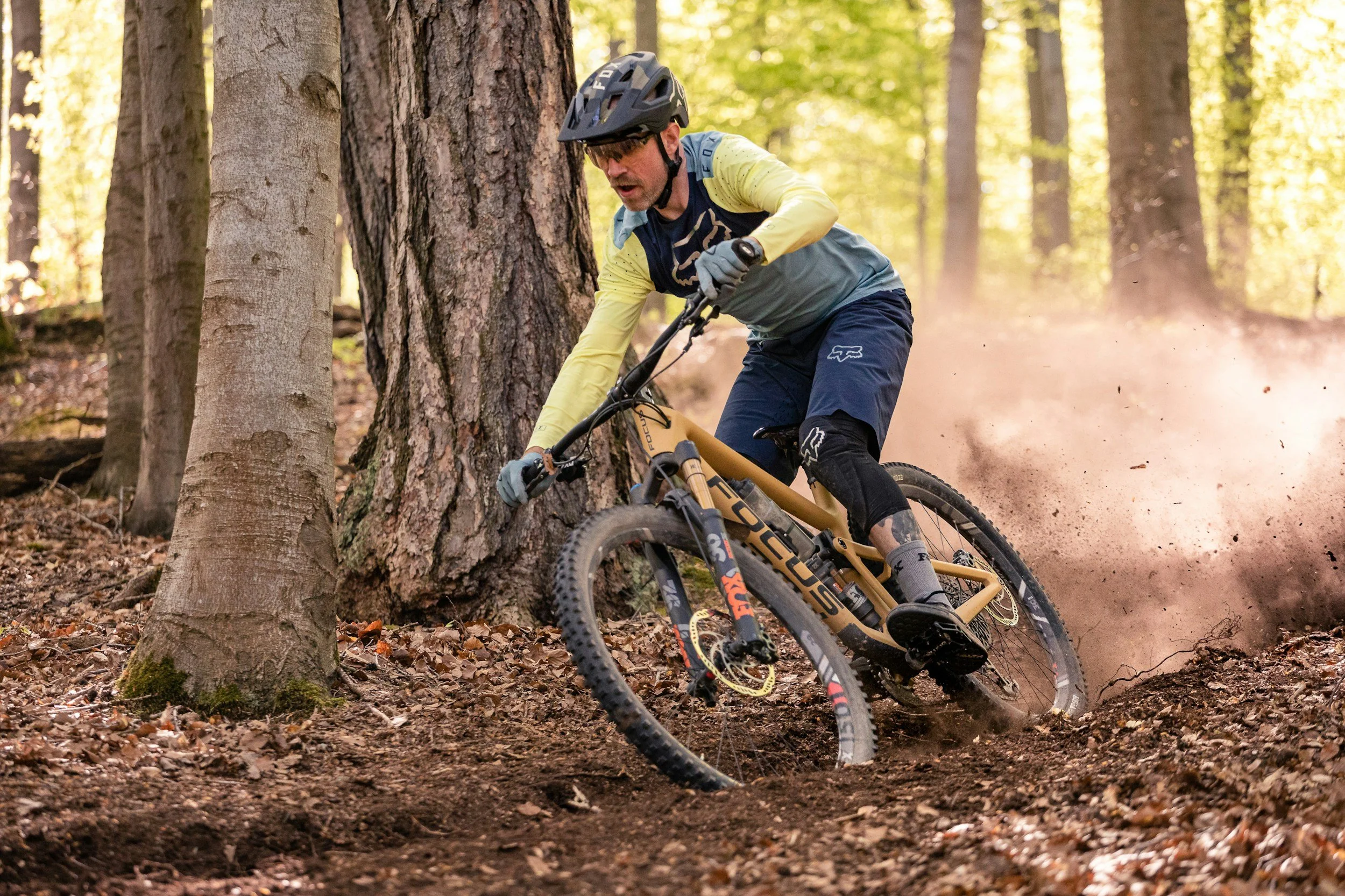
Mountain bike helmets typically feature a more robust construction with extended coverage, particularly at the back of the head and temples. This additional protection addresses the unique risks of off-road riding, where falls can occur in any direction. The deeper rear coverage, known as the occipital coverage, extends lower on the skull to protect against backward falls and impacts from overhanging obstacles.
The shell construction of mountain bike helmets often incorporates multiple-density foam layers and reinforced outer shells to handle repeated small impacts as well as significant crashes. These helmets commonly feature a more squared-off profile with pronounced edges that help deflect branches and trail debris. The interior padding tends to be thicker and more substantial, providing additional shock absorption for the varied impacts common in off-road riding.
Conversely, road helmets prioritize aerodynamics and ventilation, resulting in a sleeker, more compact profile that's ideal for maintained roads and higher speeds. Their streamlined design typically features smooth contours that reduce air resistance, crucial for maintaining efficiency during long rides. The shells are often thinner but still remarkably strong, using advanced composites and engineering to achieve maximum protection with minimal material. Road helmets generally sit higher on the head, with less coverage on the sides and rear, reflecting the more predictable nature of road cycling impacts.
The structural differences extend to the helmet's overall shape, with road helmets typically featuring an elongated, tear-drop profile that helps air flow smoothly over the rider's head at high speeds. This aerodynamic consideration becomes particularly important during competitive riding or long-distance cycling, where energy conservation is crucial.
Protection Features
The protection mechanisms in mountain bike helmets differ significantly from those of their road counterparts. Mountain bike helmets often incorporate advanced impact absorption technologies like MIPS (Multi-directional Impact Protection System) or similar rotation-reduction systems as standard features. These systems help protect against the angular forces common in off-road crashes. Many mountain bike helmets also include integrated visor systems that shield riders from low-hanging branches, sun glare, and flying debris.
Road bike helmets focus on protecting against the specific types of impacts more common in road cycling. While they may also feature MIPS or similar technologies, their protection emphasizes high-speed impacts from forward falls. The absence of a visor reduces weight and improves aerodynamics, though some models include small, detachable visors for versatility.
Ventilation Systems
The approach to ventilation varies markedly between these helmet types. Road bike helmets typically feature numerous large vents arranged to maximize airflow at high speeds. This design helps maintain comfort during sustained efforts on paved surfaces, where speeds tend to be higher and more consistent. The venting systems often incorporate internal channels that guide air across the rider's head, enhancing cooling efficiency.
Mountain bike helmets balance ventilation with protection requirements. They usually have fewer, smaller vents that still provide adequate airflow while maintaining structural integrity for off-road impacts. The vents are often designed to work effectively at lower speeds, with some models featuring adjustable ventilation systems for different riding conditions and seasons.

Weight Considerations
The weight difference between mountain and road helmets reflects their distinct purposes. Road helmets typically weigh less, often between 200-250 grams for high-end models. This lightweight design reduces neck fatigue during long rides and helps maintain an aerodynamic position. The focus on minimal weight contributes to the overall efficiency prized in road cycling.
Mountain bike helmets generally weigh more, ranging from 300-400 grams or more, due to their additional protective features and more robust construction. The extra weight represents a practical trade-off between protection and comfort, considering the different demands of off-road riding.
Fit and Adjustment Systems
Both helmet types feature sophisticated fit systems, but their implementation varies. Mountain bike helmets often include more adjustable retention systems to accommodate goggles and varying terrain demands. These systems typically offer a greater range of adjustments and more secure fitting options to prevent the helmet from shifting during technical riding.
Road bike helmets focus on achieving a precise fit that minimizes air resistance. Their retention systems are usually lighter and lower-profile, with an emphasis on maintaining consistent positioning during long rides. Many road helmets also feature dedicated ports or systems for securing sunglasses when not in use.
Conclusion: Making Your Choice
The decision between a mountain bike and a road bike helmet should primarily depend on your riding style and environment.
If you’re a rider who splits your time between disciplines, many manufacturers now offer versatile helmets that incorporate features from both styles. Consider factors like your typical riding conditions, climate, and personal preferences for features like visors and ventilation when making your selection.
Remember that regardless of type, the most important aspect of any helmet is proper fit and regular replacement after significant impacts or general wear. A well-fitted helmet of either variety will provide better protection than an ill-fitting one with more advanced features.
HOW DO YOU FEEL ABOUT FASHION?
COMMENT OR TAKE OUR PAGE READER SURVEY
Featured





Parents today face many challenges when supporting their child’s emotional and mental wellbeing.