
Depop’s 2026 Trends Report Signals the Rise of “The Edited Self"
PAGE
By PAGE Editor
Depop has officially unveiled its 2026 Trends Report, introducing The Edited Self—a defining framework for a new era of intentional style rooted in clarity, confidence, and personalization. As digital saturation continues to accelerate trend cycles, the report captures a cultural pivot away from excess and toward refinement, where fashion becomes a deliberate extension of identity rather than a response to algorithm-driven churn.
At the heart of The Edited Self is a growing resistance to constant novelty. Consumers are choosing quality over quantity, emotional connection over impulse, and personal authorship over fleeting microtrends. Across Depop’s global community, wardrobes are being pared back and sharpened, with repeated silhouettes and trusted staples replacing endless reinvention. Clothing, once again, is about self-definition—reflecting lived experience, taste, and intention.
Building on last year’s The New Fundamentals, the 2026 report draws from Depop’s proprietary insights, including platform search behavior, sales data, and broader cultural research. It also arrives at a moment shaped by major global events—from the World Cup to the U.S. 250th anniversary—that are pulling people back into public life and redefining how, why, and when they choose to dress with presence. Within this context, Depop outlines four core trends that will define the year ahead.
Modern Uniforms: Consistency Becomes the New Flex reflects a shift toward dependable dressing in response to decision fatigue, economic tension, and digital noise. Neutral palettes, sharp tailoring, boxy knits, and workwear classics anchor wardrobes that prioritize ease and confidence. Rather than signaling style through constant change, this trend embraces repetition as a marker of taste—where consistency itself becomes expressive.
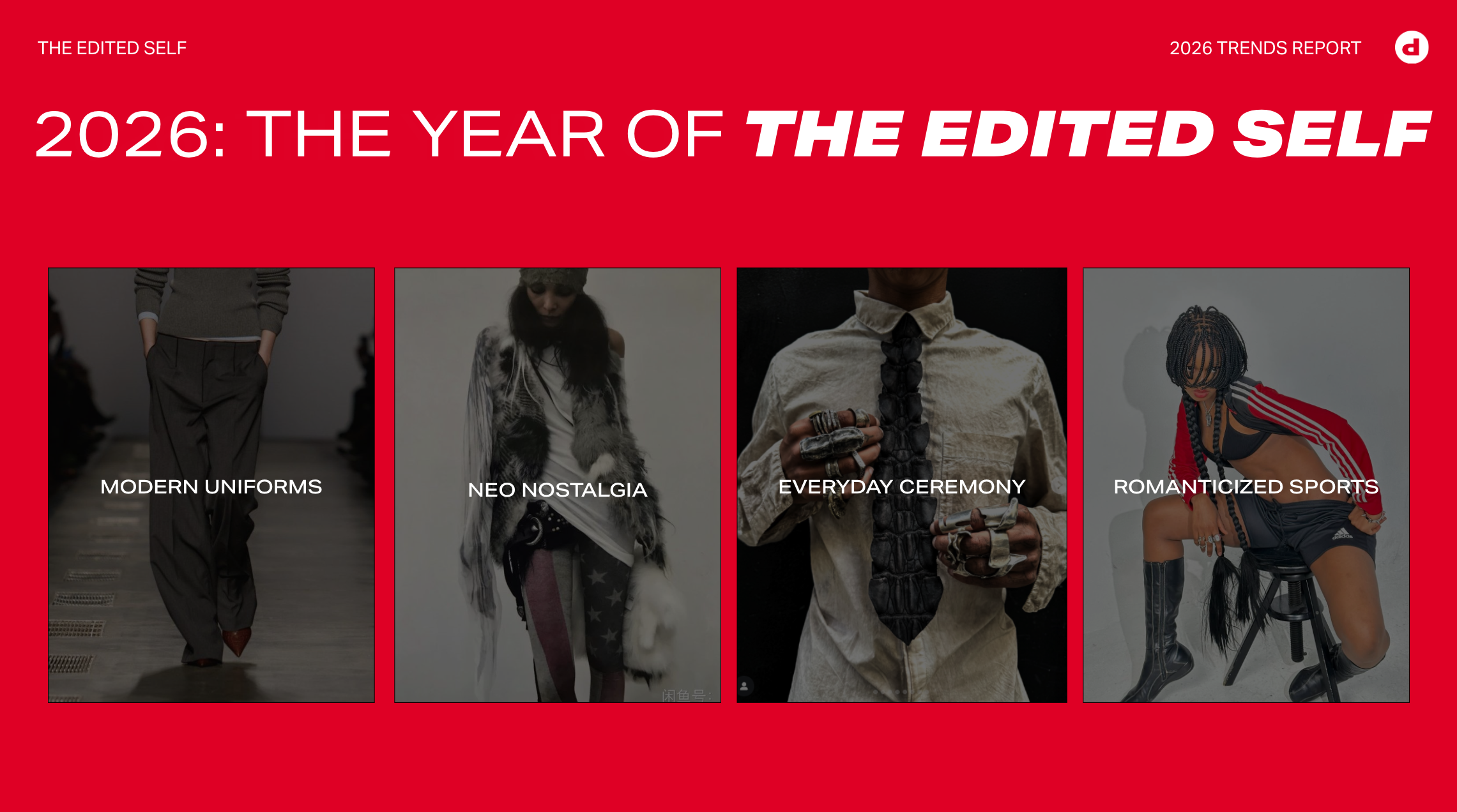
Neo Nostalgia: Editing the Past to Soften the Present captures how Gen Z and young Millennials are turning to nostalgia as emotional grounding. Instead of committing to a single era, wearers are blending references from the 1970s, 1990s, and early 2000s, creating layered, personal aesthetics that feel both familiar and new. This era-mixing approach reframes nostalgia not as imitation, but as selective storytelling through dress.
With Everyday Ceremony: Bringing Intentionality to Daily Routines, fashion becomes a ritual. People are dressing with purpose, elevating ordinary moments through structured blazers, tailored coats, statement jewelry, and expressive footwear. This trend reflects a desire for confidence and emotional comfort, where getting dressed is less about occasion and more about showing up fully in daily life.
Rounding out the report is Romanticized Sports: Elegance Meets Ease, a trend that repositions sportswear beyond performance. Vintage and upcycled athletic pieces—tennis whites, jerseys, bike shorts, ski layers—are reworked with luxe and tailored elements to create looks that balance comfort, style, and cultural relevance. In a World Cup year especially, sportswear becomes both nostalgic and aspirational, blending athletic heritage with refined ease.
Together, these four trends signal a broader cultural reset. 2026 marks a moment of recalibration, where consumers are editing rather than accumulating, choosing meaning over momentum. Across The Edited Self, a clear narrative emerges: people want to feel grounded, seen, and intentional. They want clothes that reflect who they are—not who the internet tells them to be.
HOW DO YOU FEEL ABOUT FASHION?
COMMENT OR TAKE OUR PAGE READER SURVEY
Featured

For modern businesses, a website is often the starting point of a customer's journey.