
High Fashion or High Street: Is the Industry Afraid to Invest in Craft Over Clout?
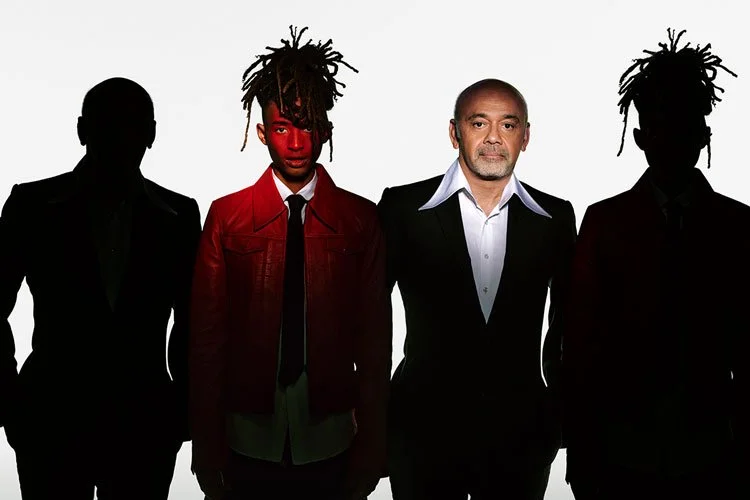
Christianlouboutin.com
We are living in the celebrity influence era, one that often eclipses deep industry craftsmanship, where fashion stands at a defining crossroads. Luxury houses, and increasingly, the luxury consumer, are rewarding visibility over vocational mastery, elevating musicians, entertainers, and digital personalities into fashion leadership roles. Not the issues until it is bluntly bypassing designers whose authority is rooted in study, discipline, and long-term immersion in the craft.
Recent moments like Jaden Smith’s debut as Christian Louboutin’s first men’s creative director have reignited this debate. The conversation centered less on silhouette, construction, or materiality - it beckons the idea that lineage, celebrity, and spectacle are the only motives for the “bottom line.” This is not an anomaly, so much as it is a symptom of a broader recalibration, one in which cultural capital has increasingly been mistaken for creative readiness.
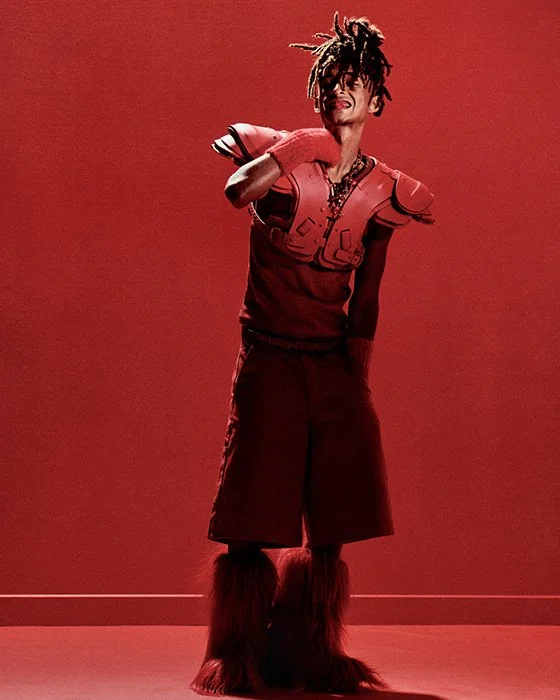
Christian Louboutin
Yet fashion has always loved hype. The difference today is who the hype is attached to, where that comes from, and how we are celebrating it all.
Designer Hype Is Not New—Displacing Designers Is
Before celebrity creatives dominated fashion headlines, designers themselves were the hype, and it was built from the ground up. The industry once knew how to recognize and nurture that energy early on. Alexander McQueen emerged as a ‘once-in-a-generation’ force and talent whose shows were events. It was a radical vision, technical mastery, and emotional provocation, not because of celebrity endorsement.
His collections challenged beauty, power, and identity, converting fashion into cultural theater. McQueen’s rise exemplified that craft could generate obsession-level hype on its own when paired with fearless storytelling,
Marc Jacobs arrived in the 1990s as a provocateur who redefined American fashion. His grunge collection for Perry Ellis famously got him fired, but created a legend. It cemented him as a cultural force. Jacobs’ ascent showed that disruption from within the system, led by a designer fluent in history and subculture, could reshape the industry. He went on to creatively lead Louis Vuitton amid the streetwear uprising of the early to mid-2000s.
Public School New York, led by Dao-Yi Chow and Maxwell Osborne, captured the zeitgeist of the early 2010s by translating downtown New York grit into luxury fashion language. Their rise from CFDA acclaim to major brand partnerships, like the Jordan brand, proved that designers rooted in lived urban experience could build hype organically, without celebrity scaffolding.
Gosha Rubchinskiy emerged from post-Soviet youth culture and skate aesthetics, transforming his subcultural authenticity into a global fashion movement almost overnight. Although a ten-year run [2008 - 2018] evolved the name into its alphabetic form [from ГОША РУБЧИНСКИЙ], his success wasn’t celebrity-driven; rather, world-building, rooted in real communities and cultural specificity. Cancel culture likely got the better of him and his Pro-Kremlin views at the time.
Marine Serre, a newborn within the luxury family tree, captivated the industry with a vision centered on sustainability, reuse, and futurism. Serre launched her first collection in her fourth year at the La Cambre Mode university in Brussels. She did her diligence, interning at Maison Margiela and Dior, and as an alumna of Balenciaga, this persistence granted her the 2017 LVMH Prize for Young Fashion Designers. Even Asap Rocky consigned her crescent moon motif, becoming an instant global symbol not through influencer saturation, but because her ideas felt urgent, generational, and necessary.
After his departure, we can see how impactful a designer can be to the brand name, for instance, JW Anderson. Balmain was revitalized by Olivier Roustein in 2011, and Matthieu Blazy at Chanel is slated to do similar today.
Fame doesn’t connect these designers as much as their initial authorship of garments. They sought visibility while arriving with fully formed perspectives. The sartorial conundrum today isn’t if fashion loves hype; is fashion increasingly detached from the discipline, risk, and long-term, sustainable thinking that once defined it?
These designers arrived with a point of view. Fashion met them where they were and amplified them. That ecosystem, however, is shrinking.
Margiela and the Antwerp Six: When Ideas, Not Identity, Led Fashion
Decades before celebrity creative directors and influencer-led marketing, fashion was revolutionized by a group of designers who rejected fame altogether: Martin Margiela and The Antwerp Six. Emerging from Belgium in the late 1980s, their impact reshaped how fashion could look, function, and understand without relying on personality-driven hype.
Martin Margiela, a graduate of the Royal Academy of Fine Arts Antwerp, challenged every convention of luxury fashion. He embraced anonymity, refusing interviews and public appearances, letting the work speak for itself. Margiela’s approach wasn’t about visibility; rather, it was about intellectual fortitude, technical experimentation, and conceptual depth.
Alongside Margiela, The Antwerp Six included Dries Van Noten, Ann Demeulemeester, Dirk Bikkembergs, Dirk Van Saene, Walter Van Beirendonck, and Marina Yee. The group introduced a new European fashion language rooted in art, subculture, and craftsmanship. Their rise proved that formal education, shared experimentation, and collective risk-taking could challenge Parisian dominance and reshape global fashion narratives.
The Antwerp Six emphasised process over persona. These designers understood textiles, tailoring, historical references, and pattern construction at an academic level, yet applied that knowledge to radical, emotional, and often confrontational design.
In an era where celebrity identity often overshadows the garment, Margiela and the Antwerp Six stand as a reminder. Their influence continued to ripple through modern fashion from Demna’s deconstruction at Balenciaga to Virgil Abloh’s conceptual frameworks; high fashion/high street hybrids.
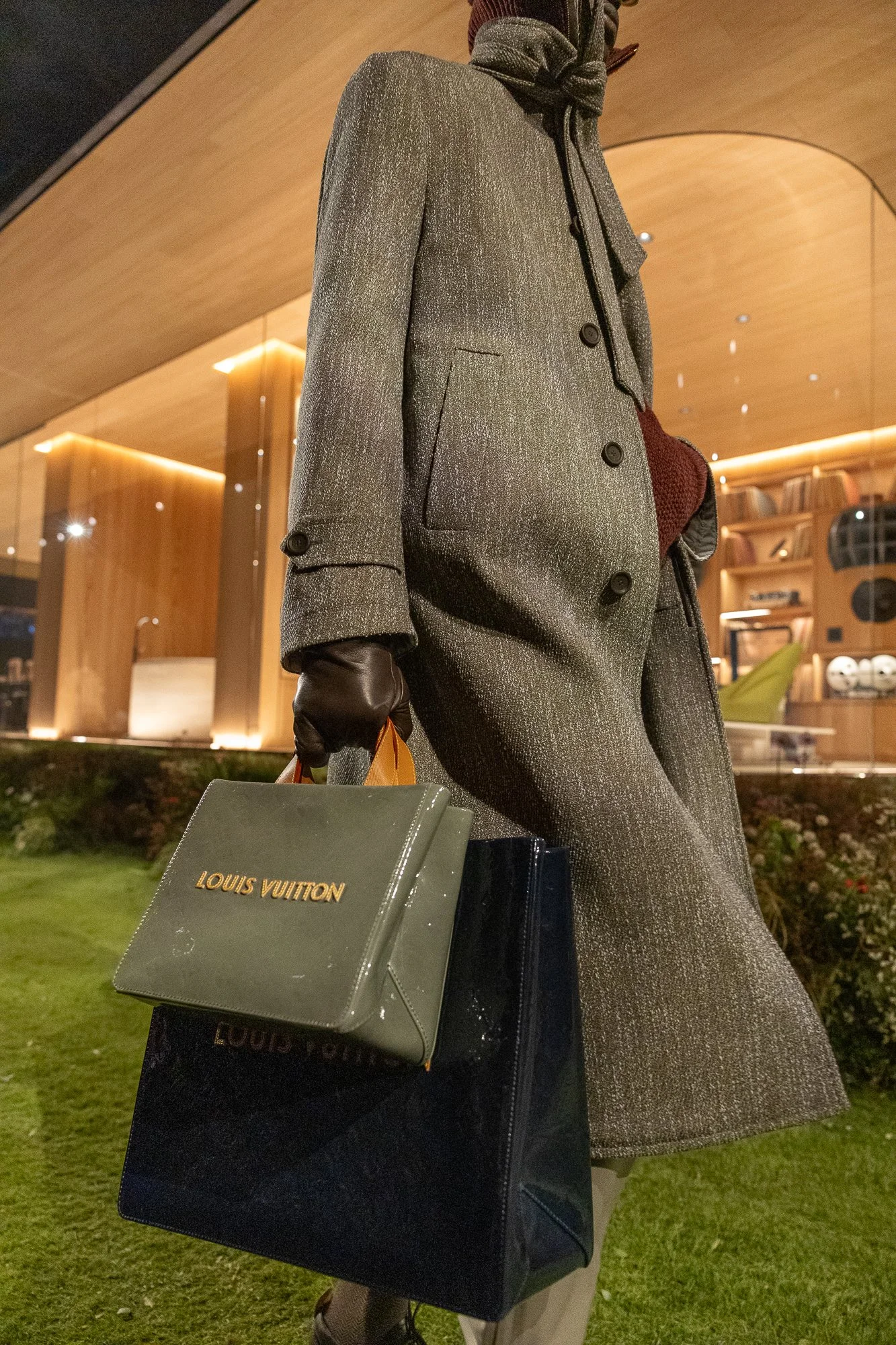
Louis Vuitton F./W ‘26
Celebrity Creatives: When Access Skips Apprenticeship
Today, celebrity creatives are often granted access at the top of the pyramid. While figures like Pharrell Williams and Kanye West earned their place through years of learning - Pharrell via Billionaire Boys Club, Kanye through his Fendi internship and years of trial with YEEZY - others arrive without comparable preparation.
Kai Cenat exemplifies this shift. Despite enormous cultural influence, his relationship to fashion largely exists through fit pics, gifting, and social validation. His desire to “Steve Jobs” a fashion brand - assembling a team to execute a vision without first developing one through considerable immersion - reflects a growing misconception in creative spaces that taste alone qualifies leadership. Technical prowess becomes an afterthought.
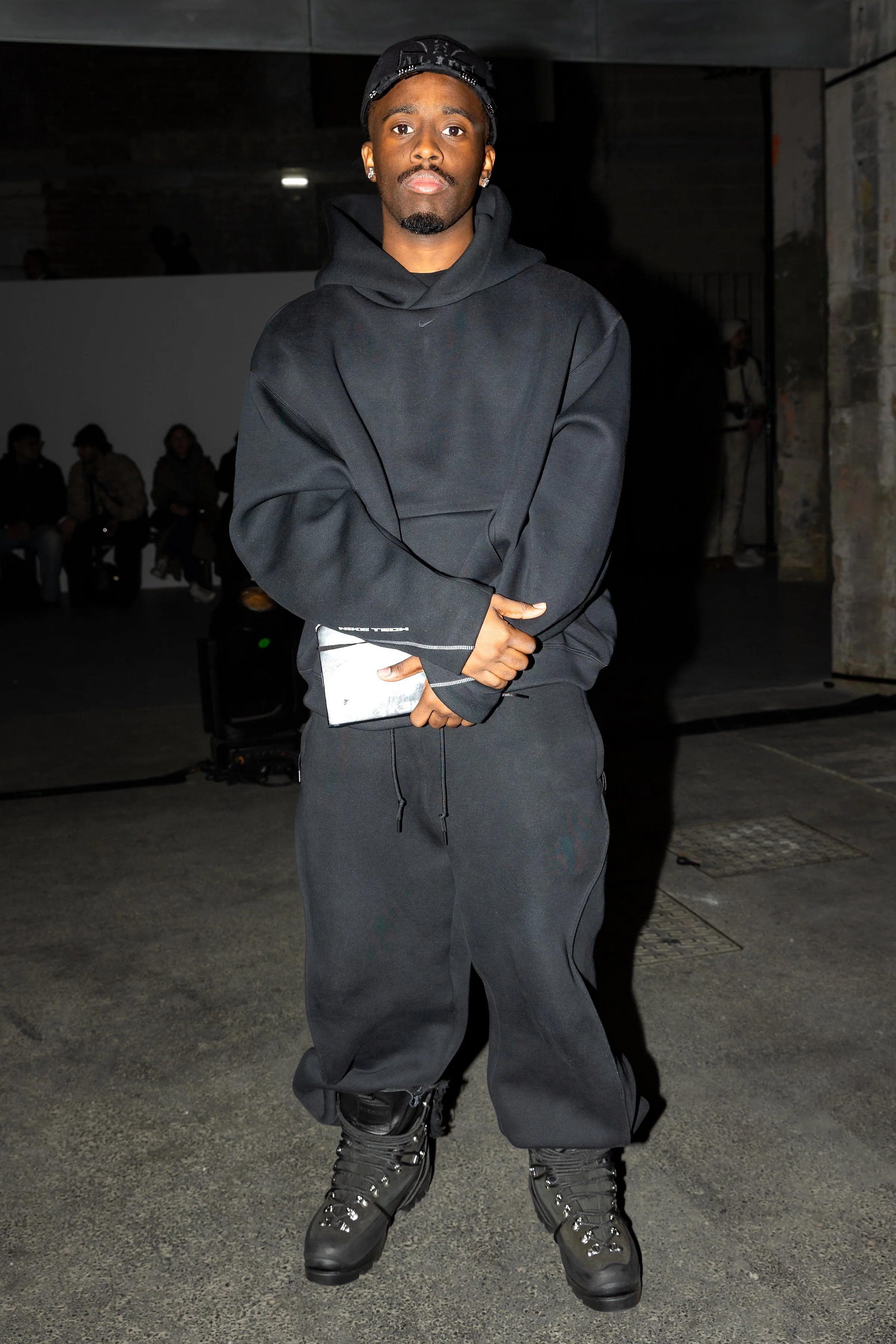
Kai Cenatg at 424 F./W ‘26 runway
Designers Bridging High Fashion and the High Street—Successfully
What makes this moment especially contradictory is that designers without celebrity backing are already doing the work the industry yearns for. Willy Chavarria has mastered the intersection of tailoring, street culture, and political expression. Guillermo Andrade’s 424 is a case study in how streetwear can mature into high fashion without losing authenticity. Who Decides War, founded by Ev Bravado and Téla D’Amore, merges couture-level construction with streetwear silhouettes, embedding themes of grief, survival, and spirituality into garments that transcend trend cycles. Resisting the dilution of high fashion to reach the street, they translate it.
One of the most diligent examples of a modern designer bridging high fashion and high street is KidSuper. The New York–born label, founded by Colm Dillane, thrives on imagination, narrative, and immersive storytelling, as displayed in their FW26 Paris Fashion Week runway, screening a film starring French actor Vincent Cassel, transforming streetwear into emotionally rich collections.
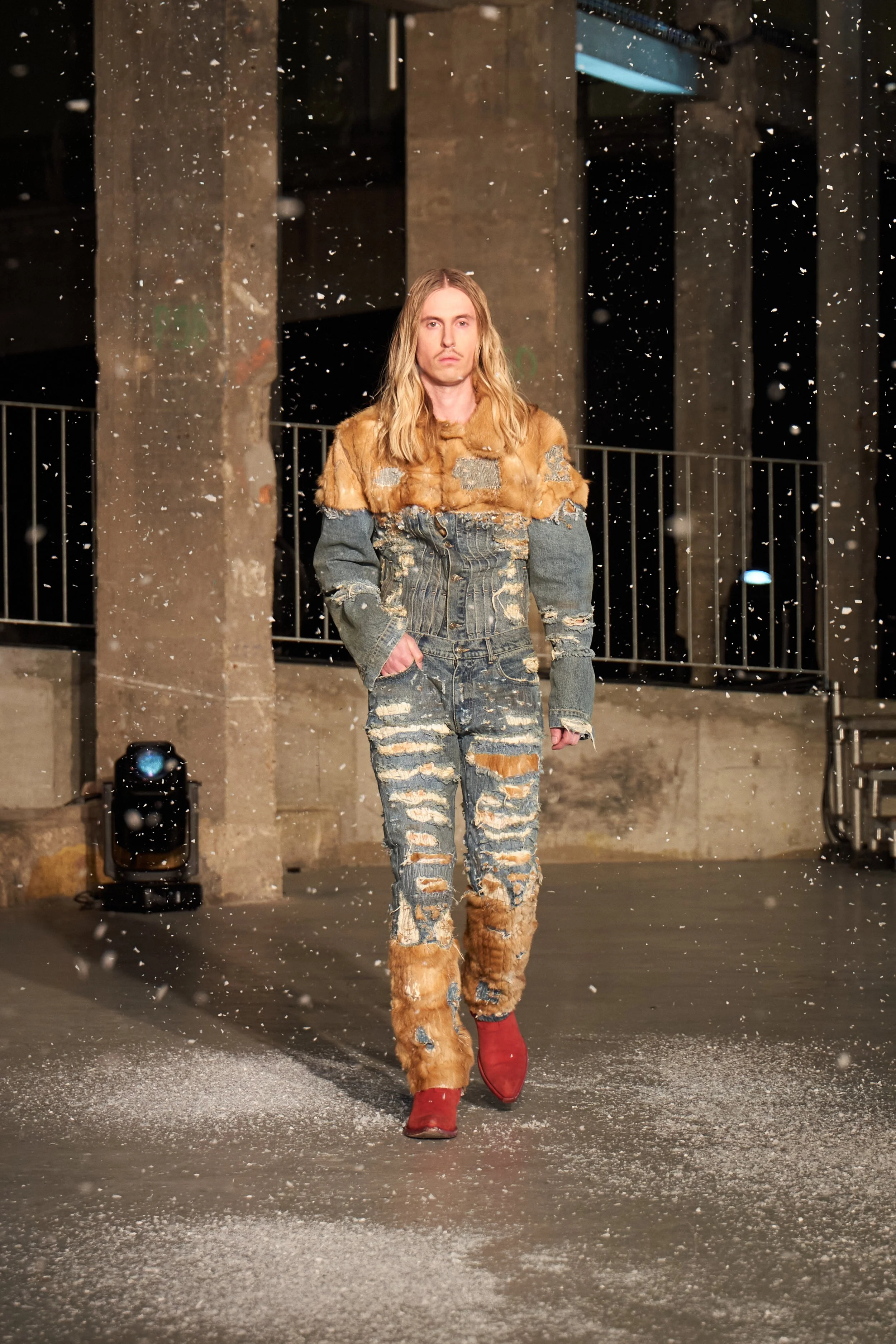
424 F./W ‘26
Dillane’s brief stint at a luxury house taught him the mechanics of luxury production. His experience with Louis Vuitton Menswear for its FW23 collection combined this formal immersion with his own DIY ethos. That ethos forged KidSuper’s Paris runway shows, beginning in 2019 as a rogue operation. He showcased independent collections that blurred the boundaries between couture spectacle and street-level relevance.
Through KidSuper, Dillane demonstrates that a young designer can leverage a combination of creative authority, industry apprenticeship, and authentic cultural storytelling to build a brand that operates both commercially and conceptually. For emerging designers in the high fashion/high street intersection, KidSuper offers a clear blueprint.
No discussion of this imbalance is complete without Kirby Jean-Raymond. And through Pyer Moss, Kirby treated fashion as cultural scholarship with each collection functioning as an essay on Black history, labor, and systemic inequity. His partnership with Reebok wasn’t performative; it was structural. Jean-Raymond has mentioned his desire to create an entirely new sneaker and silhouette, refusing to work with competitors in the space who limit creativity with their brand.
Yet despite CFDA recognition and global acclaim, his career underscores a painful truth: to assume the role of creative lead, one must be able to handle the notoriety that comes with it. The imbalance delays accountability. As seen in the enduring tolerance of Kanye West’s behavior, an environment where personality outpaces process leads to volatility within.
Fashion’s current ecosystem often resists critique in favor of fandom. Celebrity designers are protected by audience loyalty, while designers without name recognition are asked to justify their existence season after season.
Luxury fashion is not only artistry, but it is also a multibillion-dollar industry where visibility directly impacts sales. Major houses, like Louis Vuitton, Gucci, Balenciaga, and Dior, with collections tied to high-profile creatives or celebrity collaborators, have had positive effects on revenue and brand engagement metrics. Luxury sales have been an issue as 80% market growth is due to price increase rather than normal sales per sku-numbers, according to Business of Fashion.
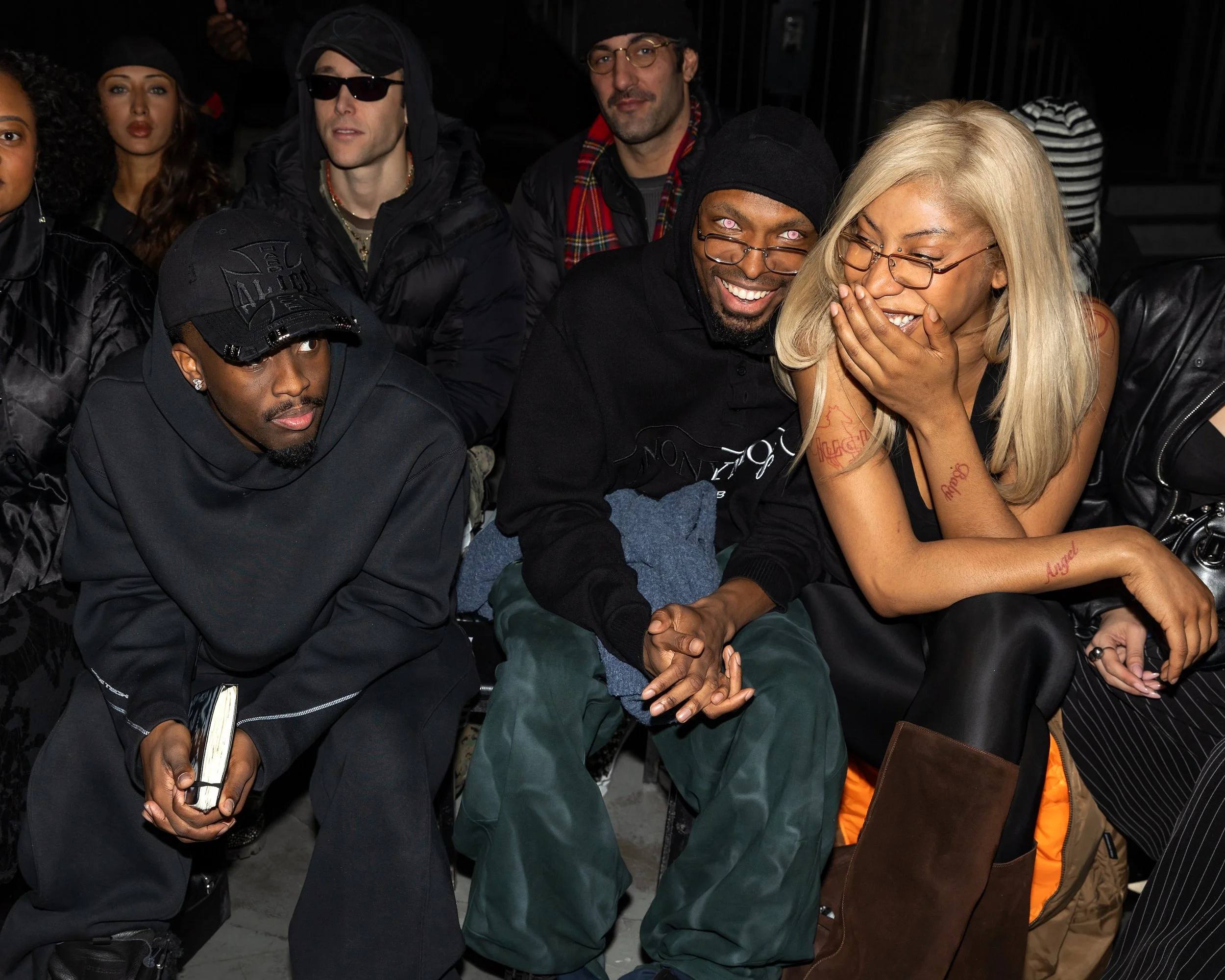
Kai Cenat and fashion designer Mowalola at 424 F./W ‘26
Celebrity appointments act as instant marketing engines for brands initially, and can have long-term effects when aesthetics align. Rihanna’s Fenty x PUMA instantly drove stock and retail movement, proving that celebrity reach translates to measurable sales lift.
Oakley and Travis Scott share a galvanizing energy. Asap Rocky and RayBan “never hide” in the public eye of prosecution. Or with Moncler, Rocky displays an interpretation of New York City grit, with elegance. All valid drivers for collaboration and consumer comprehension.
Pharrell and Kanye prove that celebrities can work in different fields when learning comes first. The danger is forgetting how to recognize design leadership when it isn’t already famous. If fashion wants to create a novel legacy or continue an existing one, it needs to reconsider those hands-on talents that bring the garments to life, in the same light of celebrity that can propel the brand into the global gaze of new customers.
HOW DO YOU FEEL ABOUT FASHION?
COMMENT OR TAKE OUR PAGE READER SURVEY
Featured
The surge in rice water skincare reflects a growing shift toward ingredient-led, DIY beauty routines, though experts emphasize it should complement—not replace—essential skincare practices.