
Anne Sofie Madsen’s ‘Ghostly Matters’ At Copenhagen Fashion Week Is A Study In Presence
PAGE
By PAGE Editor
At Copenhagen Fashion Week, where sustainability narratives and emerging talent increasingly shape the global fashion conversation, Anne Sofie Madsen’s Autumn–Winter 2026 runway felt deliberately restrained—and all the more powerful for it. Titled Ghostly Matters, the collection marked the Copenhagen-based brand’s second runway presentation under the CPHFW NewTalent program presented by Pandora, and its most conceptually assured statement to date.
Staged on January 28 inside a space inspired by an abandoned Renaissance theatre, the show unfolded as an exercise in controlled tension. Classical architectural references—ornamented interiors, suspended chandeliers, and focused spotlights—were stripped back and reframed through a contemporary lens. Low lighting created a hushed, almost reverent atmosphere, inviting the audience to read the garments not as spectacle, but as living forms in motion.
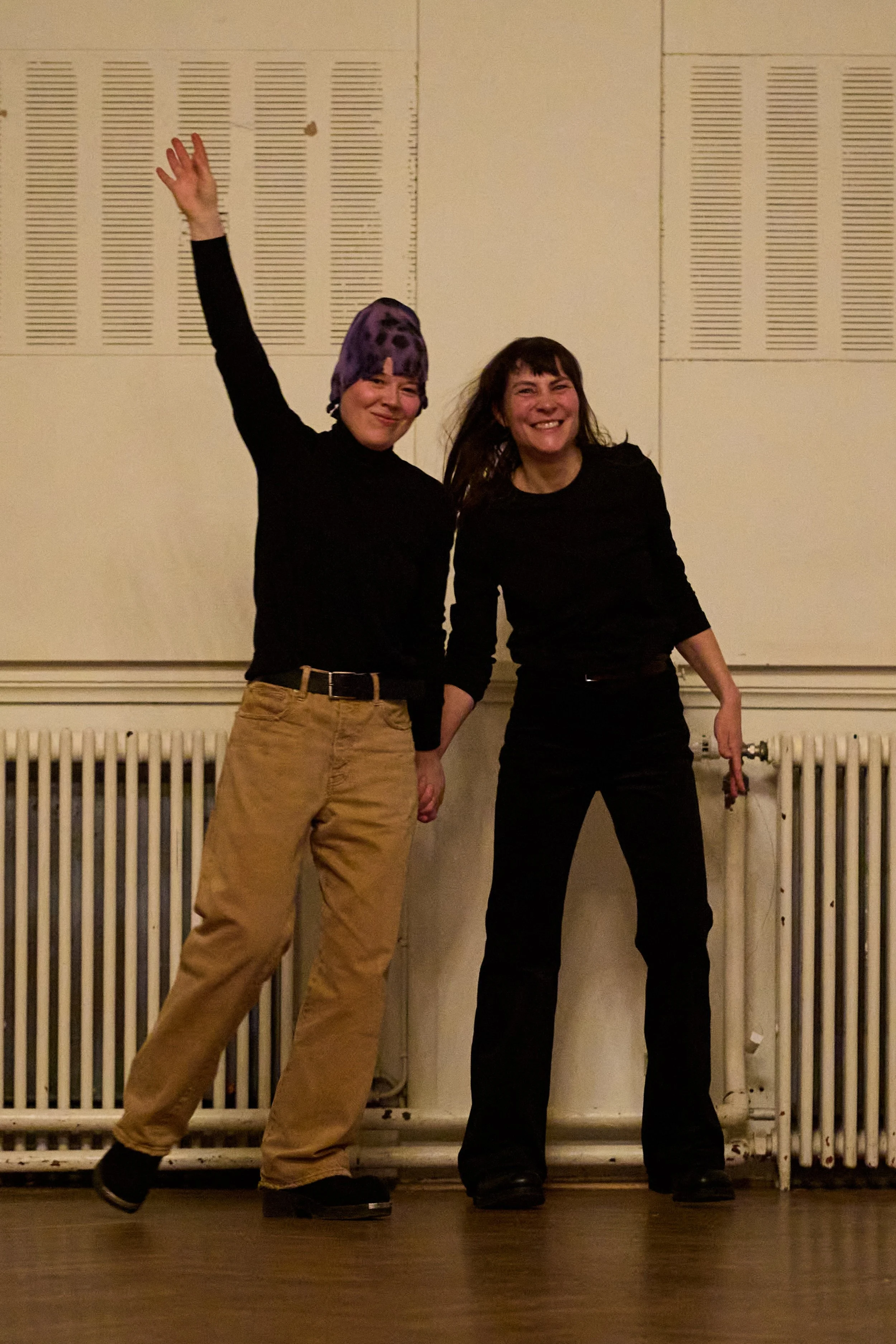
“We weren’t even sure we wanted to do a full show this season,” Madsen admitted backstage. “We decided very last minute.”
Co-creative director Caroline Clante echoed the sentiment: “We started working on the collection very late, and it was rough. But somehow, everything came together in the end.”
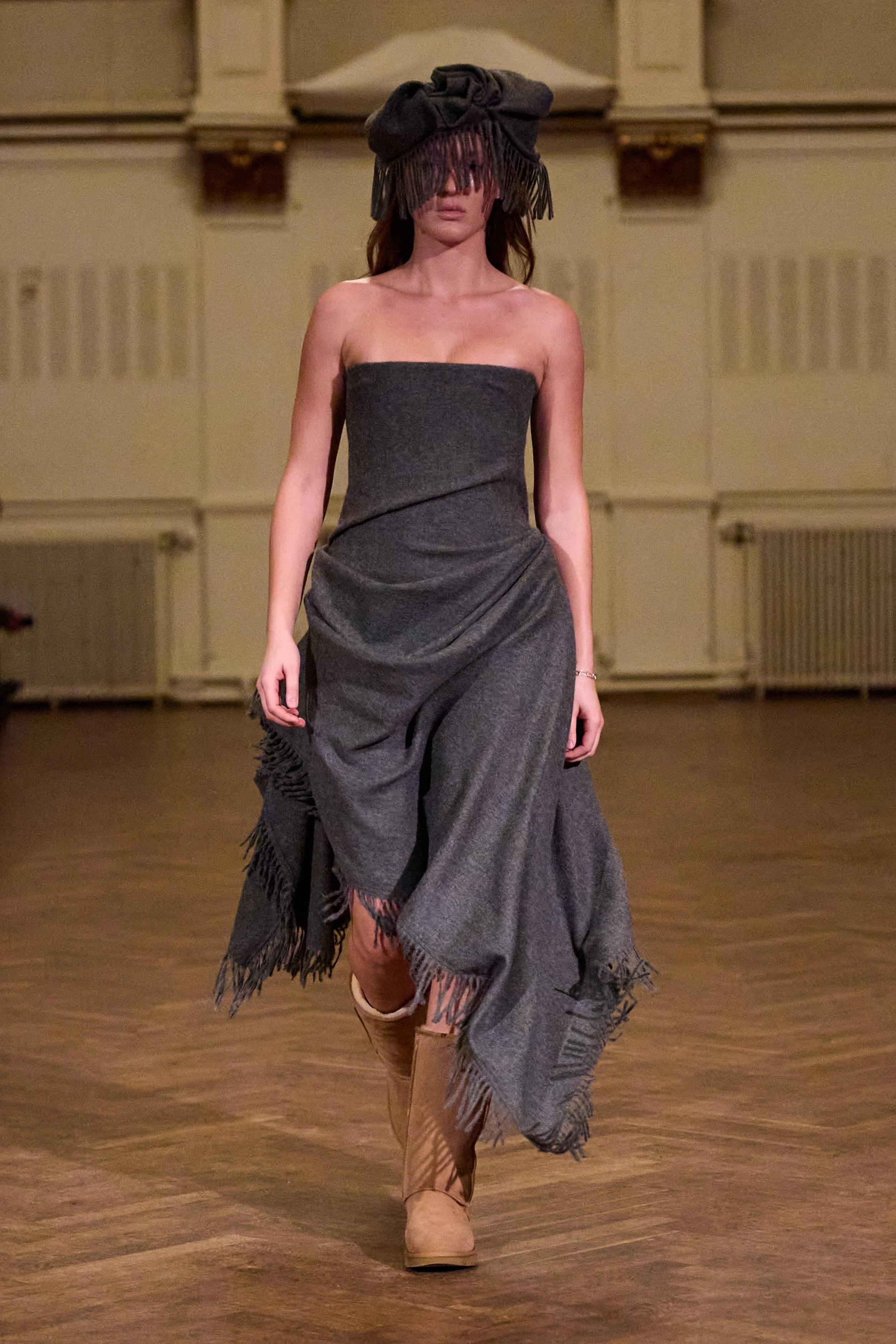
That sense of compression—of ideas pushed tightly together until something new emerges—became the conceptual core of Ghostly Matters. Shapewear anchored the collection, smoothing and framing the body while simultaneously calling attention to what it contains. Natural curves met constructed silhouettes, rendering the body both present and abstract, intimate and distant.
Skirt suits carried a contemporary authority, defined by precise tailoring and careful proportion, while duffle coats extended the brand’s investigation into functional heritage. Reimagined here, they became quiet symbols of defiance and resilience—clothes that suggest strength without spectacle. Throughout the collection, roses appeared as recurring motifs, applied through silk techniques, delicate appliqué, and nuanced airbrushing. Fragile and fleeting, they served as markers of impermanence within otherwise structured forms.
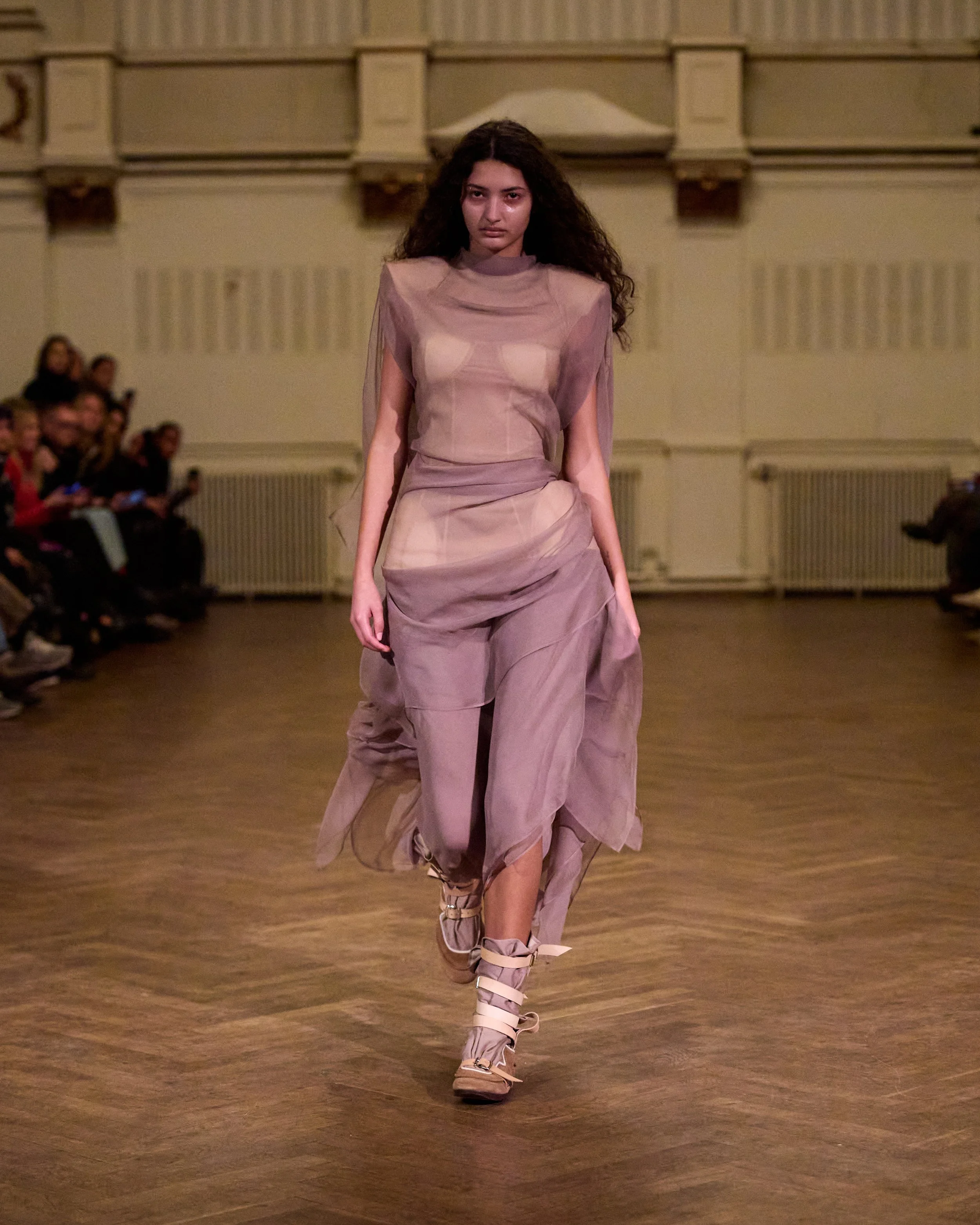
Certain looks layered shapewear beneath draped fabrics or oversized outerwear, heightening the contrast between compression and volume, containment and expansion. Sculptural drapes, exaggerated shoulders, and stacked layers of tulle and silk gave the collection an architectural rhythm—formal yet intimate, evocative of memory and absence.
That emotional tension was amplified by the live performance from Copenhagen-based band Wedding. Their layered, noisy sound punctuated the models’ movement, reinforcing the push and pull between structure and fluidity, presence and absence.
For Madsen and Clante, the show also marked a moment of consolidation. “This season felt better than the last,” Madsen said. “We’re still both working full-time jobs while building the brand, but we feel more prepared now.” Clante added, “It feels like we’re finding our rhythm.”
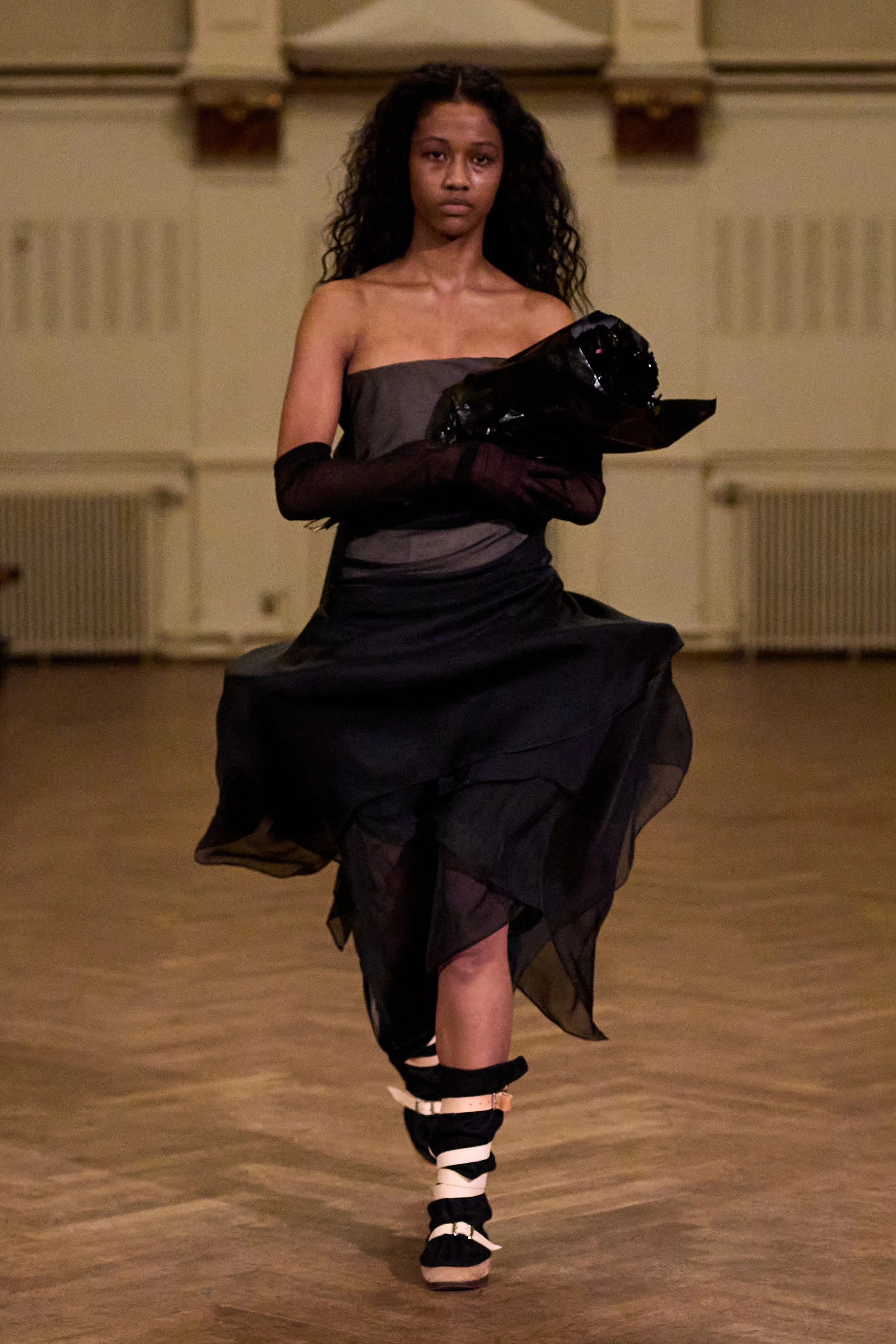
That rhythm extended into the show’s collaborations. Introducing a seasonal runway partnership with UGG®, the designers treated footwear as an extension of the garments themselves. Styles like the Quill Ballet Trainer, GoldenGlow Embossed Sandal, Otzo Clog, and Minimel Trainer were reworked using the same materials and techniques found in the collection—shearling, canvas, silk bows, and metal hardware—integrating seamlessly into the silhouettes. The result blurred the line between function and suggestion, softness and structure.
Jewellery by Pandora was similarly embedded into the clothing rather than styled atop it. Chains, links, charms, and skull medallions from the Pandora ME and Talisman collections were layered across bodices, shapewear, skirts, and outerwear, sometimes veiled in invisible tulle. The pieces shaped contours and reinforced volume, transforming modular jewellery into architectural elements of dress.
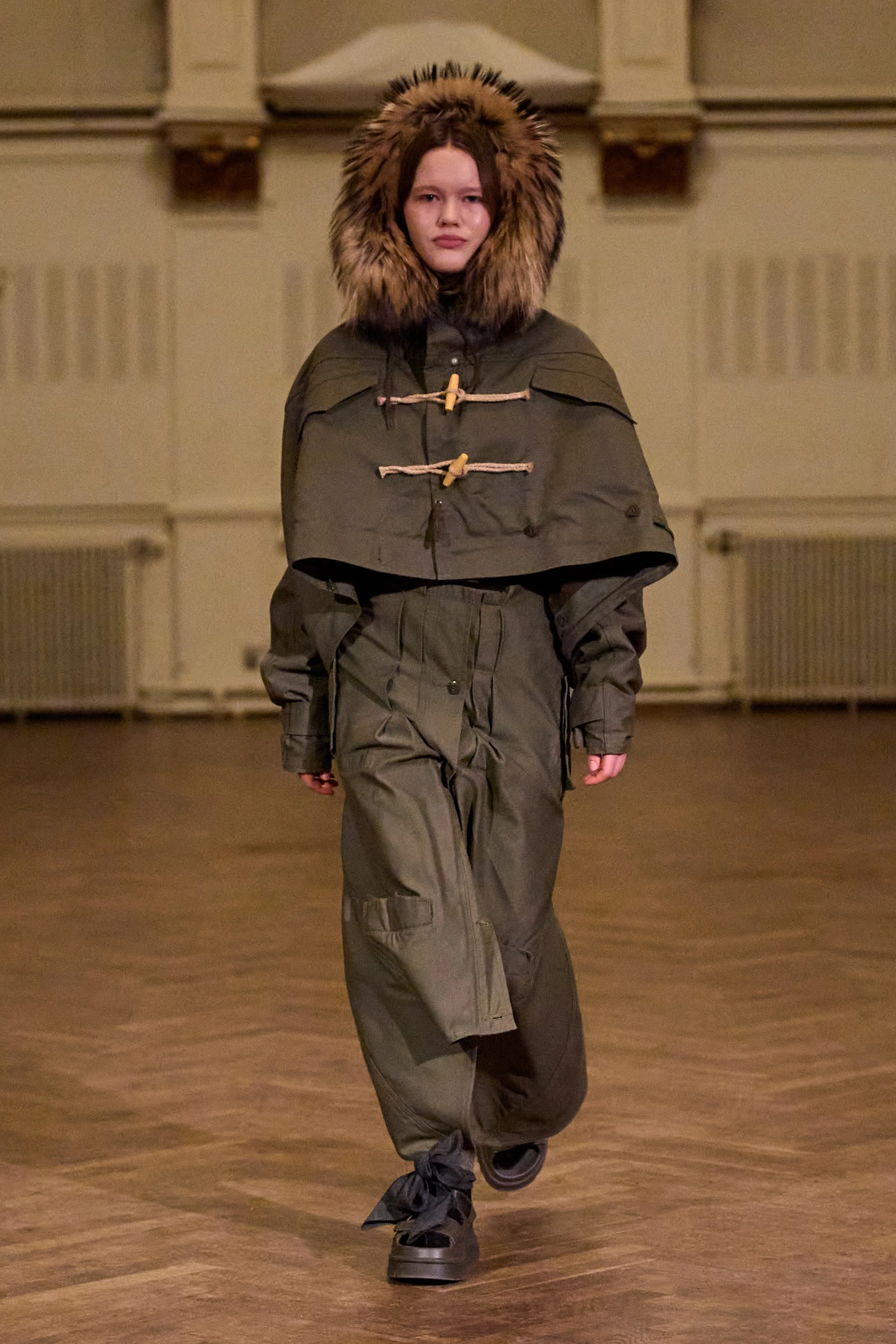
Underpinning it all is a brand philosophy rooted in slowness and care. Founded in 2025, Anne Sofie Madsen operates entirely out of its Copenhagen studio, with nothing outsourced. Deadstock silks, wool, cotton, upcycled leather, and shearling form the backbone of each collection, which builds incrementally rather than chasing trends. Madsen’s training under John Galliano and at Alexander McQueen is evident in the precision and drama of her construction, while Clante’s editorial background deepens the narrative layers.
Looking ahead, both designers remain clear-eyed rather than grandiose. Asked whether fashion will even exist in 20 years, Madsen laughed. “Uniforms,” she said. Clante agreed. “Let’s see where we’ll be in 20 years.”
For now, Ghostly Matters positions Anne Sofie Madsen as a brand comfortable with restraint—one that understands that absence can be as expressive as presence. In a fashion landscape often defined by excess, that quiet confidence feels not only timely, but necessary.
See full runway:
HOW DO YOU FEEL ABOUT FASHION?
COMMENT OR TAKE OUR PAGE READER SURVEY
Featured



You spend two hundred, three hundred, sometimes five hundred dollars on a perfume from a famous luxury brand.