
At Genesis House, Terrence Zhou’s Cosmic Egg Signals a New Model for Cultural Innovation
PAGE
By PAGE Editor
In an industry still reckoning with how to meaningfully support designers beyond performative inclusion, the CFDA | Genesis House AAPI Design + Innovation Grant has quietly become one of the more substantive platforms for long-term impact. Now in its third year, the initiative—founded by Genesis and the Council of Fashion Designers of America—has named Terrence Zhou of Bad Binch TongTong as its 2026 recipient, awarding him a total of $100,000 in funding and, perhaps more critically, a framework for sustainable growth.
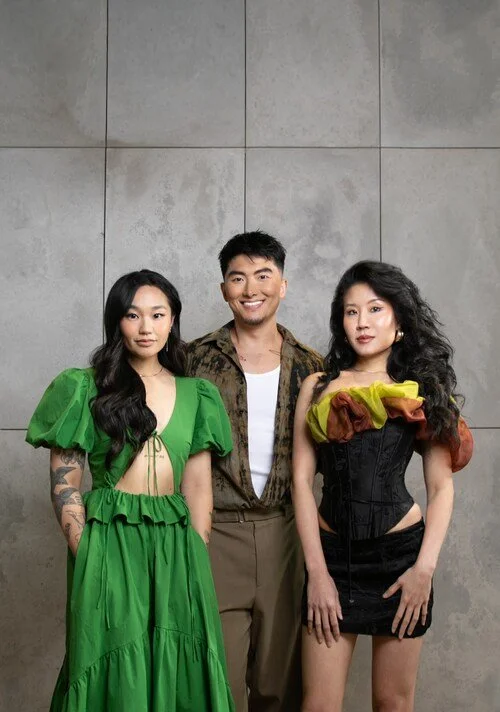
Allina Liu, Terrence Zhou, and Kim Shui.
Announced at Genesis House in New York’s Meatpacking District, Zhou’s selection followed a five-month incubator program alongside fellow finalists Allina Liu and Kim Shui. Each designer received $40,000 to develop a new body of work, participated in cross-disciplinary mentorship spanning fashion, technology, and business, and traveled to Seoul, South Korea, for an immersive cultural residency designed to expand their creative and strategic perspectives. Zhou, named the winner at a private presentation on February 5, received an additional $60,000 to further scale his business.
The structure of the grant reflects a growing recognition that financial backing alone is insufficient. For emerging designers—particularly those navigating the intersection of heritage and contemporary identity—access to networks, operational insight, and global context can prove equally transformative.
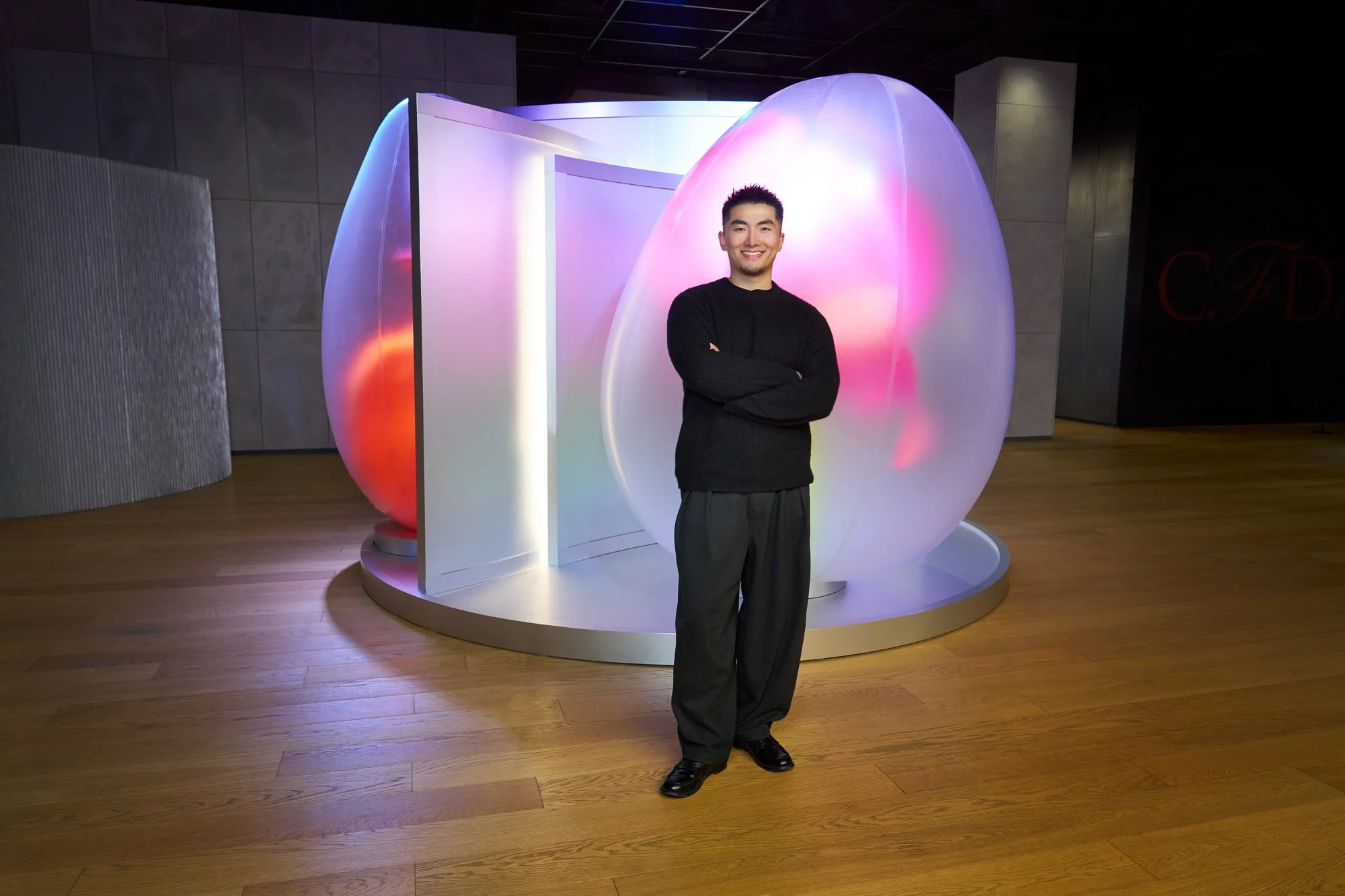
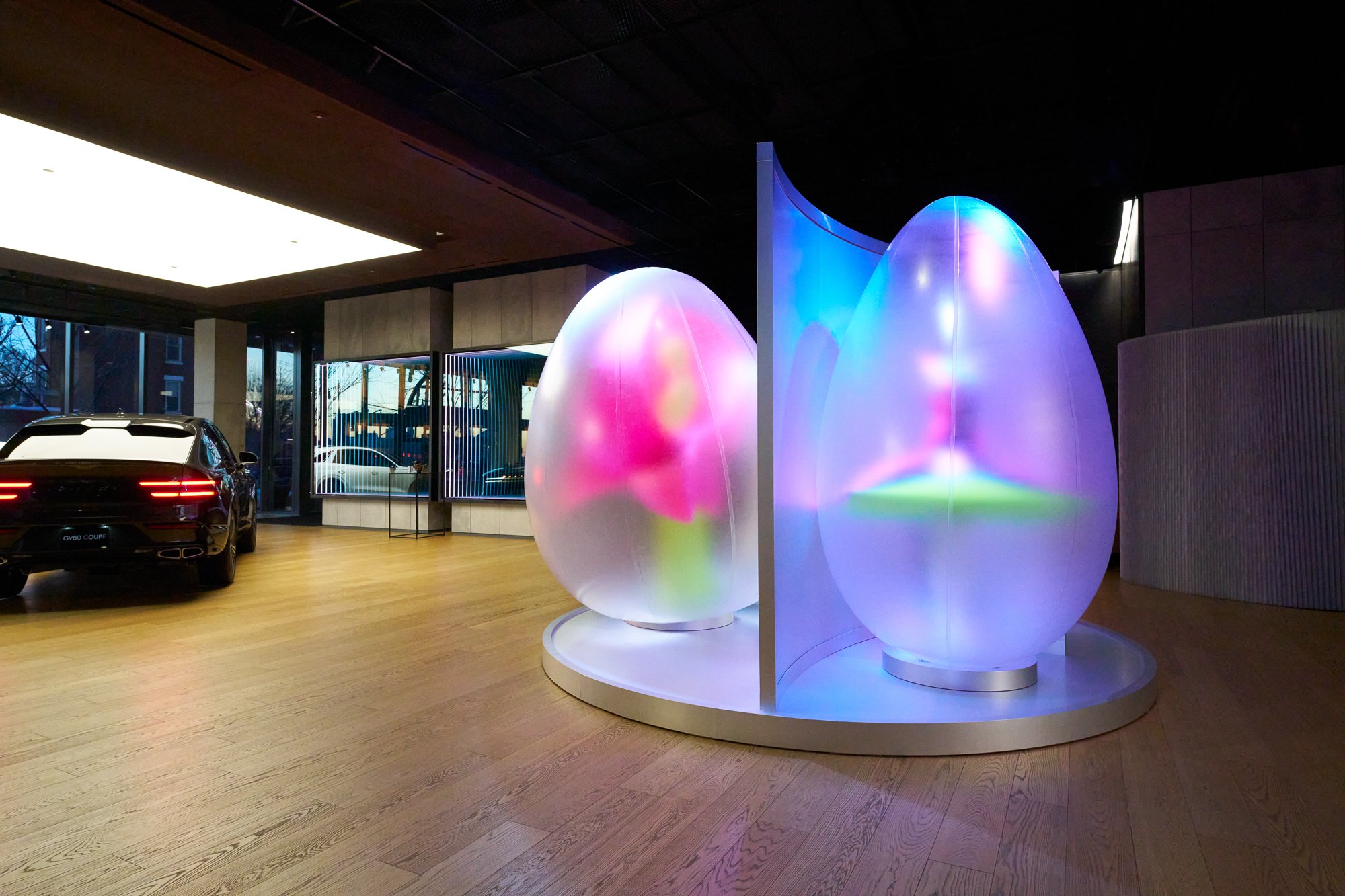
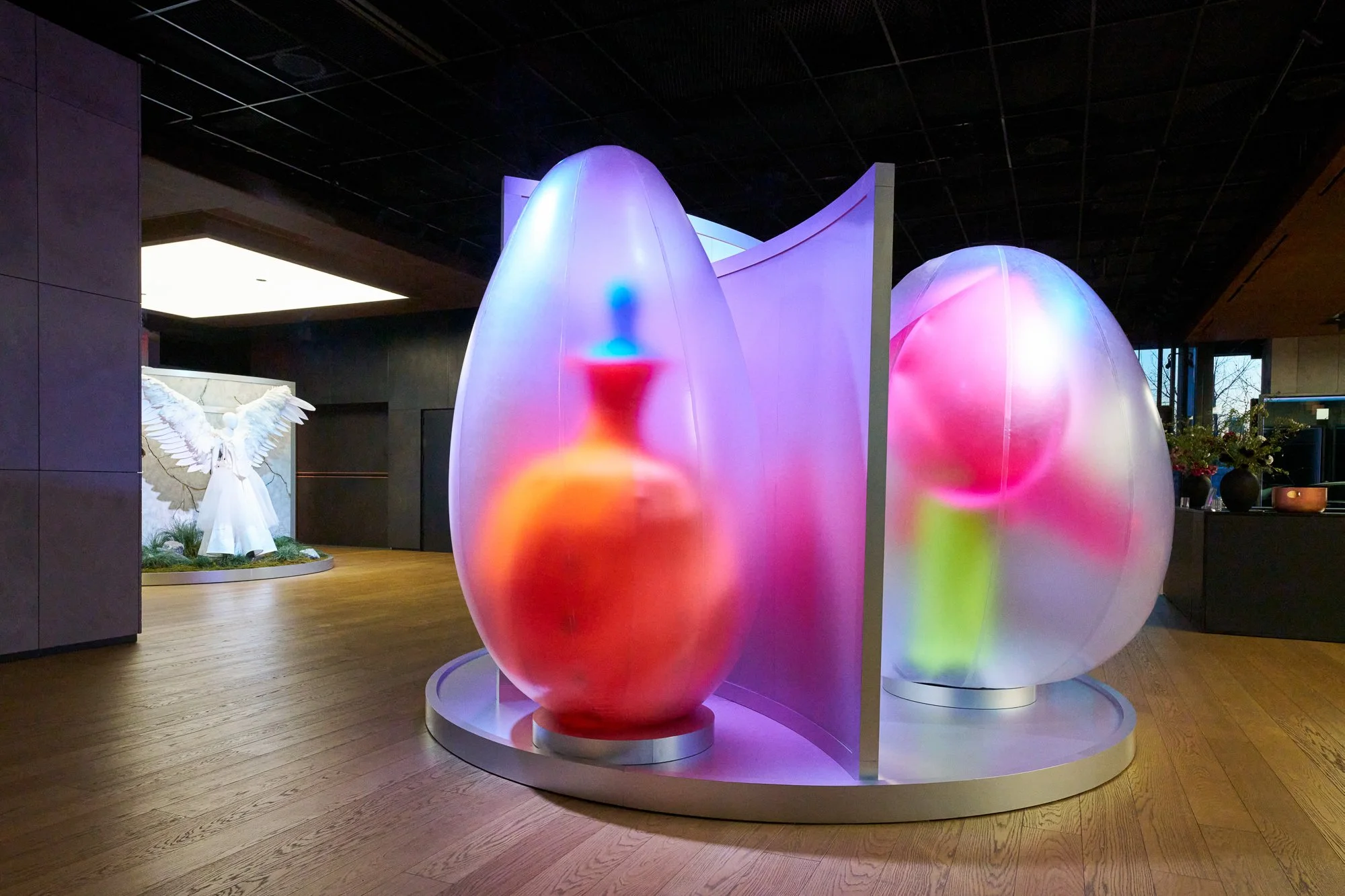
Zhou’s winning three-piece collection explored innovation not as disruption, but as incubation. Drawing from the Chinese creation myth of Pan Gu, he positioned the cosmic egg as both protective vessel and portal—an apt metaphor for the designer’s broader thesis: that heritage and modernity can coexist without one eclipsing the other. Translucent sculptural forms partially concealed softened garments beneath, creating tension between exposure and preservation. References to the Korean moon jar, a monumental lily, and even an aerodynamic automotive prototype traced a narrative arc from origin to forward motion.
The result was less about spectacle and more about philosophy—innovation as refinement rather than rupture.
“I’m deeply honored to be selected as a CFDA | Genesis House AAPI Design + Innovation Grant recipient,” Zhou said. “This program affirms my belief that innovation is not about replacing heritage, but allowing it to evolve.”
That sentiment aligns closely with Genesis’ own positioning. As a global automotive brand rooted in Korean cultural values—particularly the principle of treating customers as son-nim, or honored guests—Genesis has increasingly leaned into design and hospitality as extensions of brand identity. Genesis House, where the collections remain on view through February 22, functions as more than a showroom. With its restaurant, cellar stage, and immersive exhibition space, it operates as a cultural hub that bridges Korean tradition and forward-thinking architecture.
“It has been inspiring to witness the creativity and cultural perspective each designer brought to this program,” said Tedros Mengiste, chief operating officer of Genesis Motor North America. “We are proud to support their ongoing growth within the fashion industry.”
Steven Kolb, CEO and President of the CFDA, echoed that sentiment, noting that Zhou, Liu, and Shui each presented “strong creative identities and thoughtful perspectives” that set an energizing tone ahead of New York Fashion Week.
For Zhou—whose brand Bad Binch TongTong has built a reputation for sculptural experimentation and conceptual storytelling—the grant arrives at a pivotal moment. The independent fashion landscape remains financially volatile, and designers operating outside traditional luxury systems often face steep barriers to scale. Programs like this offer not only capital, but validation within an ecosystem that increasingly values cultural fluency as competitive advantage.
As fashion and automotive industries alike contend with technological acceleration and shifting global markets, the collaboration between Genesis and the CFDA signals a broader truth: innovation today is less about speed and more about synthesis. The future may belong to brands that understand how to carry legacy forward without calcifying it.
Inside Genesis House, Zhou’s cosmic egg stands as both artifact and argument—a reminder that the most powerful ideas often begin in a state of incubation.
HOW DO YOU FEEL ABOUT FASHION?
COMMENT OR TAKE OUR PAGE READER SURVEY
Featured





For decades, luxury in the automotive world was defined by materials, craftsmanship and engineering excellence.