
MKDT Studio Autumn–Winter 2026 Is Designed for Life, Not the Lens1
By PAGE Editor
In an industry still drawn to spectacle, MKDT Studio’s Autumn–Winter 2026 collection, Sequence in Light, makes a compelling case for restraint, intention, and relevance. Rooted in everyday life in Copenhagen, the collection reflects how women actually move through the city—walking to work, cycling across bridges, sitting in cafés, and pausing between meetings. Rather than disrupting that rhythm, the clothes are designed to support it.
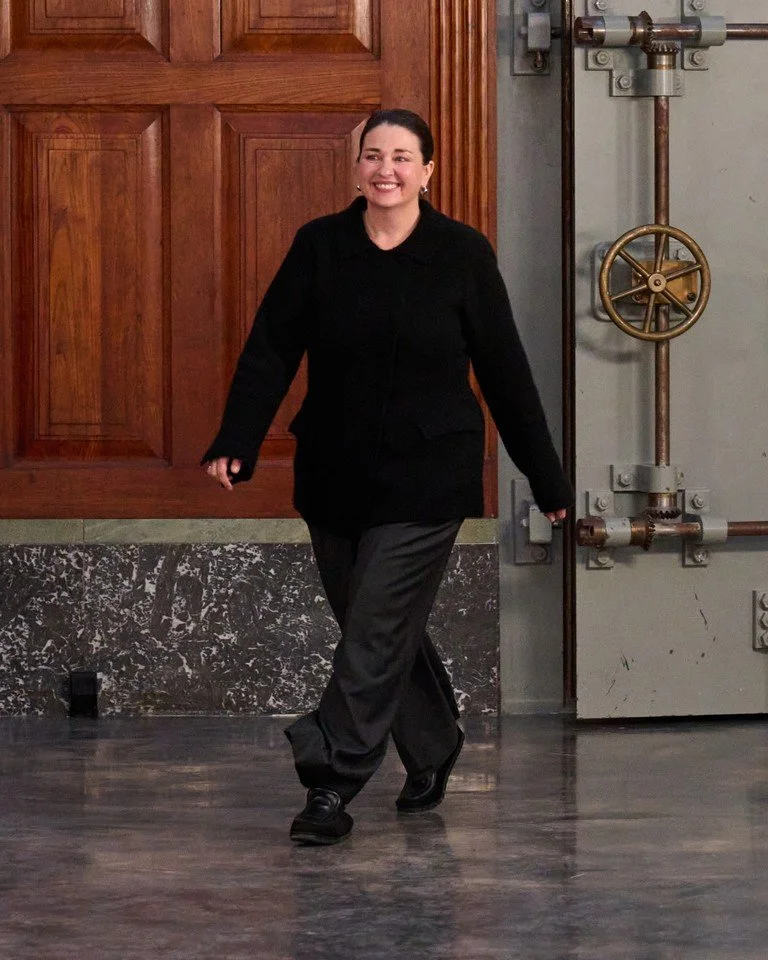
“I design for real women — their wardrobes, their pace, their lives. I’m not interested in perfection, but in confidence that feels natural,” says Creative Director Caroline Engelgaar.
That philosophy anchors Sequence in Light, where garments prioritize ease, movement, and quiet assurance over overt display. The person always comes first, not the outfit—a principle that informs every decision, from silhouette to fabric choice.
Longevity is equally central to Engelgaar’s approach. “I’m really proud of building a very long wardrobe—something you can keep for a very long time,” she explains.
“I think a lot about what you want to invest in when you buy something new. It’s a bit like furniture—you want to buy a chair you can have in your home for 10, 20, 30 years. I want to do the same with fashion.”
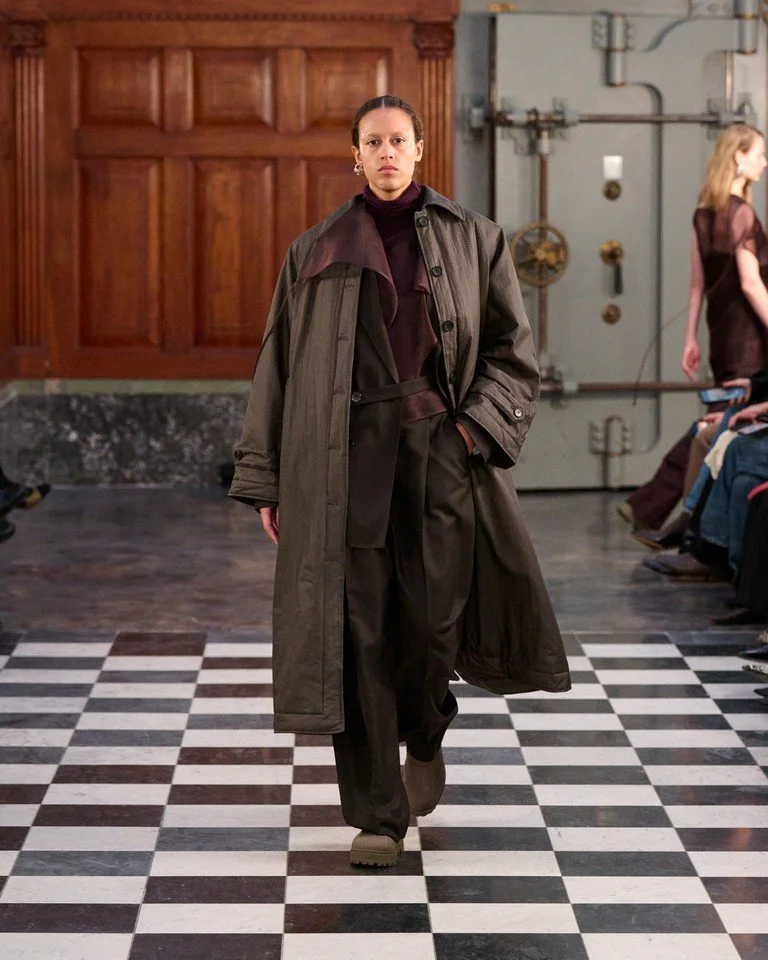
That investment mindset is visible in the collection’s tailoring, which remains a cornerstone of MKDT Studio’s identity, softened and recalibrated for AW26. A double-breasted blazer, developed from traditional menswear, is reworked through proportion and ease, worn over a high-neck knit to feel sharp without rigidity. Tailored trousers fall straight and relaxed, allowing natural movement throughout the day. In several looks, tailoring and outerwear merge entirely, with coats worn like blazers, creating silhouettes that sit between jacket and coat. Gently rounded shoulders, slightly elongated sleeves, and subtle asymmetries allow the garments to settle comfortably around the body.
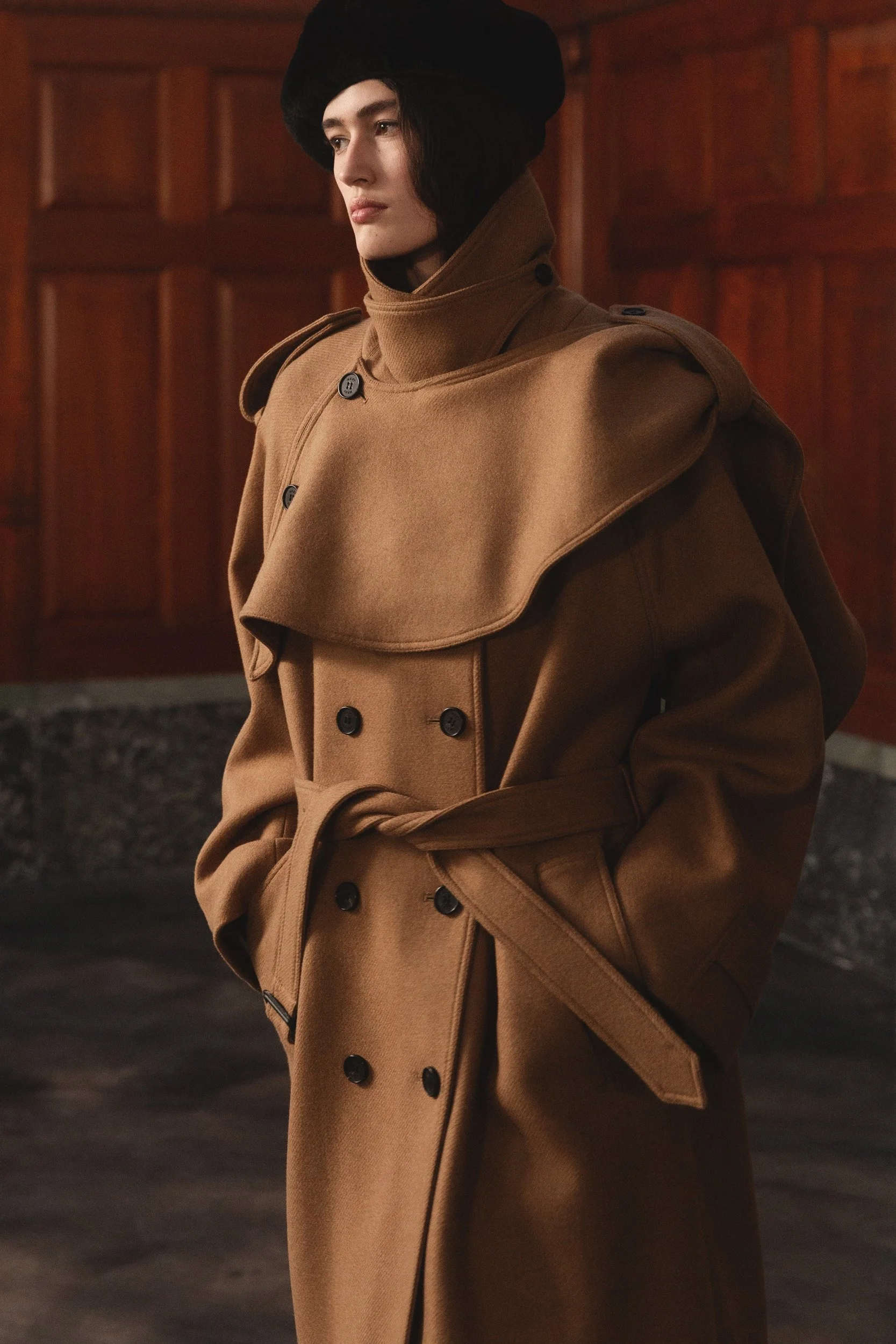
Outerwear plays a consistent, practical role. Coats in tartan and grey check are joined by solid black and warm praline, worn wrapped close or left open as the weather shifts. Belts sit easily at the waist, collars are generous without excess, and layered fronts provide warmth without weight. Some styles lean sculptural through volume and shape, while others remain clean and understated, designed to be worn effortlessly over tailoring. Practical footwear, including Tretorn rubber boots inspired by everyday city life, grounds the collection in function, weather, and movement.
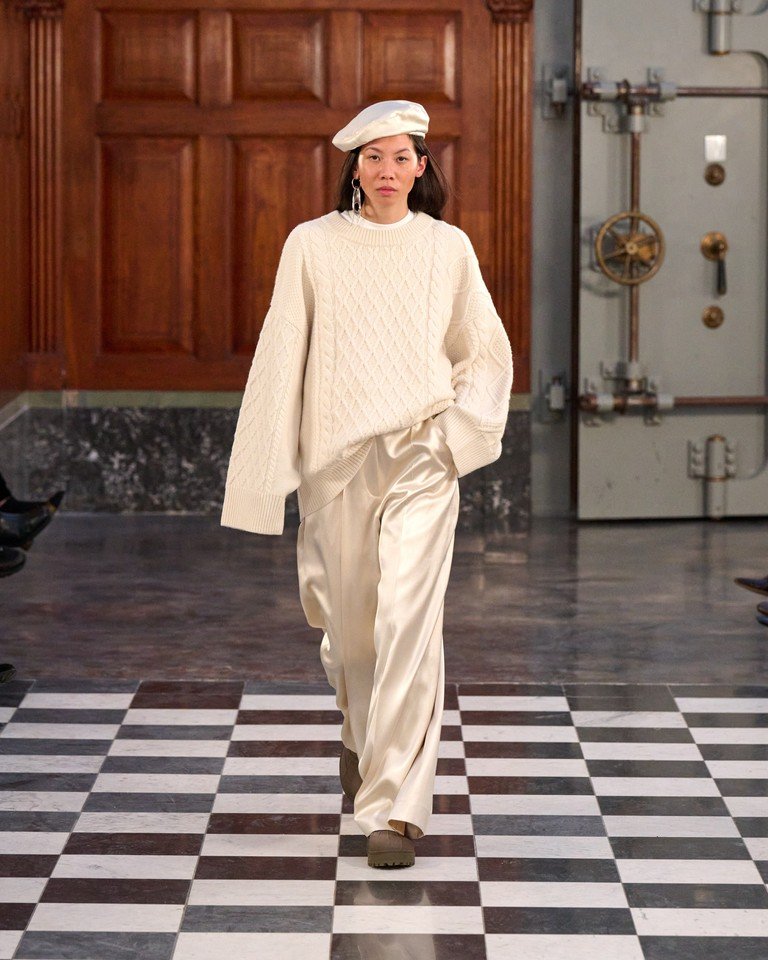
Knits bring the collection firmly back to daily wear. Soft yak-knitted trousers in ivory and black replace classic suiting in select looks, paired with compact jackets or sheer layers that add warmth without bulk. Relaxed yet intentional, these pieces are designed to hold their shape while remaining comfortable from morning to evening.
Dresses introduce lightness without fragility. Sheer black and ivory styles are layered over trousers, creating depth through material contrast rather than embellishment. Asymmetric necklines, translucent panels, and soft draping move gently with the body, reinforcing the collection’s understated, wearable approach.
Architectural thinking informs fabric and construction throughout. Clean surfaces and measured proportions reference the use of light and calm minimalism associated with Japanese architect Tadao Ando, while curved seams, wrapped fronts, and softened volumes echo the fluid, sculptural language of Zaha Hadid. Geometry is present, but never strict—balanced with softness and wearability.
Color is inspired by the work of Danish artist Oluf Høst, particularly the warmth and depth of his harvest paintings. The palette centers on refined neutrals—black, dark grey melange, layered greys—balanced with earthy tones of brown, clay, hay, and khaki. Accents of praline and deep fig add richness, while ivory knitwear and sheer layers catch the light softly, creating a calm visual rhythm across the collection.
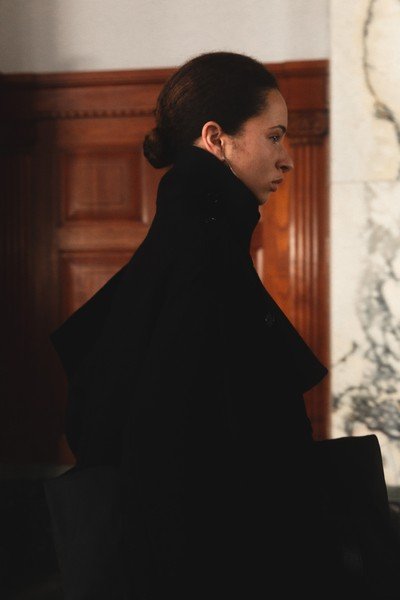
The Atelier pieces reveal a more conceptual expression of Sequence in Light while remaining grounded in function. A sheer deep-fig dress layered over trousers creates softness without delicacy, while an ivory tailored jacket and wide trousers are offset by a translucent underlayer. A sculptural shearling coat, developed in collaboration with Copenhagen-based fur specialist Utzon, introduces volume and texture, while a softly structured black jacket offers a more technical take on everyday tailoring. Many Atelier styles are reversible—a core MKDT principle—enhancing versatility and longevity.
Engelgaar also points to Copenhagen Fashion Week’s evolving focus on durability as a natural alignment with the brand’s values. “Copenhagen Fashion Week has always been extremely loyal to our brand, and to many brands,” she says. “But now there’s also a real focus on longevity, which is very much what MKDT stands for. It’s about staying warm,” she adds with a laugh, “and making good investments.”
Sequence in Light ultimately reflects MKDT Studio’s commitment to designing for real life—clear, functional, and quietly confident. These are clothes meant to be worn, lived in, and trusted, not noticed for their own sake, but remembered for how they feel.
See full runway:
See backstage:
HOW DO YOU FEEL ABOUT FASHION?
COMMENT OR TAKE OUR PAGE READER SURVEY
Featured





For decades, luxury in the automotive world was defined by materials, craftsmanship and engineering excellence.