
The Dream Closet vs. Your Real Life: How to Build an Aesthetic Wardrobe That Still Works on Monday Morning
PAGE
By PAGE Editor
You’re standing in front of an overstuffed rail—blazers slouching off mismatched hangers, a sequinned dress still wearing its tag, the same black trousers you’ve worn twice already this week.
On your phone, a silent loop of quiet-luxury videos slides past: cashmere trenches drifting through minimalist apartments, bow-trim cardigans backlit by Parisian windows, shoes that never seem to touch a wet pavement.
The mood board is cinematic; the Monday-morning mirror is fluorescent. That breath-catch between the two is where this story begins.
Why We Chase an ‘Aesthetic Self’
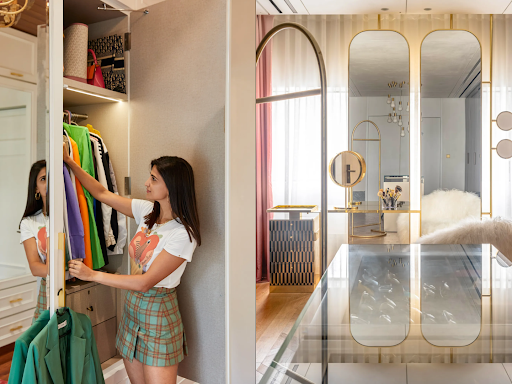
Psychologists call it the “ideal self”—an imagined version of us that tries to solve present friction by dressing it. Stressful job? We pin calming linen palettes. Tiny apartment? We dream of big-shouldered coats that announce room.
Quiet luxury, coquette softness, downtown edge—each aesthetic is a postcard from the life we want. Yet 23% of garments in UK wardrobes have not been worn for at least a year. The dopamine rush of scrolling lasts seconds; the unmet promise stays on the hanger.
Reality Check: Jobs, Cities, Bodies, Budgets
Real life edits ruthlessly. Office key-cards, stroller handles, humid subway platforms, bodies that change faster than trends, rent due on the first.
Stylists see the same gap: dream closets fill with stilettos; commutes demand sneakers that won’t scuff on subway steps. UK homes currently store about 1.6 billion unworn clothing items.
The goal isn’t to downgrade the dream; it’s to translate it—so dress code, climate, and budget join the mood board, not fight it.
Behind the Curtain: Margin & Search Bias
Byron Chen, Marketing Manager at Dear-Lover, a global women’s fashion wholesaler, notes, “One big invisible force is margin. If two dresses fit the ‘clean girl’ brief, the one with a slightly better landed margin is much more likely to be pushed in ads and featured spots.”
Algorithms don’t fetishise profit—they reward whatever can afford to be seen. Forty-two percent of fashion-e-commerce clicks in 2025 go to high-margin items.
“The second is how easy a piece is to describe and tag. A black satin slip dress will outrank a sculptural draped top because the keywords are obvious,” Chen added.
Simple, highly taggable items are three times more likely to rank first-page on marketplaces.
Boutiques work inside these filters. Many indie shops trial new aesthetics by ordering just five open-pack units from Dear-Lover; only the pieces that earn likes and sell-through graduate to a full rack.
What lands in your feed has already survived an invisible audition shaped by profit maths and keyword hygiene.
Translating a Mood Board into a Functional Formula
Write three to five words for your dream aesthetic—e.g., soft, tailored, grounded.
Write three to five for your real life—e.g., commute, humid, budget-conscious.
Circle the overlap; that Venn is your design constraint.
List the roles your clothes need to play (desk, childcare, travel). If an item can’t cover at least two roles, it’s serving the algorithm more than you.
Search the mood, not the micro-trend: “long wool belted coat black” retrieves wider options than “mob-wife coat.”
Digitising the Closet: Seeing the Gaps, Not Just the Clothes
Most of us know the shock of rediscovering a crumpled silk shirt we “could’ve sworn” we donated months ago. Digital-closet apps—Stylebook, Whering, Acloset, even humble Google Photos folders—turn that amnesia into data.
Spend a Sunday photographing every garment (imperfect lighting is fine).
Once the rail lives on your phone, sort by colour, season, cost-per-wear, or last-worn date. Patterns jump out fast: five nearly identical black knits; zero smart jackets that fit post-pandemic shoulders.
Instead of the guilt-ridden purge, start with a “why haven’t I worn this?” filter. Maybe the colour clashes with your commuter coat; maybe the trousers need a 2-cm hem. Small fixes—dye bath, tailor visit—often unlock “new” outfits without a single purchase.
And when you do shop, upload the screenshot first. If that cocoa-brown skirt doesn’t harmonise with at least three tops already logged, the algorithmic cart can wait.
Digital inventory also pairs beautifully with resale platforms: the photo, measurements, and condition notes are already done, trimming the friction of listing unworn pieces.
In essence, the virtual rail shifts the fantasy from owning more things to owning clearer insight.
Slow, Practical Wardrobe Pivots
Start with one micro-area—work trousers, outerwear, or shoes. Build a cinematic uniform: wide-leg trousers + soft knit + flat slingbacks echo quiet luxury without costume-change anxiety.
Test new vibes through rentals or second-hand; resale now makes up 28% of the average wardrobe.
Many boutiques source size-inclusive, layer-friendly basics through Dear-Lover’s open-pack model before betting big—so those pieces already prove they can survive Mondays.
Climate-Smart Fabrics: Dressing for Forecasts, Not Just Feeds
Aesthetics thrive on backdrop: a crisp trench against drizzly streets, a gauzy sundress in Sicilian light. But weather volatility is rewriting those backdrops faster than trends. The World Meteorological Organization logged the eight hottest years on record in the last decade, while sudden cold snaps still puncture spring calendars.
Enter climate-smart fabrics—merino blends, Tencel, phase-change cottons—that regulate temperature across a broader band.
A lightweight merino tee insulates on a frigid platform yet wicks moisture when the subway heats up; a Tencel-linen trouser drapes like vacationwear but air-dries overnight in humid bathrooms.
Think of them as technical neutrals: unfussy shapes you can style into quiet-luxury minimalism or downtown grunge, depending on layers.
Bonus: Their longevity counters algorithm churn; merino keeps its bounce for years, reducing replacement cycles.
Before clicking “buy,” pull up a 10-day forecast and ask: Can this piece handle both the highest and lowest temps listed? If the answer is yes, you’re investing in Monday-morning viability, not just Pinterest harmony.
Closing: An Evolving Collaboration
Your dream closet isn’t a shoppable grid; it’s an ongoing duet between mood, body, time, and the unseen economics of fashion. Knowing that algorithms and wholesale maths shape the options lets you scroll—and shop—like a curator, not a passenger.
Tomorrow’s 7:45 a.m. mirror might still be fluorescent, but the outfit meeting it could feel just cinematic enough.
HOW DO YOU FEEL ABOUT FASHION?
COMMENT OR TAKE OUR PAGE READER SURVEY
Featured




MKDT Studio’s Autumn–Winter 2026 collection, Sequence in Light, translates everyday life in Copenhagen into softly structured, long-lasting garments designed for real women—prioritizing movement, longevity, and quiet confidence over spectacle.