
The Rise of Adaptive Clothing: How Brands Are Redesigning Uniforms
PAGE
By PAGE Editor
For decades, mainstream fashion quietly overlooked an entire population: people with mobility challenges, sensory sensitivities, medical needs, or disabilities that made everyday dressing; something most take for granted, much harder than it needed to be.
Buttons, zippers, stiff seams, tight waistbands, scratchy tags, narrow necklines, and unforgiving silhouettes created friction in moments that should feel simple, dignified, and personal.
Today, that landscape is changing. We’re witnessing the rise of adaptive clothing; a movement reshaping not just specialty garments, but everyday apparel, loungewear, workwear, and yes, even school uniforms. What was once a niche category is now a global conversation around accessibility, dignity, ease, and freedom.
And brands across the fashion spectrum are finally listening.
What “Adaptive Clothing” Really Means
Adaptive clothing goes far beyond Velcro and elastic.
Common features include:
Magnetic buttons for single-handed dressing
Side or back openings for wheelchair users or those with mobility aids
Flat seams + tagless labels for sensory-sensitive individuals
Flexible waistbands to accommodate prosthetics or braces
Longer hems and higher rises designed for seated wear
Hidden abdominal access for medical ports, feeding tubes, or catheters
Easy-on shoes with wide openings or zipper backs
The goal is simple:
Clothing that supports the body you actually have, not the one a pattern was designed for.
Why Adaptive Uniforms Matter
The shift is being driven by three major cultural forces.
1. Acknowledgment of diverse bodies and needs
More families, educators, workplaces, and caregivers are vocalizing that traditional clothing often does not work for everyone; and this shift has seen the rise of adaptive clothing for success.
Children with sensory sensitivities struggle with harsh seams. Adults with limited mobility may need one-handed closures. People who use wheelchairs benefit from higher back rises, longer hems, or side-opening trousers
Clothes shouldn’t create barriers. Adaptive design makes sure they don’t.
2. The push for independence and dignity
Adaptive features like magnetic closures, elastic waists, side openings, hidden zippers, or tagless seams allow individuals, especially children, seniors, and those with reduced dexterity, to dress independently. Small features can change someone’s whole day.
3. Comfort and function are now fashion priorities
Thanks to the athleisure movement and a global shift toward comfort-first dressing, adaptive garments fit perfectly into what the modern consumer already expects:
soft, breathable fabrics
flexible silhouettes
movement-friendly construction
gender-neutral palettes
The difference is that adaptive pieces go further, ensuring these benefits apply to every body.
Brands Leading the Adaptive Movement
Adaptive fashion is no longer limited to medical-wear companies. Mainstream brands are stepping up, and that has changed the conversation.
Tommy Hilfiger adaptive
A pioneer in mainstream adaptive fashion, Tommy Hilfiger’s line includes magnetic closures, wheelchair-friendly cuts, and seated-wear designs that look indistinguishable from regular clothing. This move helped normalize adaptive clothing as everyday fashion, not “special needs wear.
Target’s cat & Jack adaptive line
Affordable, cheerful, colorful, and widely accessible. Target played a huge role in making sensory-friendly, easy-dressing kids’ clothes available to the majority of American families.
Zappos adaptive
Not a clothing brand, but a marketplace champion.
Zappos Adaptive curates accessible clothing and footwear across brands, making adaptive shopping centralized and easier.
Nike flyEase
Slip-on, hands-free sneakers designed to support athletes and everyday users who need an easier way to get shoes on. These are worn by everyone, which is the whole point.
Specialty adaptive brands
Smaller brands like Hatchbacks, BILLY Footwear, Mada, and MagnaReady have become innovators in areas like inclusive footwear, magnetic closures, and seated-wear engineering.
They set the trends that big brands are now learning from.
So Where School Uniforms Fit into the Adaptive Conversation
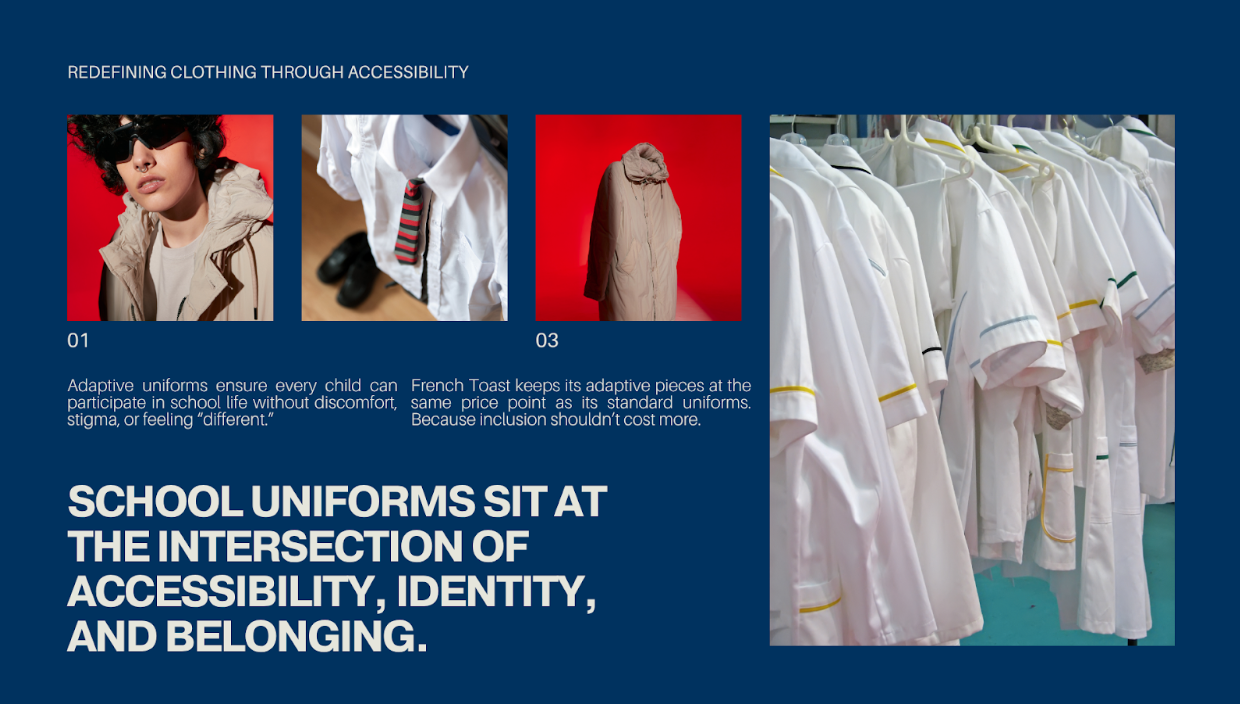
School uniforms deserve a dedicated moment here because they sit at the intersection of accessibility, identity, and belonging.
Children with mobility challenges or sensory sensitivities often feel excluded when standardized uniforms don’t accommodate their needs. Adaptive uniforms allow them to participate fully in school life without discomfort or stigma.
French Toast (Adaptive School Uniforms)
French Toast, one of the leading premium school-uniform brands, has taken a thoughtful, research-driven approach to adaptive design. While the brand is well-known for classroom essentials like French Toast’s boys white button down shirt, their adaptive collection goes a step further by redesigning everyday schoolwear for comfort, accessibility, and independence.
Their adaptive line includes:
Velcro closures instead of buttons
LiftLoops™ to assist pulling garments on
Soft, flat seams
Tagless construction
Higher back rises for wheelchair users
Sensory-friendly fabrics
Uniform silhouettes that match regular collections
This ensures kids who need adaptive features still look and feel like part of the school community; a core emotional benefit for students.
Notably, French Toast also kept adaptive pieces at the same price point as standard uniforms, reinforcing that inclusion shouldn’t cost more.
Why Adaptive Clothing Feels Like the Future of Fashion
Adaptive clothing is more than a category; it’s a philosophy that aligns with modern values.
1. It challenges outdated fashion norms
For too long, fashion assumed all bodies have the same needs. Adaptive clothing expands the definition of “normal.”
2. It encourages independence across ages
From toddlers learning to dress themselves to seniors with arthritis; adaptive design restores autonomy.
3. It promotes dignity
Everyone deserves clothing that feels good, fits well, and supports their lifestyle without compromise.
4. It benefits everyone, not just people with disabilities
Tagless seams, stretch fabrics, magnetic closures and elastic waists are good for all bodies, all ages. Adaptive design is universal design.
The Next Frontier of Adaptive Fashion
We’re still early in this movement, but momentum is strong. Expect to see:
More mainstream brands adding adaptive lines
Stylish adaptive collections that don’t prioritize function over fashion
Increased availability in international markets
Adaptive workwear for adults
Inclusive collections in luxury fashion
Adaptive athleisure and performance gear
Smart textiles integrated with medical needs
Broader acceptance in schools, workplaces, and public institutions
Adaptive clothing isn’t a trend. It’s a long-overdue shift toward acknowledging that bodies come in many forms, and fashion should too.
Clothing Shouldn’t Be a Barrier! It Should Be Support
The rise of adaptive clothing marks a deeper cultural shift toward empathy, inclusivity, and thoughtful design. It reflects a world where we recognize that everyone deserves clothing that works for them, not against them.
Brands like Tommy Hilfiger Adaptive, Target Adaptive, and French Toast’s adaptive school uniforms are helping lead this evolution, but the movement is bigger than any single label.
It’s about rewriting fashion norms so that dressing is easier, more comfortable, more dignified, and more human.
And as adaptive clothing becomes mainstream, the hope is simple:
More independence.
More comfort.
More inclusion.
More belonging, through something as everyday and universal as getting dressed.
HOW DO YOU FEEL ABOUT FASHION?
COMMENT OR TAKE OUR PAGE READER SURVEY
Featured





For decades, luxury in the automotive world was defined by materials, craftsmanship and engineering excellence.