
BOY LONDON America At 50: ‘Guillotine’ Cuts Through NYFW With A Study In Authority And Rebellion
PAGE
By PAGE Editor
On Friday night at St. Paul’s German Evangelical Lutheran Church, BOY LONDON America marked its 50th anniversary with a Fall/Winter 2026 runway show that felt less like nostalgia and more like reckoning. Titled Guillotine, the collection arrived with a charged epigraph—“The blade arrives when silence is no longer possible”—a quote attributed to Camille Desmoulins—and unfolded as a meditation on authority, resistance and renewal.
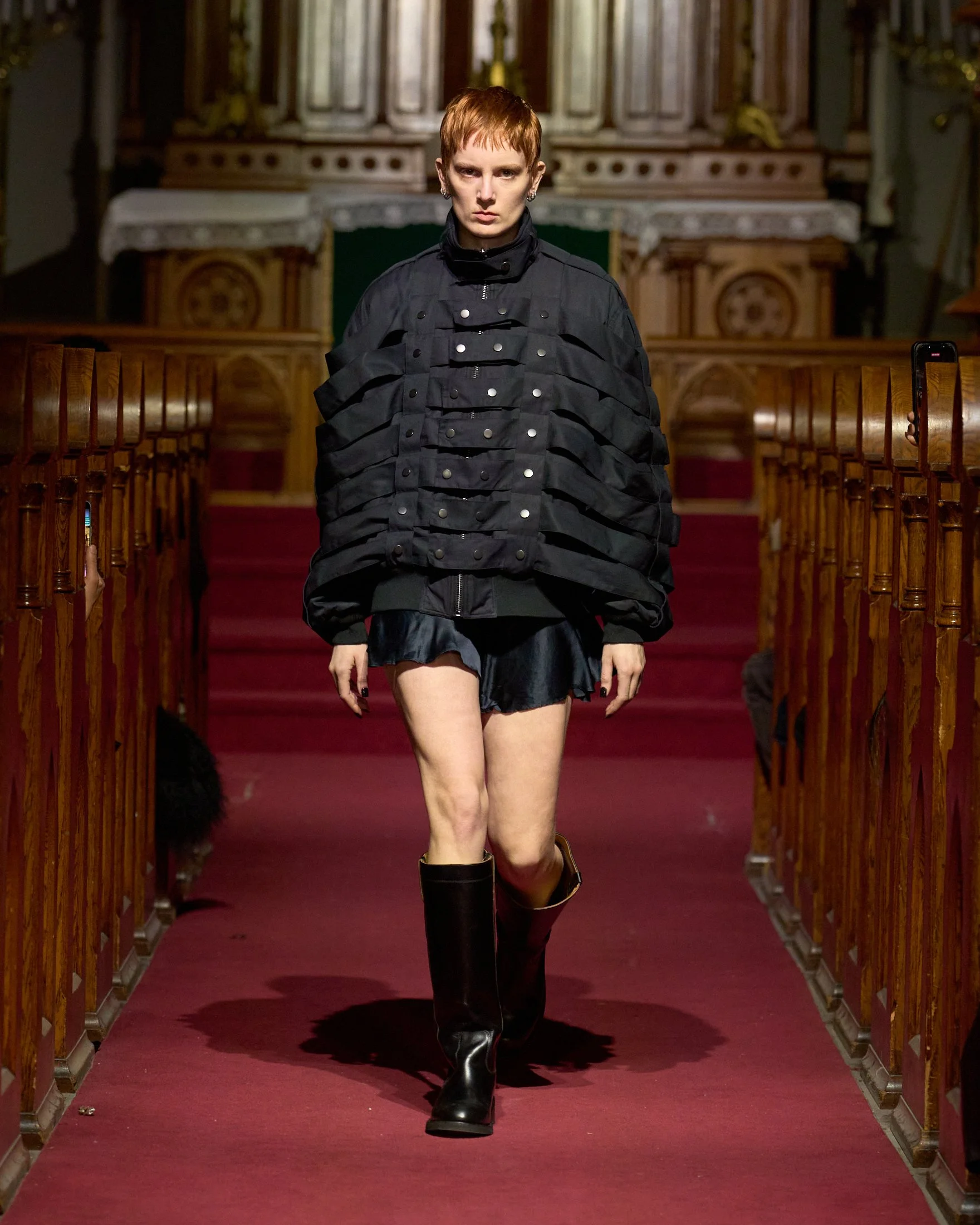
Staged during New York Fashion Week, the show transformed ecclesiastical stillness into a site of confrontation. Under the direction of Creative Director Can Tran, the brand’s punk lineage was neither diluted nor dramatized for effect. Instead, it was refined—disciplined through tailoring, sharpened through construction, and elevated through a modern formalism that balanced deconstruction with precision.
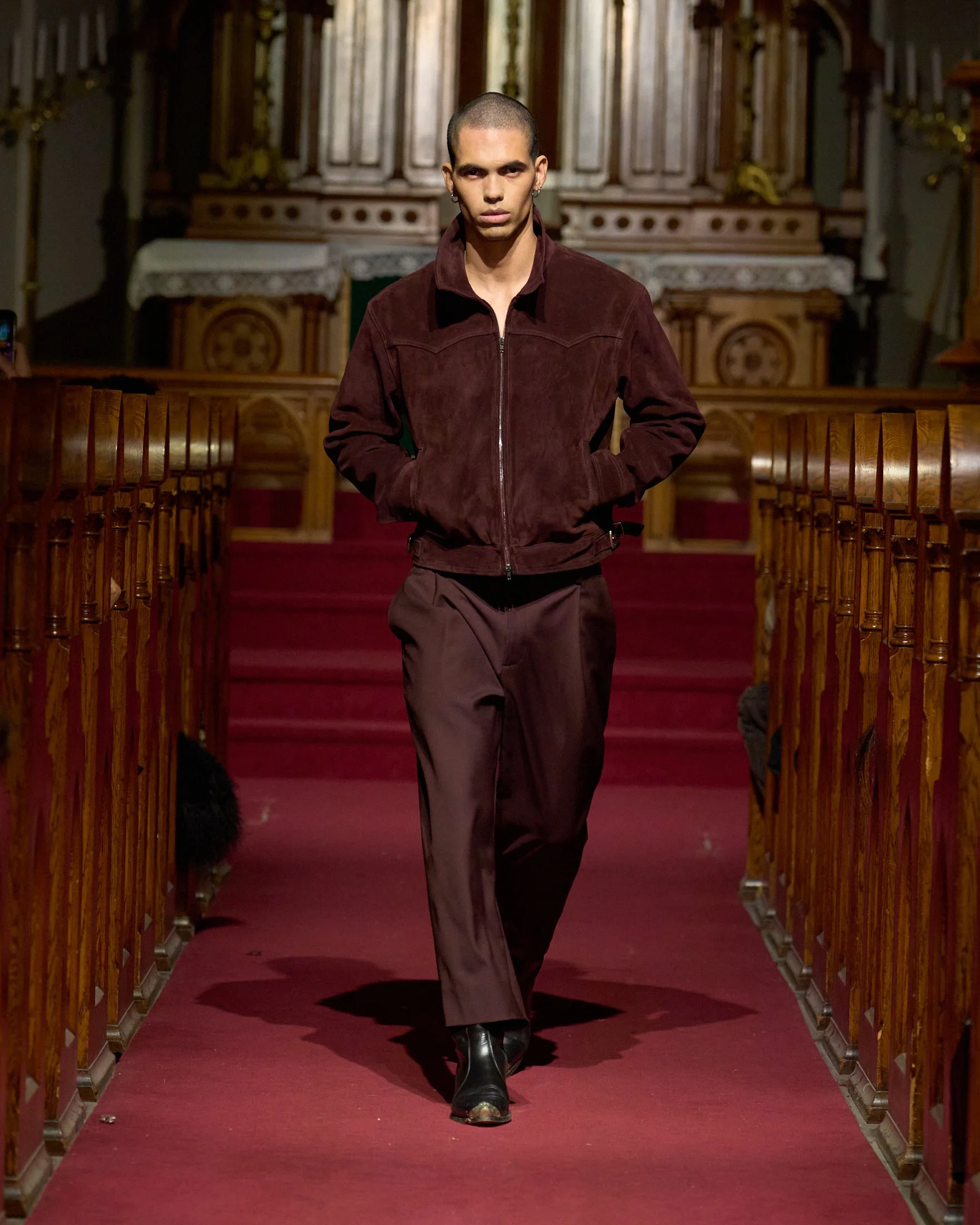
The premise was simple but pointed: what happens when rebellion grows up? BOY LONDON America answered by revisiting archival insignias and reworking them with restraint. Medieval references surfaced in elongated silhouettes and harnessed structures, while classic menswear codes—lapels, suiting lines, structured shoulders—were recalibrated with graphic tension and unexpected closures. Punk, here, was not chaos. It was architecture.
Womenswear, led by Donna Kang, proposed a dress-driven silhouette that felt ceremonial yet insurgent—elongated forms that skimmed the body, cinched by hardware or interrupted by engineered cutouts. Menswear, under Shaun Samson, leaned into disciplined tailoring softened by jersey and structured separates that suggested armor for a cultural battlefield. Across both, there was a sense of historical layering: a future cut from history, rather than severed from it.

The casting reinforced the brand’s dialogue between sport, culture and spectacle. Athletes including Jarrian Jones, Jarvis Brownlee Jr., Joshua Kaindoh and Miles Sanders walked alongside figures such as Amanda Lepore and Skaiwater—a lineup that underscored BOY LONDON America’s continued fluency in cultural crossover. This was less about front-row celebrity optics and more about constructing a cast that embodied physicality, defiance and subversion.
Production and styling operated with clarity rather than excess. Stylists Peri Rosenzweig, Alicia Rodriguez Aparicio, Karen Gonzales and Nick Cohen allowed the garments to carry narrative weight. Hair by Gary Baker for UNITE and makeup by Marieke Thibaut for MAC Cosmetics maintained a polished austerity, echoing the collection’s thesis: rebellion is most potent when controlled.
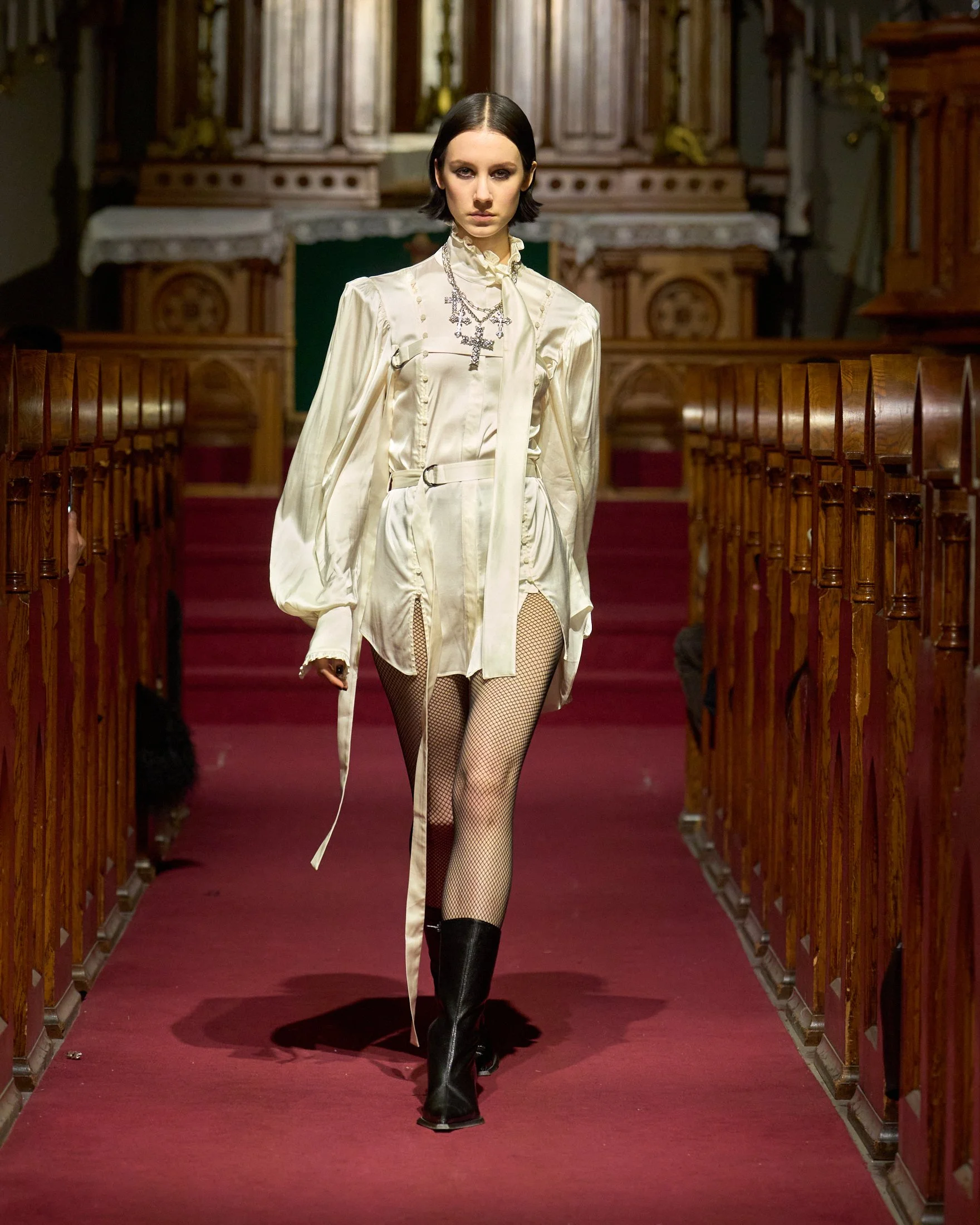
If early BOY LONDON was synonymous with loud graphics and anti-establishment provocation, Guillotine suggests a brand entering its second half-century with sharper intent. The tension between authority and dissent remains, but it is articulated through proportion, fabrication and form rather than slogan alone.
In a fashion cycle often preoccupied with immediacy, BOY LONDON America’s Fall/Winter 2026 offering stood out for its historical consciousness. It did not reject the past; it re-edited it. Fifty years in, the blade was not destructive—it was decisive.
See full runway:
HOW DO YOU FEEL ABOUT FASHION?
COMMENT OR TAKE OUR PAGE READER SURVEY
Featured



Water offers enjoyment, relaxation, and physical activities for people.