
Gucci’s AI Backlash Signals A Deeper Trust Crisis In Advertising
PAGE
By PAGE Editor
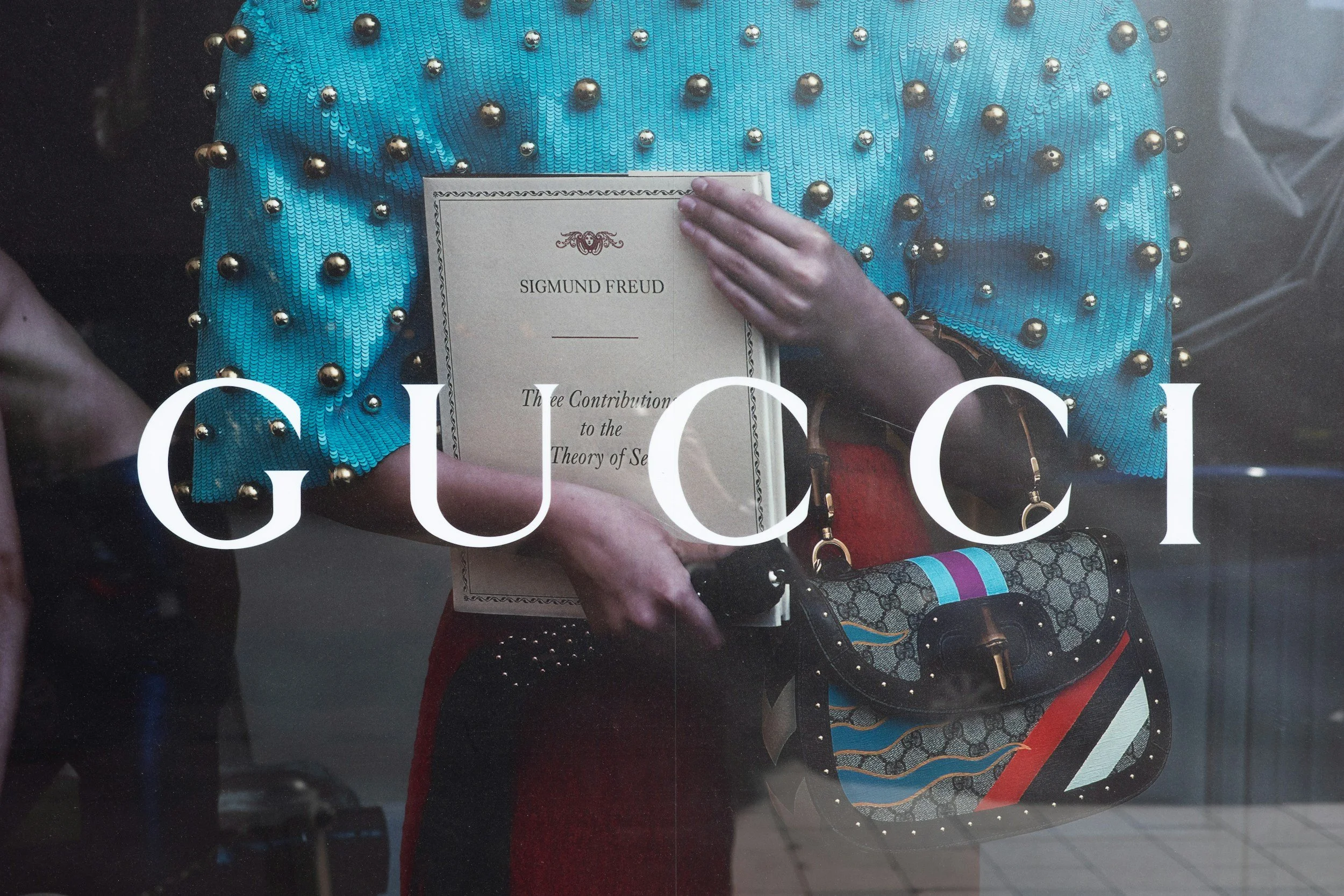
When Gucci posts a campaign, the industry pays attention. When that campaign is labeled “AI slop” across its own Instagram comments, the conversation shifts from aesthetics to accountability.
On February 25, 2026, Gucci unveiled a new AI-generated advertising series that was intended, presumably, to signal innovation. Instead, it triggered heavy online criticism for feeling impersonal, overproduced and detached from the craft heritage that has long defined the Florentine house. The backlash is not an isolated cultural flare-up. It is a datapoint in what is quickly becoming a structural trust crisis in advertising.
According to new research from the Interactive Advertising Bureau (IAB), 82% of advertising executives believe Gen Z feels positive about AI-generated ads. The reality tells a different story: only 45% of Gen Z respondents report positive sentiment. Even more striking, 39% say they feel negatively about AI-created advertising, one in three describe it as inauthentic, and one in four consider such usage unethical.
The delta between executive perception and consumer reality is not marginal. It is systemic.

The Authenticity Gap
For an industry built on persuasion, misreading audience psychology is a costly mistake. Luxury, in particular, trades on narrative, craftsmanship and cultural credibility. When a brand like Gucci leans heavily into synthetic imagery without visibly anchoring it in human creativity, the dissonance is amplified.
Donatas Smailys, CEO of Billo App, a creator marketing platform, frames the issue in economic terms. “AI-generated content will soon be so easy to make and cost so little that anyone will be able to produce it. That means a flood of slop, which we’re already seeing,” he says.
In other words, as production barriers collapse, scarcity shifts. It is no longer the ability to generate images that differentiates a brand. It is the visible investment of human intent.
Smailys warns that brands overly dependent on AI visuals risk long-term reputational damage if they fail to rebalance toward human-led storytelling. Social platforms are also under pressure to introduce clearer labeling standards for synthetic content, particularly when AI is used to simulate real people to cut costs. In the United States, mandatory disclosure requirements increasingly feel less like speculation and more like inevitability.
If and when such labeling becomes standard, AI-heavy campaigns may carry a reputational asterisk by default.
A Post-Visual-Certainty Era
The distrust is not confined to Gen Z. Older audiences express discomfort with AI in advertising as well, though with significantly lower confidence in their ability to identify it. Only 13% of consumers aged 56–75 say they can reliably detect AI-generated ads, increasing their vulnerability to synthetic creative.
This dynamic introduces a deeper ethical tension. Research published in the journal Cyberpsychology, Behavior, and Social Networking suggests we are entering what media psychologists call a “post-visual-certainty” era. For decades, photography and video functioned as digital proof. Seeing was believing. Now, realism no longer guarantees authenticity.
In such an environment, brands face a paradox. AI can deliver short-term engagement spikes and cost efficiencies. But the more seamless the illusion becomes, the more fragile trust becomes.
We are not simply debating tools. We are renegotiating the social contract between brands and audiences.
The Return Of The Human Signal
Interestingly, the market is already self-correcting. Platforms are seeing renewed appetite for visibly human content—unedited formats, raw testimonials, even intentionally “ugly ads.” What once might have been dismissed as low production value now reads as proof of effort.
Billo App reports a threefold increase in Gen Z creators on its platform over the past year. The data suggests that young audiences are not rejecting technology per se. They are rejecting what feels effortless, generic or manipulative.

In a marketplace flooded with AI-generated polish, imperfection becomes premium.
For legacy luxury houses, the implications are profound. Brands like Gucci have historically commanded value through craftsmanship, ateliers and the mythology of the maker. When automation replaces artisanship—visibly or symbolically—the emotional equation changes.
The question is no longer whether brands will use AI. They will. The competitive advantage lies in how they integrate it without eroding human resonance.
As Smailys puts it: “The future challenge for brands is not whether to use AI, but how to use it without sacrificing authenticity. Consumers are already interpreting overreliance on AI as a lack of effort.”
For now, Gucci’s backlash may fade from trending feeds. But the underlying signal will remain. In an era where synthetic content is infinite, authenticity becomes finite. And in advertising, scarcity is still what commands value.
HOW DO YOU FEEL ABOUT FASHION?
COMMENT OR TAKE OUR PAGE READER SURVEY
Featured




At an intimate premiere at Metrograph, Saucony unveiled The Runners, a contemplative short film that deepens its “Run as One” platform by positioning connection—not competition—as the future of running culture.