
The Vending Machine Location Blueprint: Where to Place for Maximum Profit

PAGE
By PAGE Editor
The vending machine business has long been seen as a simple route to passive income. Yet, many entrepreneurs find their machines idling, gathering dust instead of dollars. The difference between a profitable venture and a costly hobby isn't the machine, the products, or even the price-it’s the location.
This article is your blueprint for strategic placement. We’re moving Beyond the Breakroom to embrace a data-driven approach that establishes site selection as the single most critical factor in your vending machine’s profitability and long-term success.
The 80/20 Rule of Vending: Location Dictates Success
In the vending machine business, the Pareto principle holds true: 80% of your revenue optimization will come from just 20% of your locations. A machine placed in a suboptimal spot, even with the best snacks, will always underperform one placed strategically, even with standard offerings.
Our goal is to shift your mindset from hopeful placement to strategic placement. The right location acts as a constant, high-volume sales representative, working 24/7. This focused location strategy is the key to unlocking maximum profit.
Section 1: The Three Pillars of Prime Placement
A great location is built on three essential, measurable factors that guarantee a high probability of sales.
1. Traffic Volume (The Exposure)
You need sheer numbers. A minimum daily foot traffic requirement of 100+ people is often cited as the baseline for a traditional location. However, for true high traffic areas, you should aim for significantly more. Traffic must be consistent, seven days a week, not just during standard business hours.
2. Dwell Time (The Opportunity)
People must be stationary long enough to consider a purchase. Impulse buying requires a moment of idleness. Excellent dwell time spots include:
Car washes or repair shop waiting areas.
Laundromats.
Hospital or large corporate building lobbies.
Bus terminals or train stations.
3. Need State (The Psychology)
This is the secret sauce for successful vending machine placement. You must match the product to the consumer’s immediate, specific need.
Gyms/Fitness Centers: Cold water, protein shakes, or electrolyte drinks.
Late-night venues: Coffee, energy shots, or quick sandwiches.
Hotels/AirBnB Lobbies: Toiletries, charging cables, or pain relievers.
Section 2: High-Profit, Low-Competition Niche Locations
Moving past traditional, saturated office breakrooms is essential for achieving exceptional returns. When planning where can you put vending machines, focus on these non-obvious, high-potential spots:
Specialty Manufacturing Plants: These sites often have hundreds of workers with mandatory break times and limited food options on-site. The high worker density and lack of convenient external alternatives create captive, motivated customers.
Auto Dealerships and Repair Shops: Customers often face wait times exceeding two hours. A machine selling drinks, simple snacks, and maybe even phone accessories can be a huge convenience factor, generating high sales per customer.
College Dormitories/Student Unions: A massive need for late-night food and drinks. Students are a highly motivated demographic for convenience purchases after the cafeteria closes.
Modern Tech Office Complexes/Co-working Spaces: While traditional offices are saturated, modern complexes prioritize convenience and amenities. Vending specialty items, like fresh food or artisanal coffee, can cater to this high-income demographic.
Short-term Rental/AirBnB Lobbies: A machine dispensing travel essentials, from charging adapters to earplugs, meets immediate, unpredicted needs, resulting in high margins.
Section 3: The Art of the Pitch and Partnership
Site selection isn't just about finding the location, it's about securing it. Treat your proposal like a professional business partnership.
Securing Exclusive Rights
The Professional Pitch: Always approach a location owner with a neat, printed proposal. Detail your maintenance schedule, insurance liability, and the machine's aesthetics. Highlight how your machine will be a free amenity for their staff or customers.
The Profit-Sharing Model: Instead of a flat fee, offer a percentage of gross sales (e.g., 10-20%). This aligns your incentive with theirs. They profit when you profit, making the deal mutually beneficial.
Negotiating Exclusivity: Always negotiate for exclusive placement rights. This protects you from a competitor undercutting your prices or diluting the sales pool. Emphasize that your professional, well-maintained machine is all they need.
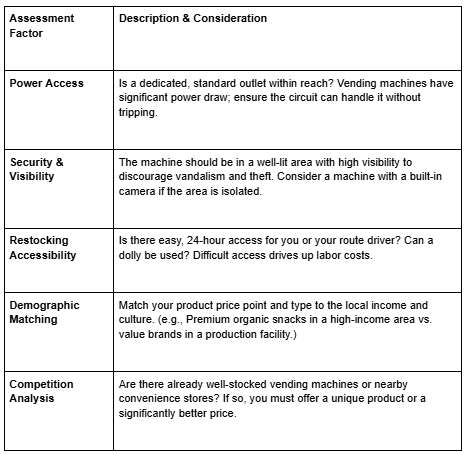
Section 4: Site Assessment Checklist (A Step-by-Step Guide)
Before signing any agreement, conduct a meticulous physical and demographic survey of the area.
Conclusion: Scaling Your Vending Empire
To succeed in the vending machine business, you must treat location selection like a real estate investment. A subpar location is like a vacant property; it consumes resources (machine cost, depreciation, time) without generating income. A prime location is an asset that appreciates your time and effort.
Finally, embrace technology. The role of telemetry-remote, real-time data monitoring-is to confirm that your strategic placement is working. Data on sales velocity, peak times, and popular products allows you to instantly prove and scale a great location model.
By rigorously applying the Three Pillars and seeking out high-potential niches, you will move past hoping for sales to engineering them, ensuring long-term maximum profit and stability for your vending machine business.
HOW DO YOU FEEL ABOUT FASHION?
COMMENT OR TAKE OUR PAGE READER SURVEY
Featured




OpéraSPORT’s Fall/Winter 2026 Venice by Night captures the city’s nocturnal elegance through sculpted tailoring, shimmering satins, and poetic textures, blending nostalgia, modernity, and sustainable craftsmanship in an immersive, cinematic fashion experience.