
Patricio Campillo’s Architectural Approach To Identity At The Standard, High Line
By PAGE Editor
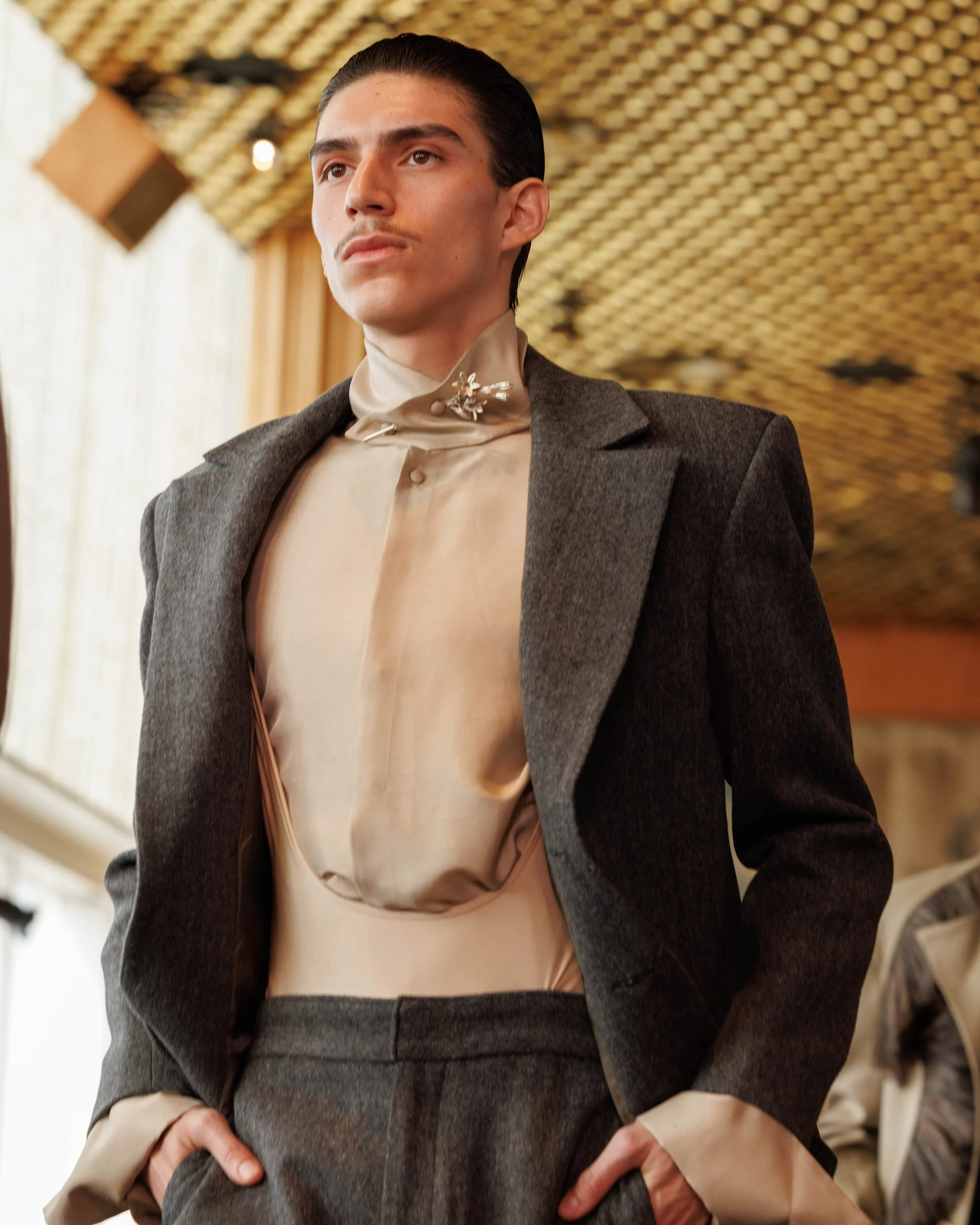
At BOOM inside The Standard, High Line, Mexican designer Patricio Campillo staged a study in self-construction. His Fall/Winter 2026 presentation for CAMPILLO was less about seasonal novelty and more about a philosophical proposition: that clothing is not merely worn, but inhabited—and in many ways, it reorganizes the wearer from the inside out.
For Campillo, garments do not simply adorn the body; they recalibrate it. This season unfolded as a meditation on the dual power of clothing—its ability to reconcile identity with lived reality, and its capacity to physically reshape the body into a projection of aspiration. In an industry often preoccupied with surface, Campillo redirected attention to structure. Construction led; textiles followed.
“The collection suggests that clothing holds a transformative power not only in how it makes us look, but in how it makes us feel,”
Campillo noted.
“Identity becomes something sculpted, rehearsed, discovered, and reaffirmed through the garments we choose.”
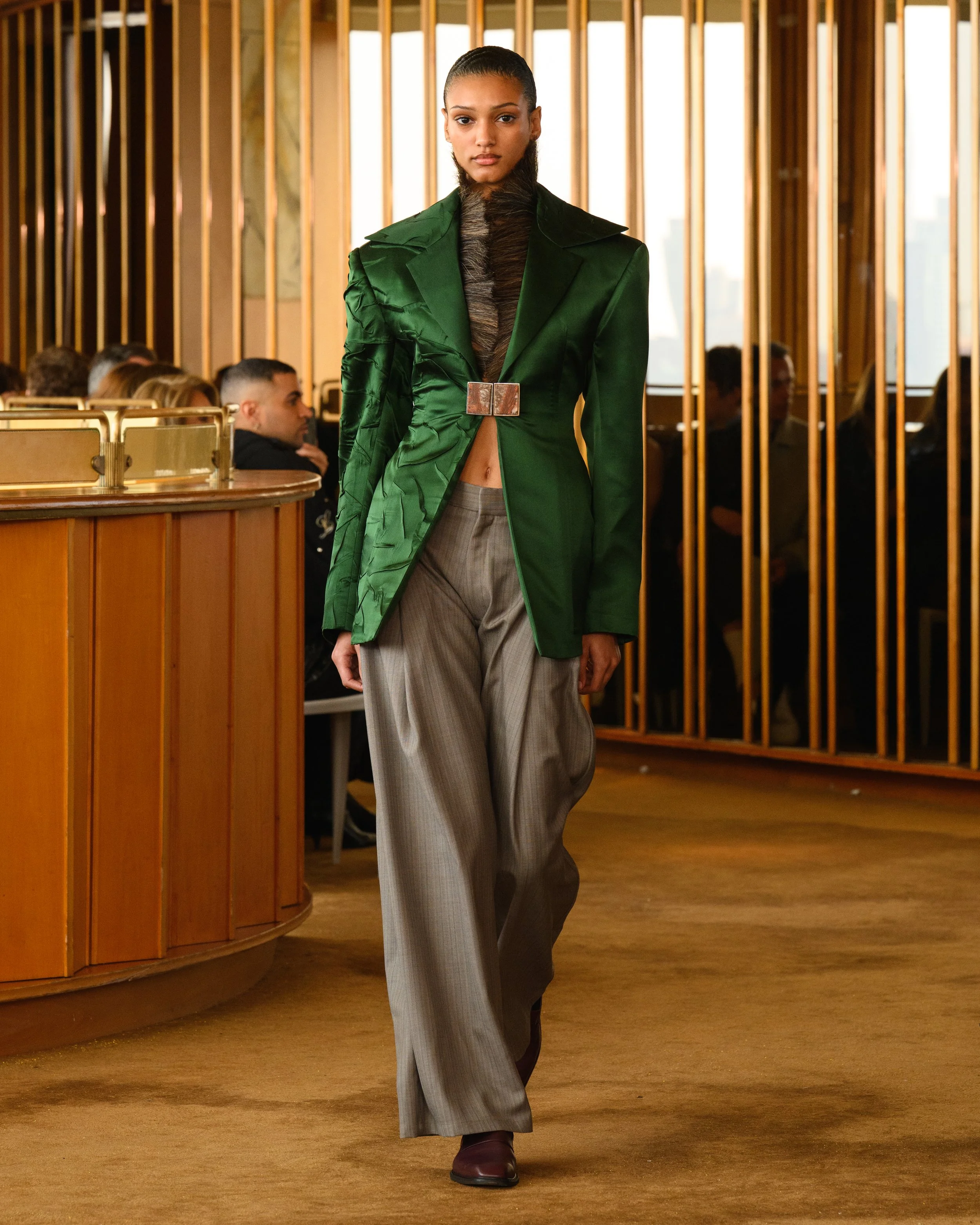
That thesis materialized in tailoring that felt engineered rather than styled. Internal scaffolding dictated posture. Cropped jackets sharpened the torso. Shoulders extended with disciplined authority. Elongated trousers redirected proportion and movement. Jewel-toned silks and rich suede softened the rigor, while horsehair trimmings added both texture and ancestral weight. Charro-inspired silhouettes—filtered through Campillo’s now-signature cropped cuts and architectural lines—transformed heritage into a framework for contemporary self-definition.
The garments appeared to exist independently of their fabric, as if the cloth were merely skin stretched over a deeper structural truth. It’s a subtle but radical shift: identity is not a fixed outer layer, but a negotiated architecture. Clothing, in this context, becomes both rehearsal and revelation.
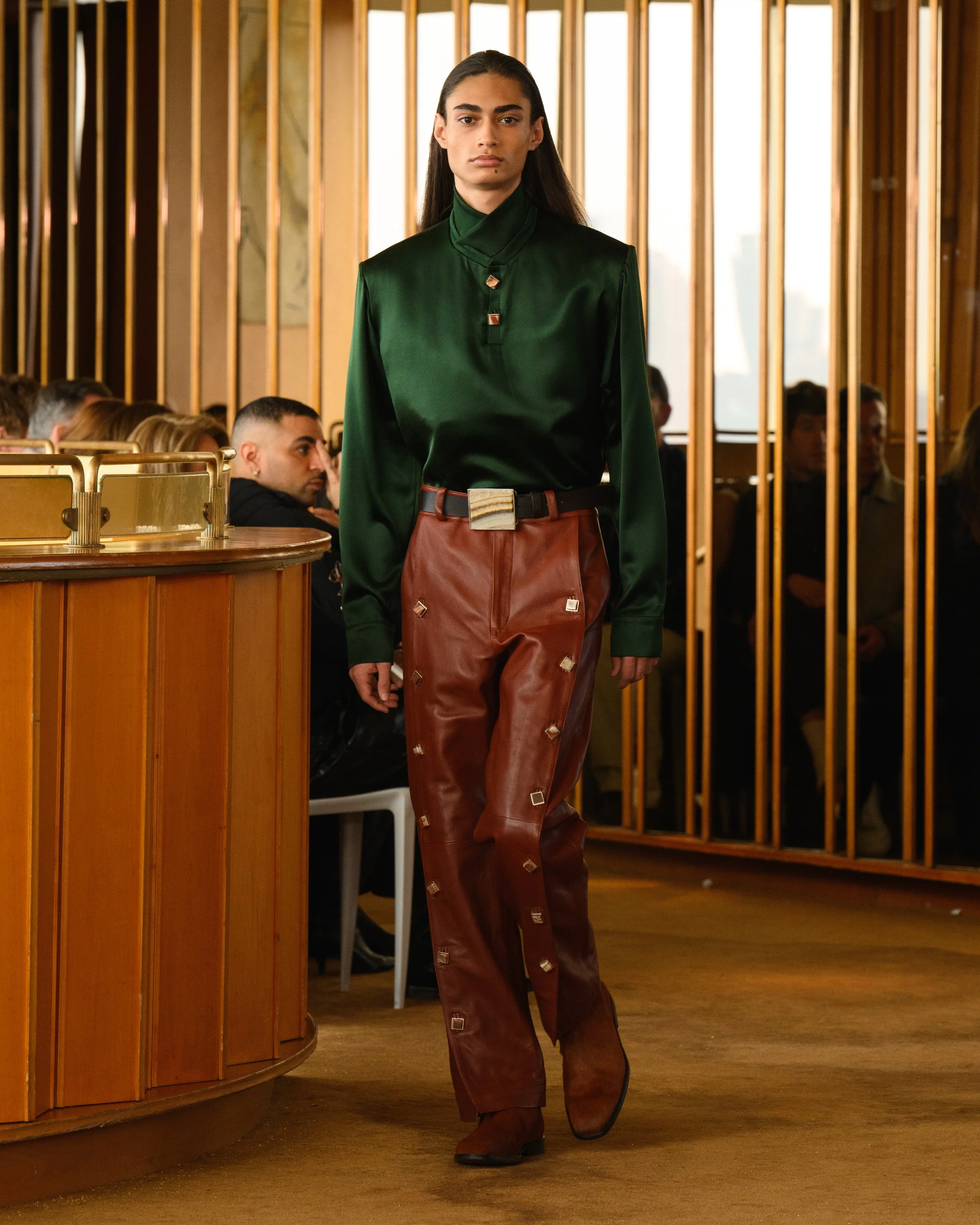
Footwear and accessories further underscored this structural ethos. CAMPILLO renewed its partnership with APICCAPS, collaborating with Mariano Shoes—an 80-year-old Portuguese artisan brand—to produce a capsule of classic boots, leather loafers with artisanal soles, and belts rooted in traditional craft. Bags debuted on the runway were produced with Belcinto, another Portuguese manufacturer known for durable leather goods. Materials across footwear and bags were developed through the BioShoes4all project, aligning innovation with sustainability—an increasingly critical mandate for global luxury supply chains.
Sport entered the narrative through lifestyle adaptations of the Total 90 (T90) football boot provided by Nike, a nod to Campillo’s ongoing dialogue between performance and poise. The juxtaposition felt intentional: sport reshapes the body through discipline; tailoring reshapes it through design.
Even the front row reinforced the theme of identity anchored in heritage. Continuing its relationship with Tequila Don Julio, guests were offered Tequila Don Julio 70 Añejo Cristalino Minis adorned with charms crafted in Mexico using agave fibers. The accessory—created by 86nudos Studio—extended the runway’s philosophy beyond clothing, suggesting that craft itself is a vessel for cultural continuity. Founded on the agricultural principles of Don Julio González in Jalisco’s Los Altos region, the brand has long positioned itself at the intersection of tradition and refinement—values that mirror Campillo’s own.
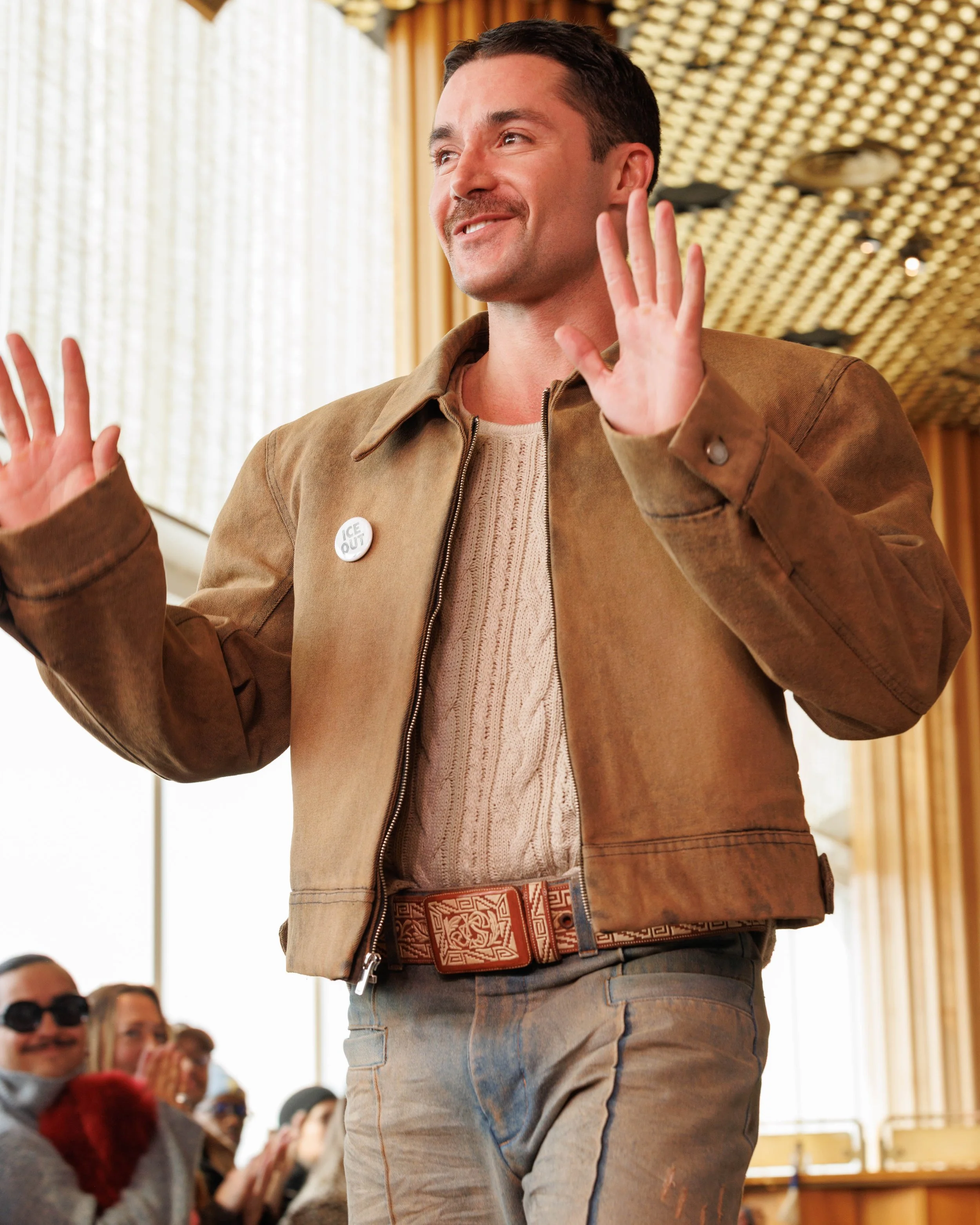
Artisans across Mexico anchored the collection’s material narrative: silversmith Carlos Andrés Sánchez and Sara Pineda shaped buckles and buttons; Christian Rodriguez transformed horsehair using traditional methods; Procemex Denim executed natural dyeing and rusting techniques; and wool fabrics came from San Ildefonso-based artisans Familia Morera. These collaborations underscored a broader point: identity is rarely constructed alone. It is scaffolded by community, heritage, and generational skill.
Founded in Porto in 1975, APICCAPS currently represents an industry exporting approximately 70 million pairs of shoes annually and targeting €600 million in investments by the decade’s end, with a focus on automation, robotics, and sustainability. Within that macroeconomic framework, CAMPILLO’s runway becomes more than aesthetic exercise—it is a case study in how localized craftsmanship and international infrastructure can coexist.
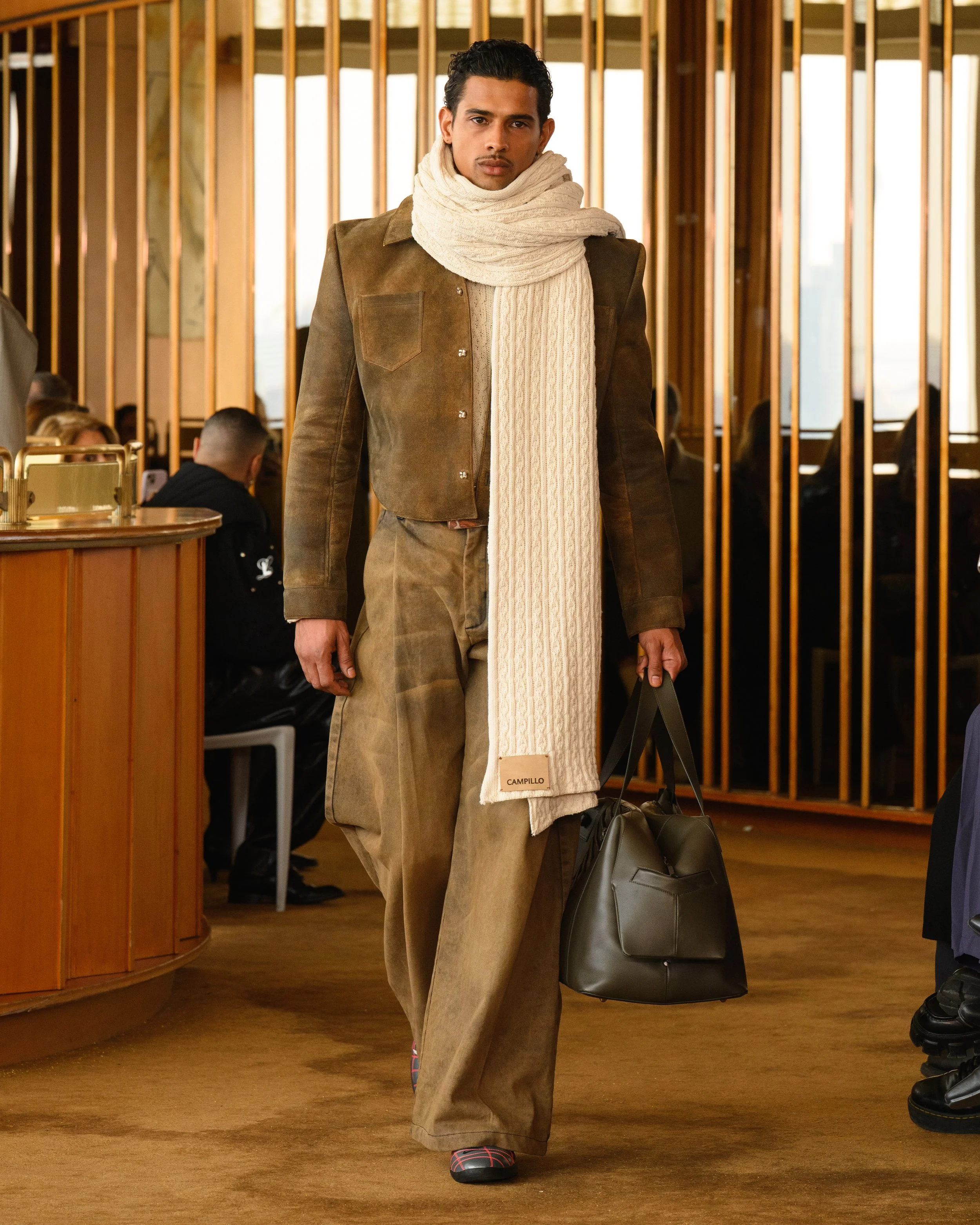
Ultimately, Fall/Winter 2026 proposed that the body is not static matter but evolving presence. Through tailoring, proportion, and engineered restraint, Campillo argued that we do not simply wear clothing—we become through it. In a fashion week crowded with spectacle, CAMPILLO offered something rarer: a reminder that style, at its most potent, is a disciplined act of self-authorship.
See full runway and details:
HOW DO YOU FEEL ABOUT FASHION?
COMMENT OR TAKE OUR PAGE READER SURVEY
Featured




For decades, luxury in the automotive world was defined by materials, craftsmanship and engineering excellence.