
MSCHF’s 20,000 Paper Planes Turn Chinatown’s Newest Cultural Space Into A Living Oracle
By PAGE Editor
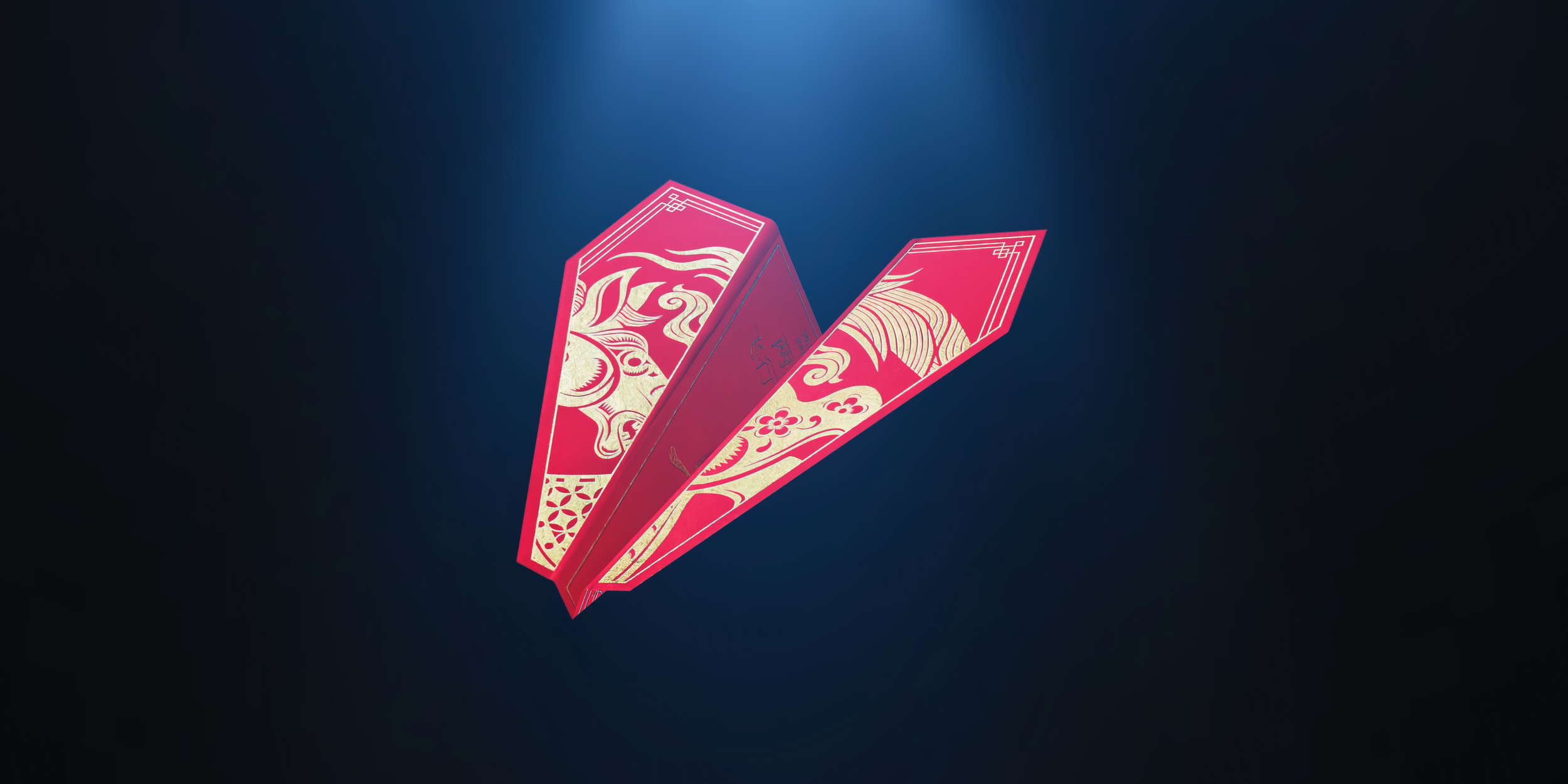
On the eve of Lunar New Year, MSCHF will once again test the elasticity of spectacle—this time trading viral product drops for something more atmospheric, and arguably more intimate. 20,000 Variations On A Paper Plane In Flight, debuting at The Wang Contemporary at 58 Bowery, marks the collective’s first exhibition with the newly opened, mission-driven foundation founded by Ying Wang and Alexander Wang.
PAGE
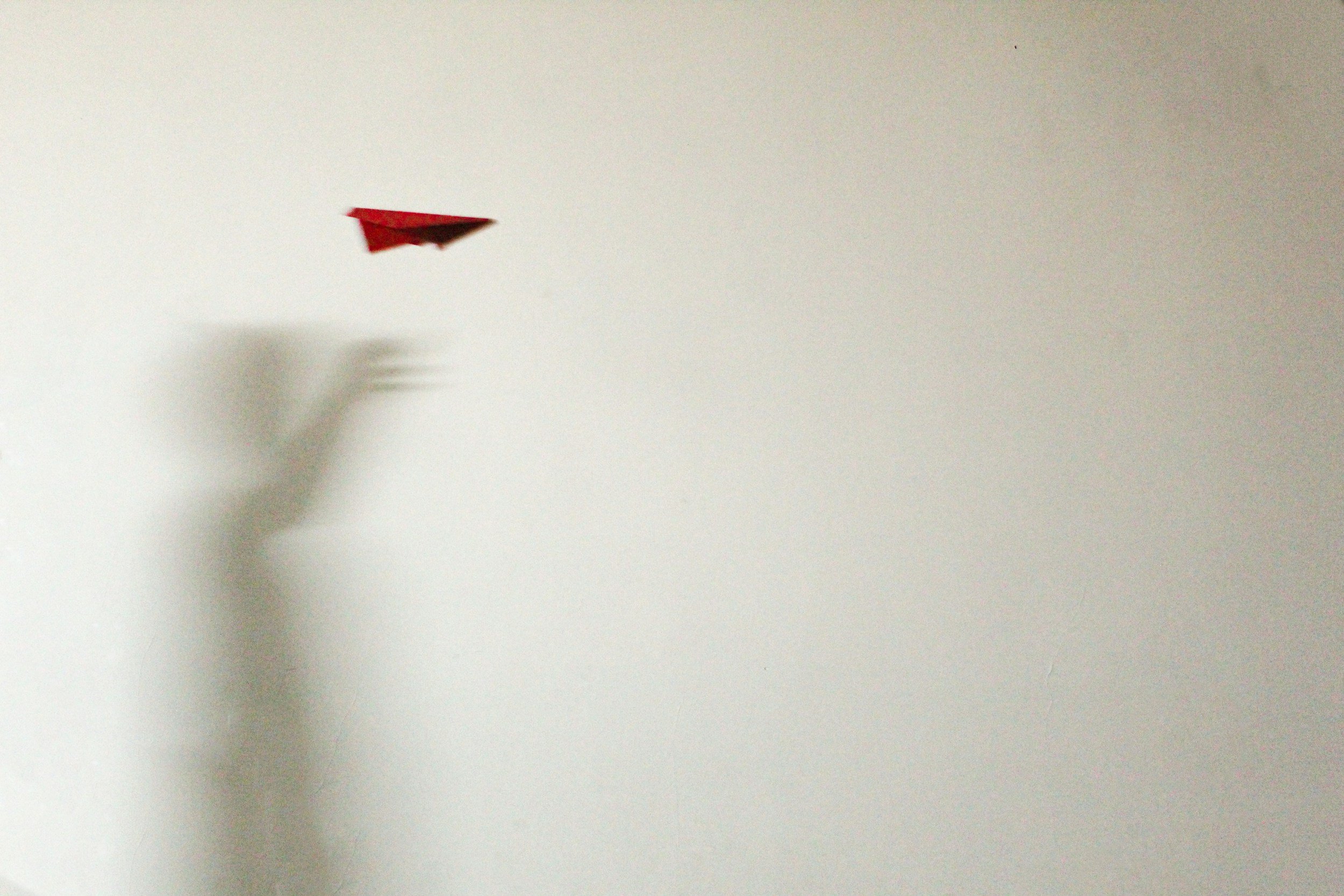
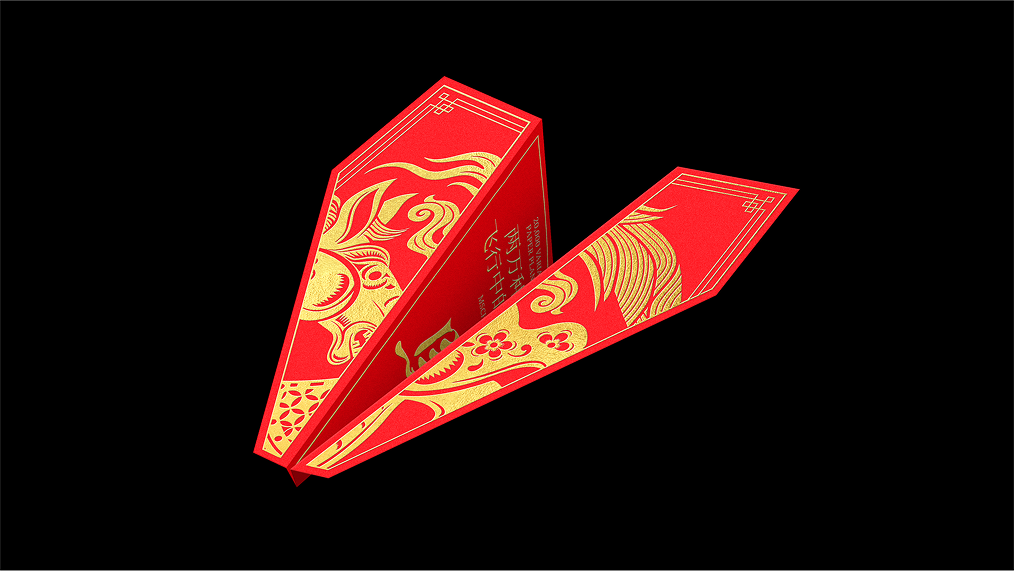
Timed to coincide with Lunar New Year, the three-day durational installation transforms the historic Chinatown building into a rhythmic stage set for anticipation. Once per hour—precisely 36 minutes past—red and gold paper planes descend from the central oculus in a synchronized flock. The action is simple. The meaning, less so.
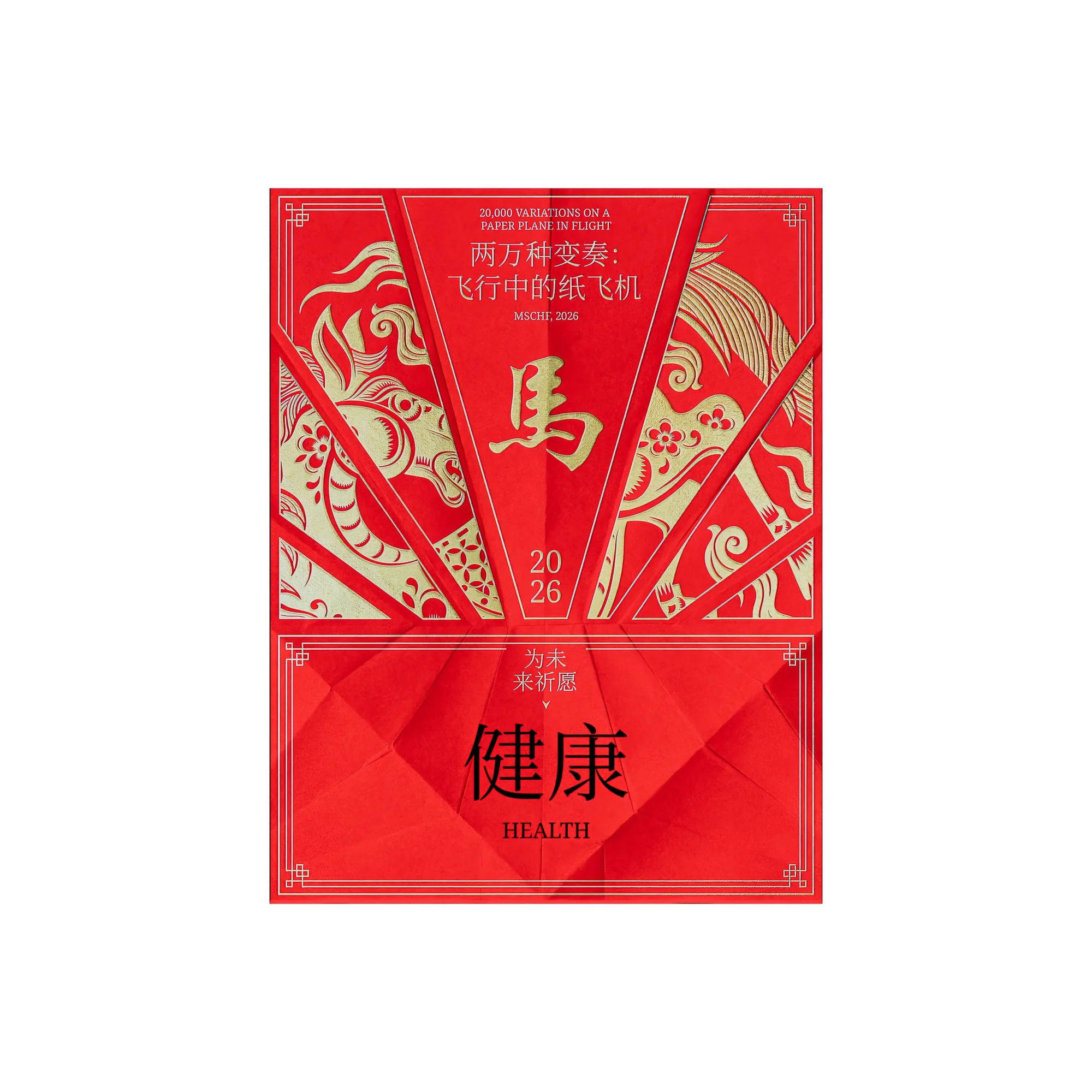
Each of the 20,000 planes bears a single noun drawn from the 5,000 most commonly used words in the English language. By virtue of ubiquity, the words become democratic; by virtue of randomness, they become oracular. Visitors are invited to pick up a plane and unfold it, revealing their assigned invocation. The gesture is participatory but not prescriptive. “They mean everything and nothing,” reads the collective’s manifesto. “In choosing, you tell the universe who you are.”
In many ways, the project is quintessential MSCHF. Since its founding in Brooklyn, the collective has engineered elaborate cultural interventions that function as both critique and commodity, often collapsing the two. Whether interrogating sneaker resale economies or corporate spectacle, MSCHF’s practice has consistently reframed public attention as medium. Here, instead of a product drop, we get a cadence—a recurring communal inhale as the crowd gathers, looks up, and waits.
The installation’s structure mirrors the cyclical logic of the calendar itself. “Yearly cycles create moments of anticipation that bring groups together,” the manifesto continues. There is a heartbeat embedded in repetition: doors close, the crowd stills, planes fall. Over three days, the space will pulse with this hourly ritual, creating what the collective describes as a “crowd-organism.” In an era of algorithmic feeds and infinite scroll, the constraint of once-an-hour feels almost radical.
The sonic environment deepens the work’s meditative undercurrent. An evolving piano score by Seoul-born composer and pianist Yeonjoon Yoon accompanies each descent. Yoon, whose performances have spanned institutions including Lincoln Center and London’s Barbican Centre, layers acoustic tradition with electronic sensibility and East-Asian philosophy. His composition resists crescendo in favor of atmosphere—less soundtrack, more weather system.
For The Wang Contemporary, the exhibition functions as an inaugural statement. Housed in a historic landmark long embedded in Chinatown’s cultural landscape, the foundation positions itself as a platform for Asian and Asian-American creativity across generations and disciplines. Launching with MSCHF is strategic: it signals an appetite for experimentation and scale, while situating that experimentation within a neighborhood shaped by migration, commerce, and layered histories.
There is also an unspoken dialogue between the iconography of the paper plane and the season it inhabits. Red and gold—colors synonymous with prosperity and luck—fall from above like a secular blessing. Yet MSCHF resists the comfort of certainty. The planes are “probabilistic fortune telling,” a reminder that meaning is constructed in the act of selection. The future, as always, is participatory.
Open to the public by RSVP from February 20–22, noon to 6 p.m., the exhibition transforms a simple childhood object into a mechanism for collective reflection. For a collective known for exposing the absurdity of cultural systems, 20,000 Variations On A Paper Plane In Flight feels less like a provocation and more like a pause—an invitation to look up together, if only for a moment, and consider the poetry hidden in plain language.
HOW DO YOU FEEL ABOUT FASHION?
COMMENT OR TAKE OUR PAGE READER SURVEY
Featured




For decades, luxury in the automotive world was defined by materials, craftsmanship and engineering excellence.