
Dechecker AI Checker: Regaining Confidence in AI-Assisted Writing Decisions

PAGE
By PAGE Editor
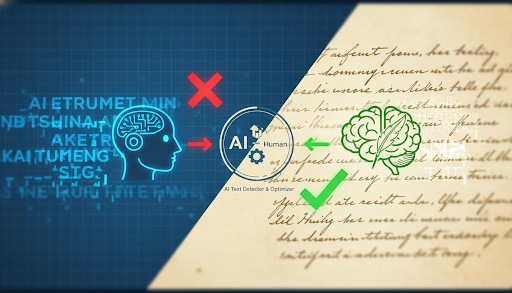
AI has quietly become part of how most text gets written. Reports, blog drafts, homework explanations, even internal emails often begin with machine assistance. The hesitation appears later, when someone has to decide whether that text is actually usable. Dechecker was built for that moment, when speed collides with judgment and confidence matters more than novelty.
The Moment Writers Start Doubting Their Own Text
When productivity creates uncertainty
AI accelerates output, but it also introduces a subtle unease. Writers reread their work and pause, not because it is incorrect, but because it feels too smooth. This is often the point where people turn to an AI Checker to confirm whether their instincts are justified.
Experience teaches caution
Seasoned writers recognize patterns quickly. Repetitive sentence rhythm, balanced clauses stacked too neatly, conclusions that sound final without effort. These signs do not always mean failure, but they do trigger a professional instinct to double-check.
The cost of guessing wrong
Submitting content that appears AI-generated can lead to penalties, rejection, or loss of trust. Revising unnecessarily wastes time. The real challenge lies in knowing which direction to take, and that decision requires clarity.
Dechecker as a Practical Evaluation Tool
Observation before intervention
Dechecker does not demand immediate action. It allows users to observe how their text is perceived before deciding whether changes are needed. That pause often prevents over-editing.
Supporting judgment, not replacing it
The platform respects that human judgment still matters. AI Checker results act as signals rather than commands, helping users decide where attention is truly required.
A calmer review workflow
Instead of emotional reactions to AI accusations, Dechecker introduces a neutral step into the process. Writers move from doubt to evidence, then from evidence to action.
How AI Checker Fits Into Real Writing Processes
Draft first, evaluate later
Writers who try to self-censor while drafting slow themselves down. Dechecker fits best after ideas are fully formed, when structure and intent are already clear.
Identifying pressure points
Not every paragraph carries equal weight. Introductions, transitions, and summaries tend to attract more scrutiny. AI Checker highlights these areas so writers can focus energy where it matters.
Avoiding unnecessary rewrites
Sometimes a document passes review with minimal concern. Knowing that allows writers to stop adjusting and move on, rather than polishing endlessly.
The Psychology of “AI-Sounding” Content
Predictability triggers suspicion
Readers rarely analyze why something feels artificial. They simply sense predictability. Dechecker helps surface where language patterns repeat too cleanly.
Confidence versus authenticity
AI-generated text often sounds confident without struggle. Human writing usually shows traces of hesitation, emphasis shifts, or uneven pacing. Recognizing this difference guides smarter revisions.
Learning from repeated checks
Over time, writers internalize which constructions attract flags. AI Checker becomes a quiet tutor, shaping instincts through repetition.
Humanizing Without Losing Control
When rewriting becomes necessary
Some passages resist light editing. At that point, rewriting is faster than tweaking. Used selectively, the AI Humanizer reshapes sentence flow while preserving original meaning and intent.
Maintaining authorial voice
The goal is not to disguise AI use, but to restore a human rhythm. Dechecker supports comparison, allowing writers to judge whether revisions still sound like themselves.
Avoiding stylistic overcorrection
Too much humanization can introduce inconsistency. Writers learn to apply it sparingly, guided by AI Checker signals rather than impulse.
Academic Writing Under Increasing Scrutiny
Students navigating new expectations
Many students lean on AI for structure, idea generation, or clarification, but the risk emerges when assistance becomes too visible in submissions. Dechecker helps pinpoint exactly where AI influence shows, guiding students to refine phrasing and maintain authenticity. This not only safeguards academic integrity but also encourages active engagement with the material, reinforcing learning rather than replacing it.
Tutors and educators reviewing work
Educators increasingly need to distinguish between genuine learning and automated assistance, a task that can feel daunting. AI Checker provides a reliable reference without turning evaluation into accusation. By highlighting AI-generated patterns, it allows tutors to focus on constructive feedback, guiding students to improve their reasoning and expression while preserving fairness in assessment.
Building safer study habits
Frequent use of Dechecker trains students to adjust prompts and edit more thoughtfully, reducing the need for heavy rewriting later. Over time, this fosters proactive study habits, where learners understand how to balance AI support with personal effort. The process strengthens critical thinking and helps students internalize writing skills that will serve them beyond individual assignments.
Content Creation and Marketing Use Cases
Scaling content responsibly
Marketing teams publish at volume. AI helps meet demand, but unchecked output erodes brand trust. Dechecker supports scale without sacrificing distinct voice.
Aligning with search expectations
Search engines increasingly reward originality in tone and structure. AI Checker insights help writers move away from generic phrasing that blends into competitors.
Balancing speed and differentiation
Fast content only works when it still feels intentional. Dechecker allows teams to protect differentiation even under tight deadlines.
Professional Documents and Client-Facing Text
Risk management through review
Proposals, reports, and policy documents carry reputational weight. Dechecker helps identify language that might undermine authority or credibility.
Clarifying internal approvals
When multiple stakeholders review a document, AI Checker results reduce subjective disagreement and focus discussion on concrete revisions.
Demonstrating responsible AI use
Using Dechecker signals to clients that AI assistance is handled thoughtfully, not carelessly.
Developing Long-Term Writing Awareness
From checking to anticipating
Writers who use Dechecker regularly begin predicting which sentences will trigger flags. Over time, this reduces reliance on heavy editing.
Refining prompts upstream
Understanding AI Checker patterns leads writers to adjust how they generate content in the first place, improving first drafts naturally.
Maintaining confidence under pressure
Deadlines compress decision-making. Dechecker offers reassurance when there is no time for second-guessing.
Writing With AI Without Losing Authority
AI is now part of modern writing. The challenge is no longer avoidance, but governance. Dechecker exists to support that governance quietly, without disrupting creative flow.
By using AI Checker insights to guide selective edits and applying humanization only where it adds value, writers retain control. The result is not perfect text, but credible, confident communication that holds up when it matters most.
HOW DO YOU FEEL ABOUT FASHION?
COMMENT OR TAKE OUR PAGE READER SURVEY
Featured




Bigger earrings of carats have a distinguishing power of changing the looks of an individual at once.