
Future of Furniture Prototyping: 3D CAD, Virtual Mockups, and Rapid Iteration
PAGE
By PAGE Editor
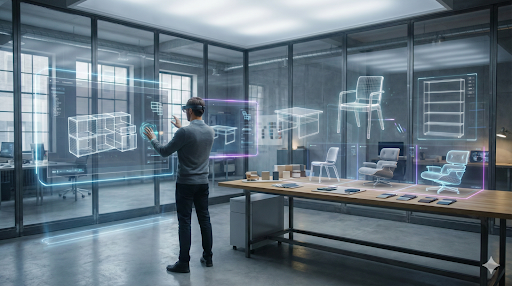
Furniture manufacturing is undergoing one of the most significant transformations in decades. As consumer expectations rise and global supply chains tighten, traditional prototyping methods—often slow, expensive, and material-intensive—can no longer support the pace of innovation required today. Digital technologies such as 3D CAD modeling, virtual mockups, and rapid iteration workflows are redefining how furniture is conceived, engineered, validated, and brought to market.
The evolution isn’t simply about adopting new software; it’s about reinventing the design-to-production ecosystem. Manufacturers, product developers, and design studios now have the opportunity to shorten development cycles, minimize risks, and deliver superior products with unprecedented efficiency.
The Shift from Physical Prototypes to Digital-First Workflows
For decades, physical prototypes served as the backbone of furniture development. Whether building a chair frame, a modular shelf unit, or a seating system, teams relied on tangible samples to test scale, ergonomics, stability, and aesthetics. While effective, this approach consumes time, labor, and materials—and often must be repeated multiple times before reaching design approval.
Digital-first workflows are changing this dynamic. Using high-fidelity 3D models, designers can visualize complete assemblies, simulate stresses, and adjust geometries long before any wood, metal, or upholstery is cut. This shift enables:
Earlier decision-making: Multiple concepts can be explored in parallel without committing to physical materials.
Greater collaboration: Cloud-based platforms allow teams across locations to view, annotate, and update models instantly.
Reduced waste: Fewer physical samples translate into lower material consumption and carbon impact.
Digital-first prototyping isn’t a mere upgrade—it is an operational necessity for companies seeking speed, precision, and sustainability.
Role of 3D CAD Modeling in Next-Generation Furniture Design
3D Computer-Aided Design (CAD) lies at the heart of modern furniture engineering. CAD platforms like SolidWorks, Fusion 360, and AutoCAD provide parametric modeling tools, assembly constraints, motion studies, and manufacturing-ready outputs.
Precision from Concept to Fabrication
CAD allows designers to define exact dimensions, tolerances, joinery types, material properties, and hardware selections. This level of detail ensures that the digital model becomes a single source of truth across engineering, procurement, and production.
Parametric Modeling for Configurable Products
Parametric design is especially valuable for manufacturers offering custom or modular product lines. With adjustable parameters, designers can generate multiple variations—sizes, features, material combinations—within minutes.
Manufacturing Integration
With CAD-to-CAM workflows, 3D models feed directly into CNC machines, laser cutters, and automated fabrication systems. This reduces manual interpretation errors and accelerates production readiness.
Professional Furniture CAD Drawing Services ensure these models meet both aesthetic and engineering standards, supporting seamless transitions from design to fabrication with minimal revisions.
How Virtual Mockups Reduce Cost, Time, and Production Errors
Virtual mockups are digital representations that simulate how a piece of furniture will look, function, and interact with its environment. Powered by advanced rendering engines and physics-based simulation tools, they replace early-stage physical sampling with rich, interactive digital experiences.
Cost Efficiency
Creating physical samples—especially for large or complex furniture assemblies—can cost thousands of dollars. Virtual mockups eliminate multiple rounds of rework, allowing resources to be invested in refinement and innovation rather than redundant builds.
Time Savings
Manufacturers can cut development cycles dramatically. A design that once required weeks of building and rebuilding can now be iterated within hours.
Error Prevention Through Simulation
Virtual mockups enable teams to detect:
misalignments
structural weaknesses
ergonomic issues
material inconsistencies
manufacturing constraints
By resolving these issues digitally, production errors decrease significantly, improving final product quality and customer satisfaction.
Rapid Iteration and Its Impact on Design Innovation
Rapid iteration is a fundamental principle in modern product development. In furniture design, it means the ability to explore many variations quickly, test assumptions early, and refine concepts continuously.
Accelerated Experimentation
Designers can change form factors, materials, joinery methods, and textures on the fly. Rapid experimentation fosters creativity while maintaining engineering rigor.
Shortened Feedback Loops
With shared digital models, stakeholders—including clients—can review updates in real time. This tight feedback loop reduces approval timelines and eliminates miscommunication.
Supporting Mass Customization
Today’s customers expect personalization. Rapid iteration enables manufacturers to offer customizable lines without burdening production teams with complex rework.
Integration with CAM, AR/VR Visualization, and Digital Twins
Modern prototyping doesn’t exist in isolation—it's part of a connected digital ecosystem. As furniture manufacturers adopt Industry 4.0 practices, several technologies play a supporting role.
CAD-to-CAM Automation
CNC toolpaths, cutting lists, bill of materials (BOMs), and assembly drawings can be generated directly from CAD files. This automation:
Ensures manufacturing accuracy
Minimizes interpretation mistakes
Speeds up fabrication
AR/VR for Immersive Design and Client Approval
Augmented Reality (AR) and Virtual Reality (VR) allow stakeholders to place furniture in real or simulated environments before production. This enhances:
Spatial planning
Ergonomic evaluation
Aesthetic decisions
Customer buy-in
Clients can “walk around” a sofa or inspect a conference table virtually, providing feedback as if the product already existed in physical form.
Digital Twins for Lifecycle Management
A digital twin is a dynamic digital representation of a physical product throughout its lifecycle. For furniture, digital twins support:
performance monitoring
maintenance planning
future upgrades or modular reconfiguration
sustainability assessments
This approach transforms product data into a long-term asset for manufacturers and clients alike.
Why Outsourcing to Experts Matters (and Why Shalin Designs is a Trusted Partner)
While digital prototyping tools have become more accessible, leveraging them effectively requires specialized expertise. Outsourcing to qualified CAD partners allows manufacturers and design studios to benefit from:
Experienced engineering professionals
Software mastery across major CAD platforms
Manufacturing-aware design insights
Scalable support for large or complex projects
Fast turnaround times without sacrificing accuracy
Shalin Designs offers advanced Furniture CAD Drawing Services tailored to the needs of furniture manufacturers, product designers, and prototyping labs. Their team provides production-ready drawings, 3D models, assemblies, parametric configurations, and detailed documentation that streamline development from concept through fabrication.
By partnering with experts, companies eliminate guesswork, reduce internal workloads, and achieve higher-quality outcomes—especially in demanding or time-sensitive projects.
Conclusion
Furniture prototyping is no longer bound by physical constraints or linear workflows. With 3D CAD modeling, virtual mockups, rapid iteration cycles, and integrations into CAM, AR/VR, and digital twin ecosystems, manufacturers can innovate faster and with greater confidence.
The organizations that embrace digital-first prototyping today will lead the furniture industry tomorrow—delivering smarter designs, better performance, and more sustainable solutions. And with trusted partners like Shalin Designs providing world-class CAD support, companies can accelerate their transformation and unlock the full potential of next-generation furniture engineering.
HOW DO YOU FEEL ABOUT FASHION?
COMMENT OR TAKE OUR PAGE READER SURVEY
Featured



A properly functioning water system is extremely important for every household.