
How to Use a Skin Analysis Machine to Improve Your Skincare Routine
PAGE
By PAGE Editor
How to Use a Skin Analysis Machine to Improve Your Skincare Routine?
You are not unfamiliar with the consequences of artificial intelligence unless you have been living under a rock for the past few years. Artificial intelligence has had a significant impact on several industries, including finance, software development, healthcare, and manufacturing.
But have you considered the revolutionary potential of AI in skincare? It's not just about predicting the weather or driving cars. AI is now transforming the way we care for our skin, and it's an exciting journey to be a part of.
If you're tired of the one-size-fits-all approach to skincare, AI skincare is here to change that. It's not just about results and accuracy but also personalization. Your unique skin needs are at the forefront of this new era of skincare, making you feel valued and catered to. How?
Let's investigate! Come along as we go deeply into the field of skin analysis, examine how it's driving innovation in skincare, and discuss how you may profit from it.
What Is Skin Analysis?
Examining the state and features of an individual's skin is known as skin analysis. It includes assessing the skin's texture, pigmentation, oiliness, moisture content, and other characteristics using a variety of instruments and methods.
It may involve a physical examination, a visual inspection, and the measurement and analysis of the skin's properties using various instruments and technologies. As a result, we can better understand our skin and create a customized skincare regimen based on the text result.
How to Get Ready for a Skin Exam?
To guarantee the most accurate findings, you can do the following actions before a skin analysis:
Wash Your Face: Before the analysis, ensure your face is clean and free from debris, oil, and makeup. This will make it easier for the skincare specialist or skin analysis device to determine your skin type and any issues you may be having.
Avoid Skin Care Products: For at least 24 hours before the analysis, it is advisable to refrain from using any skincare products, including moisturizers and serums. This will allow your skin to return to its natural state, free from the effects of cosmetics.
Steer Clear of Excessive Sun Exposure: Try to avoid sun exposure for at least 24 hours before the analysis. It may be challenging to determine the skin's pigmentation accurately if there are sunburn, tan lines, or other indications of sun damage.
Advantages of a Skin Analyser Machine
Personalized Skincare Advice: Skincare specialists can tailor treatments to your specific skin needs, using accurate information about your skin type and requirements. Like our facials, this customized method guarantees that your skincare regimen yields optimal results.
Monitoring Changes in the Skin Over Time: Regular evaluations enable you to track the progression of your skin and adjust your skincare routine as needed. Similar to the importance of skincare, this continuous assessment is crucial for maintaining skin health.
Early Skin Issue Identification: The early detection of potential issues, such as dehydration or pigmentation abnormalities, via a skin analyzer machine enables prompt intervention.
What Are the Skin Analysis Checklist's Four Steps?
Identification of Skin Type: Determine whether the individual has normal, oily, dry, combination, or sensitive skin. This is crucial when selecting skincare products that are suitable for an individual's specific skin type.
Evaluation of Skin Concerns: Discuss any skin issues the person may be experiencing, such as dark spots, wrinkles, fine lines, acne, or uneven skin tone.
Analysis of Skin Characteristics: Examine the skin's elasticity, pigmentation, texture, and moisture content. One can accomplish this by using specialized equipment and technology, ocular examination, or manual examination.
Recommend a Customized Skincare Regimen: This incorporates cleansers, toners, serums, moisturizers, and sunscreens tailored to the individual's skin type and concerns based on the findings of the skin analysis.
Understanding the Skin Analysis Machine
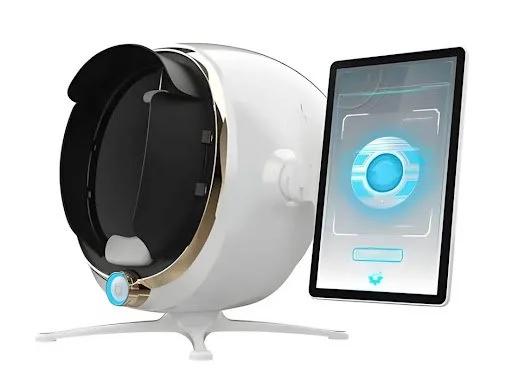
It's like having your personal skin whisperer thanks to this technological marvel. It's a brilliant device that thoroughly examines your skin. For a thorough examination of skin health, it employs the following 14 checks, along with what they measure:
Sebum Test: Provides information on how to balance sebum production by identifying the distribution of free lipids on the skin's surface.
Pore Test: This method detects and analyses the size and distribution of pores using polarised light technology.
Spot Test: Detects several pigmentation problems, such as dark brown, light yellow, dark red, yellow-brown, or light brown spots.
The Wrinkle Test: It assesses the smoothness, texture, and existence of wrinkles and fine lines on the skin.
Acne Test: Indicates the location of acne beneath the skin's surface, specifically the epidermis.
Blackhead Test: Offers a clear picture of the distribution of blackheads beneath the epidermis.
The Dark Circle Test: It examines the color of the skin beneath the surface as well as the location and thickness of blood vessels.
Skin Tone & Evenness Test: This test provides a thorough examination by comparing skin tone under various lighting conditions.
The Skin Sensitivity Test: It measures sensitivity by looking at the distribution of blood vessel pigments beneath the skin.
The UV Spot Test: It highlights areas of melanin accumulation while analyzing UV damage.
The Deep Pigment Test: It detects melanin, characterized by brownish-black and high-pigment density spots, such as freckles and chloasma, large brown patches caused by hormonal fluctuations.
The Deep Layer Acne UV Test: Measures the amount of Propionibacterium acnes and other skin flora when exposed to UV radiation.
Collagen Loss Test: Evaluates skin elasticity and flatness while judging collagen loss.
Hydration Test: Determines the skin's moisture content to assess its level of hydration and identify areas of concern.
These tests will provide you with a detailed report on your skin, highlighting the areas that require the most attention. They can help your skin therapist prescribe a customized in-spa facial and at-home skincare routine and restore your skin to bright health.
Future of Skincare
The use of AI in skincare is a sign of the future of customized beauty, not merely a fad. The days of general solutions are over. We can anticipate increasingly precise skin scans and personalized recommendations as AI algorithms continue to develop.
You can conduct a thorough virtual skin analysis and create a customized skin care regimen that suits you with the help of cutting-edge instruments. Our skincare regimens must take into account the fact that our lives are unique and individual.
For example, your skincare regimens will differ depending on your exposure, even if you and your friend have the same type of skin. The goods you use should take into consideration whether your friend has to commute to the office every day, and you work from home.
The best aspect of AI skin analysis is that its accuracy improves with the accumulation of more data. New skincare products and treatments may result from the use of this data.
Conclusion
Skin analysis is the key to having healthy, glowing skin, not merely a step in a skincare regimen. Understanding the particular requirements of your skin paves the way for beneficial products, effective treatments, and a skincare experience that is uniquely yours.
HOW DO YOU FEEL ABOUT FASHION?
COMMENT OR TAKE OUR PAGE READER SURVEY
Featured




When investing in quartz countertops, choosing the right warranty and care package is just as important as selecting the color and finish.