
5 Best Online Japanese Tuition Providers for Every Learning Style

PAGE
By PAGE Editor
Learning a new language can be both exciting and—let’s be honest—a little overwhelming. If you’ve ever sat through a one-size-fits-all class, you know it doesn’t always “click.” What turns a confusing set of symbols into actual communication? Often, it’s finding lessons that match how you learn best. Maybe you remember things by seeing them written down, maybe you need to hear and repeat, or maybe you learn fastest when you can “do” something hands-on.
Whatever your style, there are more online Japanese tuition providers than ever—each designed a bit differently. So how do you find the one that feels like it was made just for you? That’s exactly what we’ll tackle today.
Understanding Learning Styles
Let’s break it down. Not everyone soaks up information the same way, and that definitely applies to language learning:
Visual learners
You remember what you see. Diagrams, color-coded notes, videos, and written guides are your jam. If you find yourself doodling kanji to remember them, you probably fit here.
Auditory learners
Sound sticks. You pick things up by listening, repeating after teachers, or chatting with others. Japanese pronunciation and natural conversation practice work wonders for you.
Kinesthetic learners
You learn by doing. Maybe you act out scenarios, make flashcards to shuffle, or even pace the room while practicing sentences. Movement and hands-on activities help solidify the language in your mind.
Chances are, you might be a mix. That’s perfectly normal—the trick is choosing a platform that lets you learn in the style(s) that feel most natural.
Evaluation Criteria
To find the best platforms for every learning style, we looked at:
Learning style adaptability: Do the lessons work for visual, auditory, and kinesthetic learners?
Content variety: Videos, audio, games, live chat—what’s in the toolbox?
Personalization: Can you tailor lessons around your goals and schedule?
Engagement: Think quizzes, real-time feedback, conversation—not just passive learning.
Accessibility: Is it easy to use on different devices? Is there a mobile app?
Pricing: Are lessons affordable? Any free trials or discounts?
Tutor qualifications: Are the teachers skilled, experienced, and reviewed well?
Ready for the shortlist? Let’s find your match.
Top 5 Online Japanese Tuition Providers
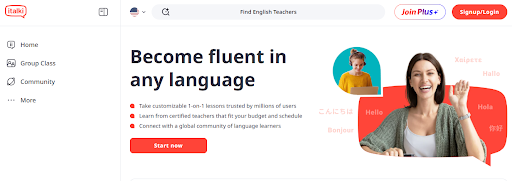
1. italki
Who We Are
Think of italki as an international language café that never closes. With over 10,000 teachers and more than 5 million learners, you’re joining a worldwide community of people helping each other get fluent—one conversation at a time.
What makes italki unique is its focus on real, personal interaction—not just memorizing from an app. It’s not unusual to meet a teacher in Tokyo in the morning and practice with someone from Osaka that evening, all on your laptop or phone.
Learning Style Fit
Visual learners: Many teachers use whiteboards, slides, and on-screen notes to break down kanji, grammar, and tricky topics.
Auditory learners: Every lesson is a conversation—listening, repeating, and swapping stories. You’ll build your ear for natural Japanese right away.
Kinesthetic learners: You’re not stuck in a passive lesson. Want to roleplay buying train tickets or practice sentence-building games? Many teachers offer just that.
Strengths
A marketplace with hundreds of Japanese tutors—browse by accent, price, teaching style, specialties (JLPT prep, business, kids, etc.), and more.
No subscriptions: Only pay for the lessons you book. Pick your tutor, your schedule, your focus area.
Built-in tools like the italki Classroom for calling, a digital notebook for writing practice, and a vibrant community for language exchange.
Broad price range, with trial lessons often under $10.
Strong community feel—you can write study notes or post questions and get feedback from native Japanese speakers.
Pricing
Tutors set their own prices, starting as low as $5–$10 per lesson, with many offering discounted trial sessions.
2. FluentU
Overview
FluentU is designed for immersive, self-paced language learning through real-world content rather than one-on-one tutoring. The platform transforms authentic Japanese videos—such as movie clips, interviews, music videos, and news—into interactive lessons. This approach allows learners to absorb Japanese naturally, integrating listening, vocabulary, and grammar study into engaging, context-rich lessons. FluentU is ideal for learners who prefer flexibility and self-directed study without needing to schedule sessions with a tutor.

Learning Style Fit
Perfect for visual and auditory learners: videos combine spoken Japanese with interactive subtitles and definitions.
Strong for contextual learning: every lesson ties vocabulary and grammar directly to authentic situations.
Self-paced approach: learners choose content that fits their level and interest, allowing for a personalized learning journey.
Strengths
Huge library of authentic Japanese content across a wide range of topics and difficulty levels.
Interactive subtitles with clickable translations and example sentences to deepen comprehension.
Adaptive quizzes and flashcards that track progress and reinforce vocabulary.
Cross-platform accessibility—learn on desktop or mobile anytime.
Pricing
FluentU uses a subscription model starting at $29.99/month, with discounted annual plans available. A free trial is offered for new users so they can explore the platform before committing.
3. JapaTalk
Overview
JapaTalk is all about Japanese—from daily conversation to manners and mindfulness, you’ll connect with native speakers who love sharing their culture.

Learning Style Fit
Auditory and kinesthetic learners thrive here—sessions focus on speaking practice and cultural exchange, sometimes through games or skits.
Lessons rarely feel rigid; many teachers encourage roleplaying real-life scenarios.
Visual teaching varies by tutor, but some use scripts, images, or gestures to help you along.
Strengths
Friendly, community-based vibe. Many tutors share personal stories and tailor sessions to your interests.
Cultural immersion: not just language, but cooking, customs, and more.
Affordable and simple pricing. Great if you want frequent practice with different teachers.
Pricing
Around 600 JPY (about $4 USD) per lesson—easy to try without breaking the bank.
4. Wasabi
Overview
Wasabi focuses on structure, quality, and building up your Japanese step by step. Lessons are one-on-one and held by certified teachers, making it a good fit if you want systematic progress.
Learning Style Fit
Visual: Clear curriculum, written guides, and lots of diagrams.
Kinesthetic: Frequent practice activities, roleplay, and self-study drills.
Auditory: Every lesson features a strong listening and speaking component—no sliding by unnoticed.
Strengths
Lessons are customized based on your goals—business, JLPT, travel, or daily conversation.
Free, well-designed self-study materials: quizzes, reading passages, and audio recordings.
Teachers are highly trained, often with teaching qualifications.
Pricing
Competitive, with packages that usually cost less per session than buying ad hoc.
Try out sample lessons and free study resources before committing.
5. Nihongo-Pro
Overview
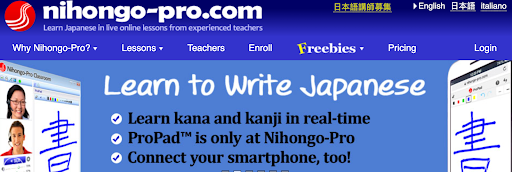
Nihongo-Pro specializes in small-group online lessons with experienced, native-speaking Japanese teachers. The vibe is friendly but academically solid—making it perfect if you want interactive guidance but a little more structure than casual conversation.
Learning Style Fit
Visual: Screen sharing, annotated materials, and digital whiteboards are common.
Auditory: Group speaking practice and teacher explanations help you pick up the rhythm of natural Japanese.
Kinesthetic: Some classes include “task-based” learning—think scavenger hunts, live polls, and real-world simulations from your own living room.
Strengths
Small group sizes mean more personal attention, but also the energy and support of learning with peers.
Teachers cater to individual strengths and needs even in group settings.
Flexible scheduling and approachable pricing for group sessions.
Pricing
Group class packages start at around $15–$20 per session, with discounts for buying packs of lessons.
Website
Conclusion
The “best” online Japanese tuition provider truly depends on what clicks for you. If you want to chat with native speakers, build your skills lesson by lesson, or try out fun cultural activities, there’s a platform that fits the bill. Visual learners, try Wasabi or Nihongo-Pro for lots of diagrams and written breakdowns. If you learn best by hearing and speaking, give italki or JapaTalk a shot—focus on teachers who love real conversation. And if “active learning” is your thing, look for hands-on tutors or group classes wherever you land.
There’s no need to lock yourself in right away. Most sites offer trial lessons or starter packs, so you can sample and see what feels right. The key is to keep looking for an approach that makes you want to come back—not one that feels like a slog.
Next time you log into your lesson, ask your tutor for an activity in your favorite style. Maybe it’s a kanji drawing game, a shopping-roleplay, or telling a story in Japanese. See how much faster things stick when your brain is having fun.
HOW DO YOU FEEL ABOUT FASHION?
COMMENT OR TAKE OUR PAGE READER SURVEY
Featured





adidas’ SoHo flagship and SS26 Creative Class reposition retail as a living cultural platform, investing in New York’s creative communities to drive sustained relevance beyond product.