
From Storytelling to Story-Sharing: The Rise of Intimate Branding in Fashion

PAGE
By PAGE Editor
In an age of infinite scrolls and shrinking attention spans, the fashion industry has found itself at a crossroads. Consumers have grown fluent in brand language, so fluent in fact that they can now spot insincerity faster than a loading ad. Words like sustainable, inclusive, and ethical no longer hold automatic value; they must be embodied, not broadcast. Amid this shift, a quieter form of marketing has begun to emerge: one that feels less like a campaign and more like a conversation.
Across both luxury and sustainable fashion, brands are embracing intimate storytelling, the use of small, personal gestures that build trust through one-to-one emotional connection. Handwritten notes slipped into packages, personalized direct messages (DMs) from creative directors, “pen-pal” style email campaigns, and even physical letters have re-entered the branding vocabulary. These gestures, while seemingly minor, are redefining how brands express care, authenticity, and belonging.
This new communication approach signals an evolution from telling stories to sharing moments. For marketers, it represents a move from performance metrics to perception metrics: how a message feels, not just how far it travels. And for the growing audience of conscious consumers, it suggests something radical, brands that still make time to listen.
From Broadcasts to Back and Forths
For decades, fashion communication followed a broadcast model: glossy campaigns, billboard slogans, and runway spectacles designed to reach the masses. But the pendulum has swung toward intimacy, particularly as digital fatigue and “purpose-wash” skepticism grow. The average consumer today receives hundreds of branded messages daily, yet the ones that stick tend to be the ones that sound and feel human.
Research in behavioral marketing consistently shows that personalization deepens loyalty. A study on handwritten communication by CW Creative found that consumers are significantly more likely to engage with and recommend a brand when they perceive human effort behind the message. In other words, the slower the medium, the faster it builds trust.
Transparency reports and data may inform, but they rarely move people. Emotional resonance does. A handwritten note that says “Thanks for choosing this piece. We made it with you in mind” feels like an act of care, not a compliance statement. It closes the distance between brand intention and human connection.
When Luxury Writes Back
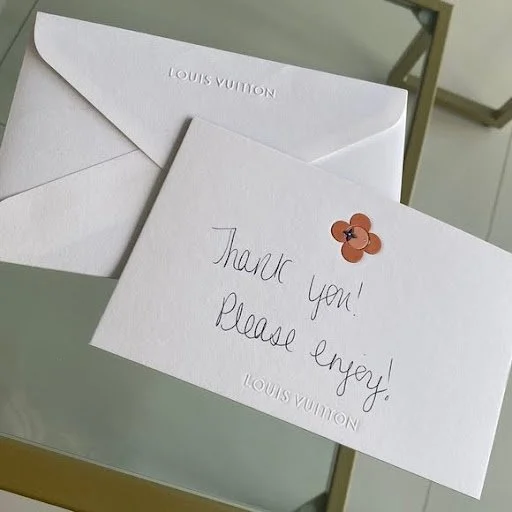
Luxury brands have always excelled at crafting desirability through scarcity and storytelling. But recently, some have started redefining exclusivity as attention. According to research compiled by Truly Handwritten, high-end fashion houses such as Louis Vuitton and Chanel have reintroduced handwritten elements into their customer engagement strategies, including thank-you notes, invitation cards, and product inserts penned in elegant script.
These gestures do more than add aesthetic charm. They function as micro-storytelling devices, proof that human hands still exist behind the brand. The handwritten message, personalized with a client’s name or reference to a recent purchase, embodies what digital campaigns cannot replicate: time, labor, and sincerity.
From a marketing communication perspective, these acts signal a deliberate deceleration. They slow down the brand-consumer interaction, framing it as a relationship rather than a transaction. In semiotic terms, handwriting itself becomes a symbol of trust, an intimate signature that no mass email can emulate.
This approach also aligns with sustainability’s broader narrative of slowness. By making communication tactile and deliberate, these brands remind consumers that luxury is not just about material rarity but about the luxury of attention.
Marques’Almeida’s “Pen-Pal” Letters
In contrast to the grandeur of luxury labels, Portuguese brand Marques’Almeida has approached intimacy through vulnerability. Their recent campaign adopted a pen-pal format, with emails written like personal letters complete with doodles, informal language, and reflections from the design team. Rather than announcing a new collection with a press release, the brand invited subscribers into an ongoing dialogue: Here’s what we’re thinking about today.
Each message read less like marketing copy and more like a diary entry. The effect was disarming. Readers weren’t just observers; they were correspondents in a shared emotional space.
From a storytelling standpoint, this campaign exemplifies micro-storytelling at scale. Marques’Almeida didn’t try to craft a universal message. Instead, they multiplied small, human moments, authentic fragments that together formed a mosaic of brand identity.
For marketers, the takeaway is clear: conversational tone is not a lack of professionalism but a strategy of authenticity. It democratizes the brand voice and shifts power from institution to individual. By positioning communication as participation, Marques’Almeida reframed its audience from consumers to co-authors.
The Power of Micro-Influencers
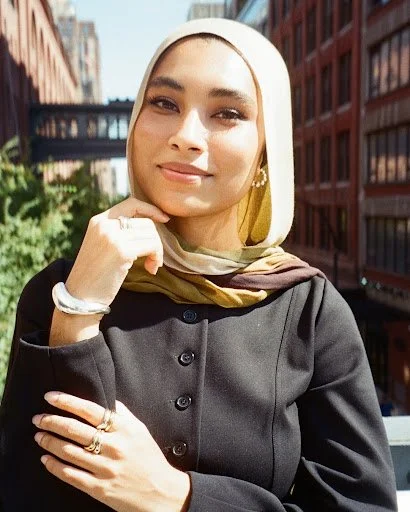
Intimate storytelling also thrives in the social space, where micro-influencers, creators with smaller but more engaged followings, are redefining credibility. In fashion and lifestyle marketing, micro-influencers often act as interpreters, translating brand values into everyday contexts: how a piece fits, how a material feels, how a story connects to lived experience.
Brands like Reformation, Everlane, Mejuri, and Veja have built communities around this principle of peer-to-peer trust. Instead of distant celebrity endorsements, they rely on genuine conversations between brand advocates and their audiences.
This approach aligns with what marketing strategist Jay Baer calls “talkable empathy,” the idea that human-scaled interactions generate more lasting advocacy than polished campaigns. Micro-influencers humanize fashion by making it conversational. They model dialogue rather than deliver monologue.
For brands that operate in crowded markets, this intimacy becomes a strategic differentiator. In spaces where trust gaps remain wide, these micro-voices act as connective tissue, verifying claims, sharing lived experiences, and reframing brand storytelling as a community, not a campaign.
Why Intimacy Works
At its core, intimate storytelling taps into what psychologist Daniel Kahneman calls System 1 thinking, the fast, emotional, intuitive side of human decision-making. Data appeals to logic, but emotional cues drive action. When a consumer receives a handwritten note or a direct message that references their purchase, it bypasses rational analysis and activates emotional belonging.
This mechanism explains why consumers often describe their favorite brands as relatable or human. They aren’t just loyal to the product; they’re loyal to the relationship the brand sustains.
From a marketing communications standpoint, intimacy functions as a trust multiplier. It bridges the gap between transparency (showing data) and empathy (showing care). In a landscape crowded with claims, that bridge is invaluable.
The Design of Dialogue
Visual design also plays a role in this new wave of intimacy. The aesthetics of micro-storytelling often lean toward imperfection: handwritten typography, analog textures, candid photography, even the occasional typo left intentionally uncorrected. These design choices communicate authenticity by signaling human touch.
Consider Glossier, which pioneered conversational packaging and customer correspondence that reads like messages from a friend. Or Studio Nicholson, whose newsletters mimic personal essays rather than product announcements. Each example demonstrates how design language can feel personal without abandoning professionalism.
In communication terms, these are trust cues, visual shorthand for sincerity. They remind consumers that authenticity doesn’t need polish; it needs presence.
Key Takeaways for Brand Communicators
Reframe scale. In an age obsessed with reach, intimacy redefines impact as depth. A hundred meaningful interactions can outperform a hundred thousand passive impressions.
Design for dialogue. Treat each communication, email, caption, or package, as a touchpoint for conversation, not an endpoint. Ask questions. Invite reflection.
Embrace imperfection. Polished perfection can alienate. Small imperfections in tone or design often signal authenticity and trust.
Measure emotion, not just engagement. Incorporate qualitative metrics such as sentiment analysis, repeat purchase motivation, and testimonial language alongside traditional KPIs.
Rethink tone as trust. Communication that feels personal, measured, and emotionally intelligent will always stand out.
The Future: From Brand Voice to Brand Ear
The next evolution of fashion marketing may not be louder storytelling, but better listening. As AI tools automate personalization and content becomes ever more scalable, human touch will become the true differentiator. The brands that thrive will be those that combine data precision with emotional intuition, the algorithm and the handwritten note.
In this context, intimate storytelling is not nostalgia; it’s strategy. It transforms sustainability from a claim into a relationship, positioning brands as partners in a shared journey rather than distant lecturers.
In an era when everyone is talking, the brands that succeed will be the ones that know how to whisper.
Regine Anastacio is a marketing communications professional with experience spanning tech, retail, luxury hospitality, and fashion. Her work focuses on narrative-driven brand storytelling and cultural marketing that connects identity, sustainability, and consumer behavior.
HOW DO YOU FEEL ABOUT FASHION?
COMMENT OR TAKE OUR PAGE READER SURVEY
Featured





Gold plating specialists in Los Angeles are often the reason a scratched, faded piece of jewelry gets a second life instead of ending up forgotten in a drawer.