
How I'd Start a Clothing Brand With No Money
PAGE
By PAGE Editor
Creating a clothing brand without start-up capital is quite realistic. I realized this when I began to understand how the fashion business is structured. It surprised me that many clothing brands were developed without investors, using only low-cost online tools and operating on short production cycles. This led me to conclude that everything depends on how well you understand the market and how practical your decisions are from the outset.
In this article, I will explain which approaches work and how a beginner can turn an idea into their own brand even with very little startup capital, drawing on my own experience along the way.
Learn the Essential Skills for Creating Clothes
Before launching your clothing line, you need to learn the basics of sewing simple garments. You can get your first lessons on YouTube or through free Coursera courses. Some community colleges also offer open classes where they explain how to work with patterns, how clothing should fit, and how to mix and match textiles. Since I had very little experience, I started with the basics: straight seams, sewing in zippers, and working with elastic materials. These skills helped me create my first samples independently and understand the quality I wanted to achieve.
It is also useful to learn digital design programs. In the industry, Adobe Illustrator is often used, but at the beginning, the free version of Canva is enough for creating technical sketches. This helped me determine the type of model I wanted to build. When a sketch is clear and easy to read, there are fewer mistakes and, accordingly, fewer expenses.
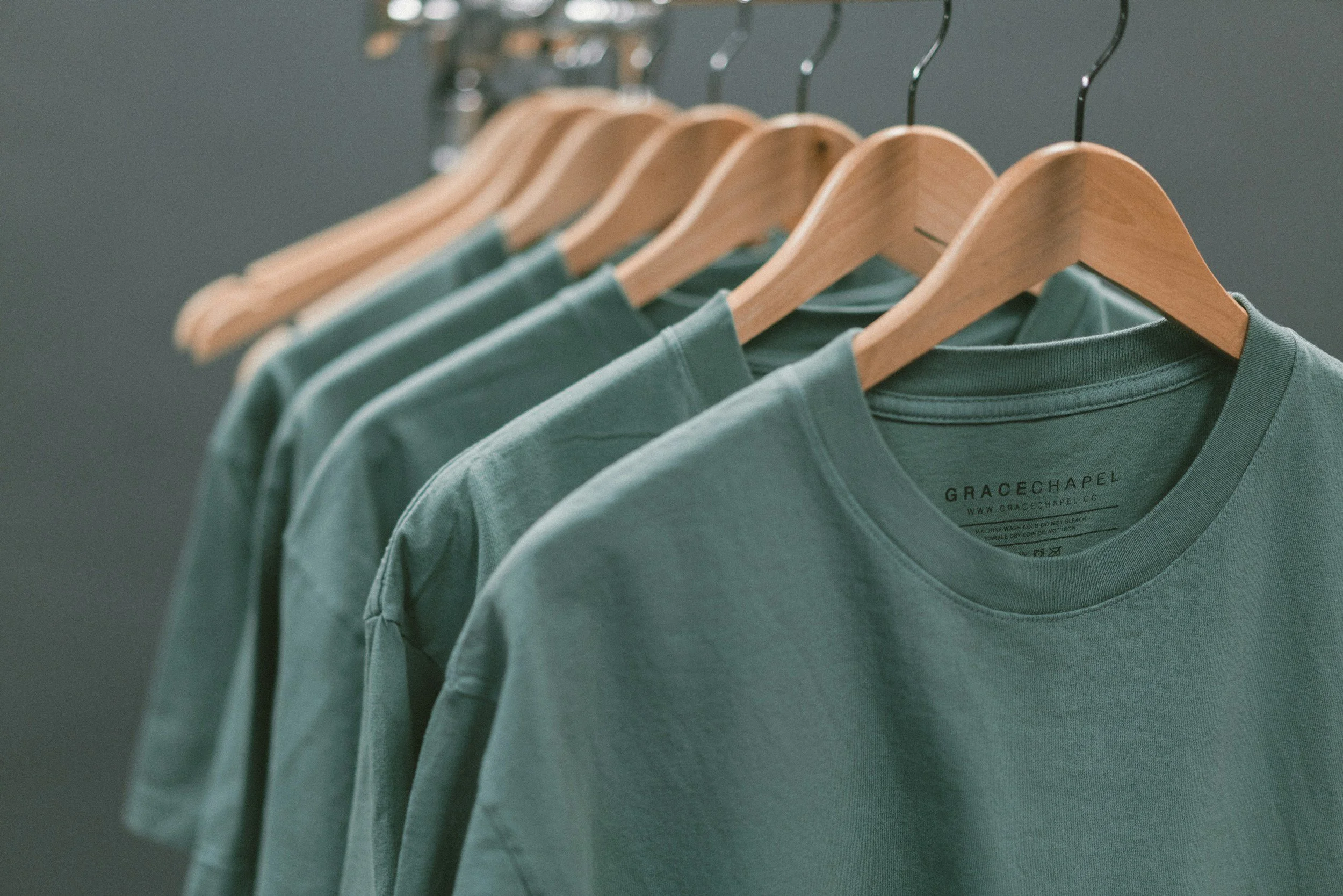
I recommend starting with T-shirts, since they are the easiest to produce. Later, as you study garment construction and fabric properties, you will be able to develop more complex models and designs.
Understand Style Trends and What People Want
A clothing brand starts working only when it meets customer needs. You do not need market data to find out what is in fashion today. Everything is available for free: on Pinterest, TikTok, Instagram, Google Trends, and in the best-seller lists of major retailers. Fashion websites such as Vogue Business and WWD also regularly talk about how customer preferences are changing.
I studied what people are interested in today, which colors resonate with them, and what sells out quickly. For example, the sportswear market is projected to grow from 220.34 billion dollars in 2025 to 350.45 billion dollars by 2032, while sales of formal clothing will continue to decline. This gave me an understanding of which ideas do not resonate with customers and definitely will not be successful.
I also read comments under competitors' posts. People often write what they do not like: poor fit, low fabric quality, or a price that feels too high. Such comments clearly show what customers are missing. If you can solve a real problem, your brand will have a much greater chance of standing out.
Define Your Brand's Identity
Brand identity is more than just a logo, fonts, and corporate colors. It is a combination of values, visual elements, and associations that directly influence how the target audience perceives the company and its products. Brand identity demonstrates certain characteristic features that allow customers to recognize their favorite brand among many others. This is important even at the earliest stage, when the business is just being formed.
I defined the brand's main goal, described my customer, and chose a design direction. Brands can look different: some create everyday clothing, some focus exclusively on the old-money style, and others make outfits for outdoor activities. It is useful to think in advance about your tone, color palette, and logo. Many beginners use free logo generators or create simple text versions using top Google Fonts.
Brand identity is important for making your business recognizable, evoking the right emotions, and preserving its individuality. Today, it is difficult to attract consumers' attention, and even harder to be remembered. Therefore, without carefully thought-out distinctive characteristics, it is impossible to adapt to market demands and maintain a strong identity.
Build a Simple Business Plan
A business plan is the foundation, because it clearly outlines the expenses you will incur, how much time each stage of development will require, and the audience you are targeting. You do not need a complex document, especially if you are starting with minimal capital.
Your plan can fit on one printed page and will already work. It should include the following points:
Product
Description of the customer
Manufacturers and potential partners
Minimum budget
I divided my tasks by month, and this helped me realistically assess my capabilities and avoid expecting quick results.
It is also useful to study official resources for small businesses. The U.S. Small Business Administration (SBA) offers free templates and educational materials. There, you can also find explanations on which legal structure you can choose, which taxes to consider, and which expenses appear at the very beginning. Fashion startups usually operate as sole proprietors because it is simpler, but forming an LLC provides better liability protection. Registration fees vary by state, and you can see them on your local Secretary of State website. If you take all this into account in advance, it will protect you from costly mistakes in the future.
Develop Your First Designs
Design work always begins with sketches. At the initial stage, it is sufficient to develop three to five models. Such a small set helps reduce risks and understand which items customers respond to best.
After conducting my research, I created a mood board to define the style and mood of the upcoming collection. Then I created technical models that show what each item should look like. A full technical pack is not required at this stage, but it is useful. It usually includes measurements, seams, fabric type, and finishing details. Many manufacturers ask for this information to ensure consistent, predictable results.
I sewed the prototypes myself on a mechanical sewing machine. This helped me see how each item fit and understand what needed adjustment. If you don't know how to sew, you can ask a local tailor to make a sample for a small fee. This is much cheaper than working with a professional development studio.
Find Affordable or Creative Ways to Source Materials
The most significant part of the budget when launching a clothing brand is fabric. But even here, you can reduce expenses by buying materials in small batches. Fabric Wholesale Direct, Mood Fabrics, and various local wholesalers sell leftover rolls or boxes of scraps at very low prices.
You can also buy deadstock fabrics. They can be found at factories at discounted prices, and the quality is often excellent. I used deadstock for my first pieces, and it helped me stay within the established budget.
If you need fabric with your own print, you can use services like Spoonflower. They charge per yard and do not require a minimum order. This is convenient when you are testing new ideas and are not ready to buy large quantities.
Upcycling is also a good option for beginners. In thrift stores and textile recycling centers, you can find quality materials at a low cost. And since we live in an era of conscious consumption, turning old clothing into new pieces is very relevant. This is a common practice and an affordable way to save money.
Set Up Low-Cost Production for Small Batches
Production can be difficult, especially for a beginner. Most factories prefer large orders, which is why new brands with small budgets find it hard to secure a contractor. But there are solutions.
Microfactories and on-demand production services allow you to produce clothing even one piece at a time. For example, Printful, Printify, and T-Pop offer print-on-demand services: you upload a design, and they manufacture and ship the item. You do not need to purchase inventory in advance. But the downside is that you earn a low profit per unit.
When it comes to items that require cutting and sewing, the process becomes more complicated. But you can still find small workshops that are willing to work with small batches. I found such contractors through Maker's Row, Upwork, and local Facebook groups. At the very beginning, when the volume was extremely small, it was easiest to work with private tailors.
When testing new designs, it is better to release small batches. This helps avoid unnecessary expenses and quickly identify sizing or fit issues before starting large-scale production.
Explore Free and Low-Cost Funding Options
When you start without initial capital, financing becomes especially important. I spent a long time looking for options that do not require a loan or collateral. There are platforms where you can receive a small grant, apply for a competition, or get support for creative entrepreneurs.
Sometimes you need to cover sudden business expenses, such as ordering materials immediately or renting a workspace. In such moments, many entrepreneurs turn to short-term financing from trusted lenders. I know small brand owners who used this approach to support production, and I also used it to cover urgent payments.
There are also other accessible ways to find money:
Community development organizations that provide microloans.
Local small business grants through city economic development centers.
The SBA microloan program, through which up to $50,000 can be obtained via nonprofit lenders.
Pitch competitions in community colleges and business centers.
At the outset, the amount need not be large. Sometimes, even $200–$500 is enough to purchase materials or cover the cost of creating the first samples.
Set Prices and Manage Inventory Wisely
The price of a product affects both your profit and your customers' attitude toward the brand. The calculation formula is very simple: (cost of production + overhead expenses) × markup = retail price.
In the fashion industry, the usual markup for direct sales is about 2.2–2.5. If selling wholesale, the price needs to be doubled again.
Mistakes in inventory management can seriously harm a new brand. I avoided large purchases and produced small batches of 10–20 units. This simplified storage and reduced financial risks.
You can track inventory using regular spreadsheets or free apps like Sortly. Small batches also create a sense of scarcity, which speeds up sales without additional advertising.
Build an Online Store With Free or Budget Tools
You can launch an online store without high upfront costs or developer support. Shopify offers inexpensive plans. On Etsy, you can start for free, although there is still a sales commission. Big Cartel also provides a free plan for beginners. All these platforms offer ready-made templates, and you do not need to know how to program.
I studied how to create a high-quality product description and added clear product photos, a size chart, and simple care instructions. Customers value clear information, especially when they cannot try on an item before buying. That is why descriptions should be short, precise, and without unnecessary words.
Payment processing also does not cause difficulties. Services like Stripe and PayPal are well-known, easy to connect to, and trusted by customers.
Promote Your Brand Across Online Channels
In the early stages, marketing does not require money. Social media offers strong reach on its own, especially if you post regularly and stick to a consistent style.
Today, building trust in the brand is extremely important, so I shared behind-the-scenes videos showing how I sew items, package them, and check quality. People liked this because they saw the real process and an honest result. Short videos on TikTok and Instagram often attract new audiences when posted consistently.
Email marketing also works. Mailchimp and Klaviyo have free plans. It is better to collect email addresses in advance and occasionally send subscribers updates about new products and restocks.
You can also work with influencers without a budget. Many micro-influencers are willing to collaborate through product exchanges or accept small offers.
Sell Through Local Events, Pop-Ups, or Small Retail Spaces
Local sales are a great way to see in person how people react to your product. In all cities across the United States, there are regular street markets and fairs where anyone can participate. Booth rental costs are inexpensive, typically $25 to $150.
You can also ask local stores whether you can set up a product display there in exchange for a percentage of sales. This does not yield high profits, but it reduces upfront costs and helps test demand.
I decided to participate in local markets. This allowed me to receive honest feedback about the quality and fit of the items. Direct communication with customers strengthened trust in my brand and helped improve the product. Moreover, it even helped me gain regular customers.
Learn From Successful Designers and Real Examples
It is extremely important to study the experiences of real people in the industry, because it is better to learn from others' mistakes than from your own. Today, you can find interviews and podcasts online where designers share their experience and warn about risks.
Useful resources include:
Practical examples from the fashion business
Podcasts for entrepreneurs in the fashion industry
YouTube interviews with the founders of small brands
I watched many interviews, which helped me understand various aspects, including how to negotiate with large suppliers and manage low inventory levels. Many founders also discuss legal and financial nuances that are important to understand from the outset.
Protect Your Brand With Low-Cost Legal Steps
Legal protection is important from the very beginning. The first step is to choose a business structure. Many people start as sole proprietors, but an LLC protects them from personal liability. You can register an LLC on the Secretary of State's website. The cost varies by state and usually ranges from $40 to $500.
Registering your brand as a trademark is not required, but it can be helpful. The United States Patent and Trademark Office (USPTO) charges a registration fee of $250 to $350 per class. You can apply later, when your brand becomes more recognizable.
It is also important to follow labeling rules. The Federal Trade Commission requires clothing labels to list the fiber content, the country of origin, and care instructions. The Textile Fiber Products Identification Act establishes these requirements.
Following these rules reduces risks and allows you to sell your products in more stores.
Plan How to Grow Without Raising Costs
Growth should not lead to a sharp increase in expenses. I began expanding only when I saw that demand was stable. I analyzed my data, identified the best-selling products, and removed the items that yielded minimal results.
For careful scaling, you can:
Gradually increase production.
Add a small number of new styles.
Negotiate better prices with suppliers.
Improve delivery processes.
Run small advertising tests.
When I needed an additional budget for advertising, I considered different options and wrote down ideas. Ultimately, I borrowed money from a reliable lender. This allowed me to expand my advertising campaigns and attract new customers. The decision paid off because demand had already been confirmed.
How a Zero-Dollar Idea Becomes a Real Fashion Brand
Creating a clothing brand without initial capital is possible if you plan everything and understand the main processes. Each step is built on the previous one. By gradually mastering the skills required and learning about design, sourcing, production, finance, and sales, you can grow steadily and avoid serious mistakes.
If you work consistently and make careful decisions, even a small idea can eventually turn into a full-fledged brand in the U.S. clothing market.
HOW DO YOU FEEL ABOUT FASHION?
COMMENT OR TAKE OUR PAGE READER SURVEY
Featured



Managing a private family office goes far beyond finances it is about ensuring a smooth, luxurious, and well-organised lifestyle for every member of the household.