
The Food Color Guide: How to Get Vibrant Natural Shades with Superfood Powders
PAGE
By PAGE Editor
Color should delight your eyes without compromising your ingredients. With plant-based powders, you can paint cakes, drinks, and breads in bold hues that come from fruit, flowers, tea, and roots—not a lab. Centralsun curates a rainbow of clean, easy-to-use options that work across batters, icings, lattes, and more. Start exploring their full range at Natural food colors for inspiration and ready-to-use shades.
Natural vs Artificial: What to Expect
Natural colors are crafted from real foods like beetroot, turmeric, matcha, spirulina, berries, and butterfly pea flowers. While artificial dyes offer stability and predictability, natural powders bring culinary depth and transparency. They behave differently based on heat, light, and pH—but with a few tips, you can master them.
Choose natural for food-first creations, kids’ treats, and visual magic like pH color shifts. You’ll get subtle flavors, require thoughtful storage (airtight, cool, dry), and see the best results when handled carefully in recipes.
The Natural Rainbow: Shade-by-Shade
Red / Magenta
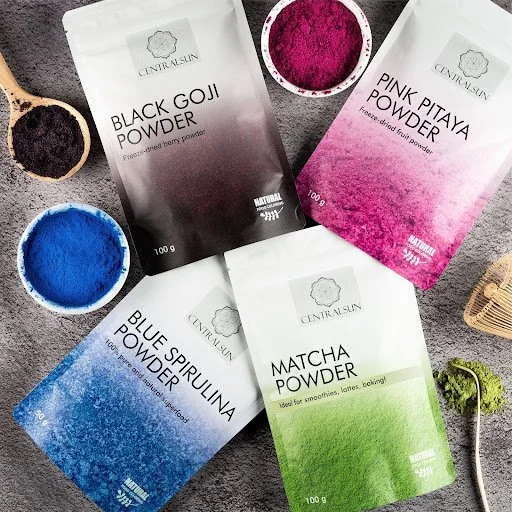
Beetroot powder delivers a classic earthy-sweet red perfect for frostings, pasta, pancakes, and red velvet bakes. For vibrant magenta or fuchsia tones, use freeze-dried Pink Pitaya powder, especially in cold applications like smoothies, yogurt, and whipped cream.
Pink
Pink Pitaya powder creates bright pink shades with a mild tropical taste. Ideal for marshmallows and buttercream, start with a small amount and build up for deeper color.
Yellow / Gold
Organic Turmeric powder (with 5% curcumin) brings warm golden yellow and a spicy-earthy kick to curries, doughs, and lattes. Freeze-dried Turmeric juice powder offers a clean flavor and dissolves easily—great for drinks and light icings. Pair either with honey, cinnamon, or vanilla.
Green
Organic Matcha tea gives a fresh grassy green tone with a tea-like flavor, ideal for ice cream, latte art, or matcha cookies. The Ceremonial grade matcha is more delicate and works beautifully in panna cottas, mousses, and drinks where flavor purity matters.
Blue
Blue Spirulina offers a striking electric blue with a neutral flavor—perfect for frostings, smoothie bowls, and meringues. Add it post-cooking to preserve its vibrancy. Butterfly Pea powder creates deep blue tones and magically shifts to purple with acid. Butterfly Pea flowers, when steeped, provide stunning tea infusions that react to lemon or yogurt.
Purple / Violet
Black Mulberry powder yields a rich purple with fruity notes, excellent in glazes and icings. Black Goji berry powder produces a violet-to-lilac hue and changes with acidity—try it in drinks or marshmallows to showcase the gradient.
Black
Activated bamboo charcoal gives jet black intensity with no taste interference, ideal for dramatic desserts like black macarons, buns, and ice cream swirls. Use sparingly—a little goes a long way.
Tips for Best Results
Flavor Balancing: Round earthy reds with vanilla or cocoa; pair greens with citrus or almond; blue tones are best in neutral bases.
pH Play: Use acidic elements like lemon or yogurt to shift blues toward purple with butterfly pea and goji powders.
Temperature Matters: Add heat-sensitive blues and berry purples at the end of cooking. Turmeric and matcha handle heat well.
Storage: Keep powders sealed in a cool, dark place to retain potency.
Mixing Tips: Start small (¼–½ tsp per cup), let colors develop for a few minutes, then adjust. Pre-dissolve when needed for even distribution.
Recipe Ideas
Electric Blue Smoothie Bowl: Blend frozen banana, coconut yogurt, pineapple, and ¼–½ tsp blue spirulina.
Magenta Beet Frosting: Mix butter, powdered sugar, milk, and ½–1 tsp beetroot powder with vanilla.
Golden Turmeric Latte: Warm milk with honey, ¼ tsp turmeric juice powder, cinnamon, and ginger.
Green Matcha Shortbread: Add matcha to classic shortbread dough for a tea twist.
Violet Goji Glaze: Combine powdered sugar, milk, and black goji powder; add lemon for lilac tones.
Jet-Black Charcoal Ice Cream: Swirl bamboo charcoal into softened vanilla ice cream for dramatic effect.
Frequently Asked Questions
Do natural food colors affect taste?
Yes, mildly. Beet and turmeric bring earthy notes, matcha adds a tea taste. You can balance these with vanilla, cocoa, or citrus.
Are they heat-stable?
Some are. Turmeric and matcha do well with heat, while blues and berry tones shine in no-bake or low-heat applications.
How can I get a vibrant blue without artificial dye?
Blue spirulina and butterfly pea are excellent options. Add late in the process and avoid acidic or hot environments.
What’s the best way to get bright reds in baking?
Use beetroot powder in frostings or neutral batters. A dash of cocoa can deepen the red in cakes.
How much powder should I use?
Start with ¼–½ tsp per cup and adjust slowly. Let colors sit for a few minutes—they intensify with time.
Do these powders stain?
They can! Turmeric and beet are especially strong. Clean spills quickly and use gloves when needed.
Call to Action
Bring bold, beautiful natural colors to your kitchen. Explore plant-based color powders that create vibrant food art and flavorful treats—shop the full range at Natural food colors.
HOW DO YOU FEEL ABOUT FASHION?
COMMENT OR TAKE OUR PAGE READER SURVEY
Featured




When investing in quartz countertops, choosing the right warranty and care package is just as important as selecting the color and finish.