
What is a DTF Transfer? A Complete Beginner’s Guide
PAGE
By PAGE Editor
If you’ve been exploring custom t-shirt printing or searching for new ways to decorate apparel, you’ve probably come across the term DTF transfer. Short for Direct to Film, this method has been gaining popularity among small businesses, print-on-demand sellers, and hobbyists alike. But what exactly is a DTF transfer, how does it work, and why are so many people turning to it? Let’s break it down.
What is a DTF Transfer?
A DTF transfer (Direct to Film transfer) is a printing technique in which a design is printed on a special film of PET, coated with adhesive powder, cured, and heat-pressed onto fabric. In comparison to vinyl or sublimation, DTF can be applied to light and dark clothes and various types of fabrics such as cotton, polyester, and blends.
This flexibility makes DTF one of the most versatile printing options for custom clothing, be it of t-shirts and hoodies or tote bags. Printers like it most because it gives them a long-lasting heat transfer with vivid colors and details- even without weeded vinyl or restricted to polyester mediums.
If you’ve ever thought, “what is a DTF transfer for t-shirts?”, the explanation is easy. It’s a newer and dependable method to put high-quality prints on any type of clothing.
How Does a DTF Transfer Work?
The DTF printing process is straightforward once you understand the steps:
Printing: A DTF printer lays down colored inks and a white ink layer onto transfer film.
Adhesive application: The wet print is coated with a fine hot-melt adhesive powder.
Curing: The powdered design is cured (generally with a unit of heat), such that it is pressed.
Heat press transfer: It is accomplished with the help of a heat press machine, in which the design is stamped on the fabric.
Given that the adhesive powder can stick to the fabric fibers, the result is a permanent print that cannot melt off or fall easily. DFT transfers can be applied on cotton, polyester or a blend.
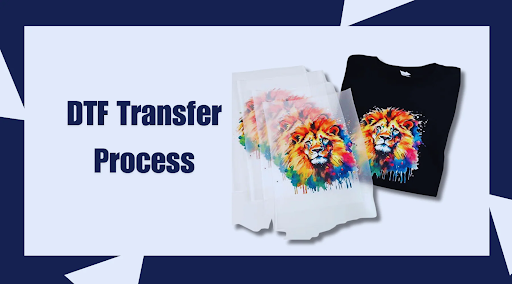
How to Make and Apply a DTF Transfer
Making a DTF Transfer
To create your own transfer, you’ll need a DTF printer, PET transfer film, DTF inks, hot-melt adhesive powder, and a curing setup. Once the design is printed and powdered, curing locks the adhesive in place so the transfer can be stored or pressed later.
This is where equipment matters—if you’ve asked “what is a DTF transfer printer?”, it’s essentially an inkjet printer modified to work with DTF inks and films.
Applying a DTF Transfer
Applying a transfer is done with a heat press machine. Here’s how:
Place the transfer on the garment.
Press at the recommended temperature and pressure (varies by supplier).
Peel the film according to instructions (cold peel or hot peel).
If your transfer isn’t sticking, it’s often due to incorrect pressure, time, or temperature. That’s why following exact heat press instructions is key.
Common questions like “how long to press a DTF transfer” or “why is my DTF transfer not sticking” usually trace back to settings or fabric preparation.
DTF vs. Other Transfer Methods
You might be asking why DTF is better than such means as sublimation or heat transfer vinyl (HTV).
DTF vs. Sublimation: Sublimation works only on polyester and light-colored fabrics. DTF works on nearly any material, in any color.
DTF vs. HTV: Vinyl requires cutting and weeding. DTF skips those steps and produces softer, more detailed prints.
Iron vs. Heat Press: While some ask “can you use an iron on DTF transfers?”, the reality is irons don’t provide consistent heat or pressure, so a proper heat press is recommended.
UV DTF Transfers Explained
Another process called UV DTF transfer works with UV-curable inks rather than textile inks. It is a good approach to use when using hard, non-porous substances such as glass, tumblers, mugs, or phone cases rather than cloth.
When you have ever used a custom phone skin or a personalized cup, you have a high possibility that it was manufactured with the use of UV DTF. Do bear in mind, though, that this technique is not supposed to work on clothes.
Creative Applications and Business Potential of DTF Transfers
DTF transfers are not limited to t-shirts, but can be used for a wide range of creative projects. Personal or business, it is the most flexible printing method: durable and easy to use for a beginner. Here is the way to take the best out of DTF transfers:
Clothing: Hoodies, hats, sweatshirts, and sweatpants. DTF is excellent in all fabrics, allowing bright colors and intricate designs to appear on clothes.
Other Items: Tote bags, aprons, pillowcases. It is possible to customize them and either use them as a present or wear them by yourself for parties or functions. They are smooth and shiny and require minimal effort.
Business Merchandise: Uniforms or giveaway items. Companies can put logos or brand messages on different fabrics, creating long-lasting and stylish products.
Small Businesses & Custom Orders: Special designs and limited editions. Small runs are simpler with DTF, avoiding big inventories and fitting unique or seasonal collections.
Hobby and Creative Projects: You can make personalized items and home decorations. Even with a simple setup, beginners can craft professional-looking things like wall art, unique gifts, or cushions at home.
Collaborations and Branding: Creative partnerships or shared branding projects can benefit from DTF. It delivers reliable quality across many types of fabric, which works well for marketing campaigns or joint ventures.
Tips for Best Results
Choose fabrics like cotton, polyester, or blends for the best adhesion.
Follow the heat press timing and temperature instructions from your supplier
Keep any unused DTF sheets in a dry and cool spot to avoid issues from moisture.
These easy practices help your prints look brighter and last longer.
Conclusion
DTF transfers are reshaping how people approach custom apparel printing. They bring flexibility and toughness, while also being easy enough for beginners to handle. This is why they are the best option to hobbyists and businesses that are expanding. In the case you want to open a print-on-demand company or create your own unique shirts, DTF technology provides you with a creative and inexpensive solution to the problem you can count on.
So if you’ve been wondering “what is a DTF transfer and how does it work?”, you now know it’s not just some passing fad. It stands out as one of the easiest and most effective printing methods you can find today.
HOW DO YOU FEEL ABOUT FASHION?
COMMENT OR TAKE OUR PAGE READER SURVEY
Featured




Recent years have seen several unprecedented advancements in oral care.