
What to Do in the First 24 Hours After a New York Car Accident: A Helpful Checklist

PAGE
By PAGE Editor
Car accidents happen fast. One minute you’re driving through the city, and the next you’re shaken, unsure what to do, and trying to think clearly. The first 24 hours after a crash are especially important—not just for your health, but also for protecting your rights and making sure you don’t face unnecessary problems later on.
Whether it’s a minor fender bender or a serious collision, knowing what to do can make the aftermath a little less overwhelming. Here’s a simple checklist to guide you through those crucial first hours.
1. Check for Safety First
The most important step is making sure you and others are safe. Take a moment to check yourself and your passengers for injuries. If anyone is hurt, call 911 immediately. Even if you feel okay, don’t ignore dizziness, pain, or confusion—adrenaline can mask symptoms at first.
If it’s safe, move your car to the side of the road to prevent further danger. Turn on your hazard lights so other drivers see you.
2. Call the Police
In New York, you’re legally required to report most accidents, especially if there are injuries or significant property damage. Having a police report is also helpful later if you need to file an insurance claim or work with motor vehicle lawyers.
When officers arrive, stay calm and stick to the facts. Avoid guessing or admitting fault—simply describe what happened to the best of your ability.
3. Gather Information at the Scene
Accidents are disorienting, but collecting details right away can save you a lot of headaches. Make sure to get:
Names and contact info of all drivers and passengers
License plate numbers
Driver’s license numbers
Insurance details
Make, model, and color of vehicles involved
Contact info for any witnesses
Use your phone to take photos of the vehicles, damage, street signs, traffic lights, and the surrounding area. These images can provide valuable evidence later.
4. Seek Medical Attention
Even if you think you’re fine, it’s smart to see a doctor as soon as possible. Some injuries, like whiplash or concussions, don’t always show symptoms right away. Having medical records from the start also helps connect your injuries to the accident if legal or insurance questions come up.
5. Notify Your Insurance Company
Most insurance policies require prompt reporting after an accident. When you call, be clear and straightforward. Share the facts, but avoid speculating about fault. Your insurer will guide you on the next steps for filing a claim.
6. Document Everything
Start a simple record of what happened. Write down the time, date, location, weather conditions, and anything you remember about the crash. Keep copies of medical visits, repair estimates, and communications with insurance.
Here’s a quick breakdown of what to track:
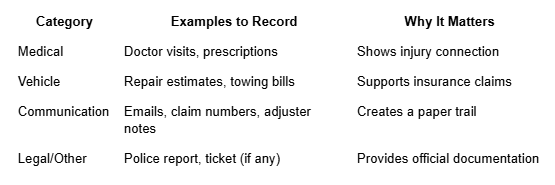
This kind of organized record can make a big difference if questions arise later.
7. Consider Legal Guidance
Accidents in New York can get complicated fast—especially with no-fault insurance rules, medical bills, and the possibility of long-term injuries. While not every accident requires a lawyer, many people find it helpful to consult with a professional early on.
An experienced motor vehicle lawyer can explain your options, protect your rights, and help you avoid mistakes that could hurt your claim. Even a quick conversation can give you peace of mind in a stressful time.
8. Take Care of Yourself
It’s easy to get caught up in logistics—insurance calls, car repairs, police reports. But don’t forget to take care of yourself too. Accidents are stressful, and it’s normal to feel shaken emotionally. Give yourself time to rest, reach out to friends or family for support, and talk to a professional if you’re struggling.
The Bottom Line
The first 24 hours after a car accident in New York can feel overwhelming, but having a plan helps. Focus on safety, get medical care, document what happened, and know when to ask for help.
By following these steps, you’ll not only protect your health but also set yourself up for a smoother recovery—physically, emotionally, and legally.
And remember, you don’t have to go through it alone. If things get complicated, reaching out to experienced motor vehicle lawyers can give you the clarity and support you need moving forward.
HOW DO YOU FEEL ABOUT FASHION?
COMMENT OR TAKE OUR PAGE READER SURVEY
Featured





Every phone call going through, every piece of data being transferred, and every emergency alert being delivered is reliant on an infrastructure chain that many people are completely unaware of until it stops working.