
Why Marine Conservation Trips in Belize Should Be on Every Traveler’s Bucket List
PAGE
By PAGE Editor
Belize is a jewel in Central America—not just for its lush jungles and rich Mayan history, but foremost for its underwater wonders. From the sweeping Belize Barrier Reef to vibrant mangrove systems and serene seagrass beds, this country offers some of the most diverse marine ecosystems in the Caribbean. For travelers seeking more than just sun and sand, opportunities abound to engage with nature in transformative ways.
A Living Classroom Beneath the Waves
When people choose marine conservation trips in Belize, they’re not just going scuba diving or snorkeling—they’re entering a living classroom. Belize has designated approximately 23.5% of its territorial waters under protection via 14 marine protected areas (MPAs) plus 13 protected fish spawning aggregation sites.
By taking marine conservation trips in Belize, travelers can witness coral restoration projects, help monitor reef health, assist with tagging endangered species, or support local community‐led initiatives that manage and protect coastal resources. The Belize Barrier Reef Reserve System is a UNESCO World Heritage site, renowned for its coral atolls, sand cays, mangroves, and estuaries, which are home to many threatened species such as marine turtles, manatees, and marine crocodiles.
Why It Matters: Ecological & Social Impact
Belize’s commitment to marine conservation is not only about biodiversity—it’s deeply tied to ecosystem-based livelihoods. Local fisheries, tourism, and coastal protection all depend on healthy reefs, mangroves, and seagrass beds. In economic terms, commercial fisheries contribute significantly to Belize’s GDP, while reef‐based and marine eco-tourism generate substantial income.
The threats, however, are real. Overfishing, habitat loss (especially mangroves declining since the 1980s), and climate change (leading to coral bleaching, more intense storms, and sea level rise) challenge Belize’s marine ecosystems. The country has banned trawling (2010), restricted gillnets (2020), and placed a moratorium on offshore oil exploration. These protections are strengthening the framework that supports marine conservation trips as genuinely impactful—not just touristic.
Unforgettable Encounters & Learning
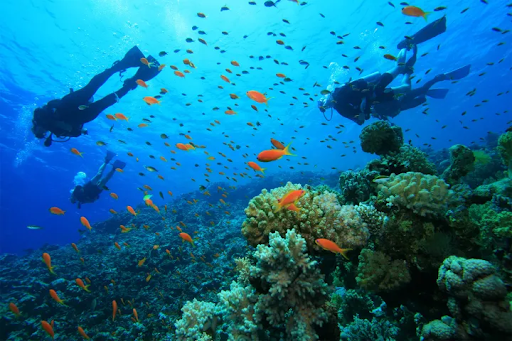
On a marine conservation trip, travelers often stay in or near MPAs such as Glover’s Reef, Port Honduras Marine Reserve, or the Gladden Spit and Silk Cayes Marine Reserve. These sites offer extraordinary wildlife encounters—schools of reef fish, spawning aggregations of queen conch and spiny lobster, and occasional visits by whale sharks in places like Gladden Spit during spawning seasons.
Participants can intersect conservation with adventure—snorkeling over coral gardens, kayaking through mangrove tunnels, helping with restoration or coral nursery work, and learning how local communities are adapting to climate change. Such immersion fosters awareness, empathy, and—often—lasting behavior change toward marine conservation.
Conservation Trips: What Sets Belize Apart
Scale & legal protection: Belize has one of the largest proportions of its waters protected in the Caribbean, with legal and policy tools supporting marine protected areas and replenishment zones.
Stakeholder participation: Many MPAs operate via co-management arrangements involving local fishers, NGOs, and government agencies. This means conservation isn’t imposed—it involves people whose lives depend on marine resources.
Biodiversity hotspots: With many threatened and endemic species, Belize offers experiences that are rare elsewhere—such as witnessing spawning coral fish aggregations, nesting sea turtles, and diverse reef ecosystems.
Belize offers more than a holiday—it offers an opportunity to witness, contribute to, and learn from marine conservation. For travelers who want meaning, beauty, and impact in one place, marine conservation trips in Belize deserve a prime spot on the bucket list.
HOW DO YOU FEEL ABOUT FASHION?
COMMENT OR TAKE OUR PAGE READER SURVEY
Featured





A properly functioning water system is extremely important for every household.