
The Next Frontier: How Robotics and AI Are Transforming Laser Welding
PAGE
By PAGE Editor
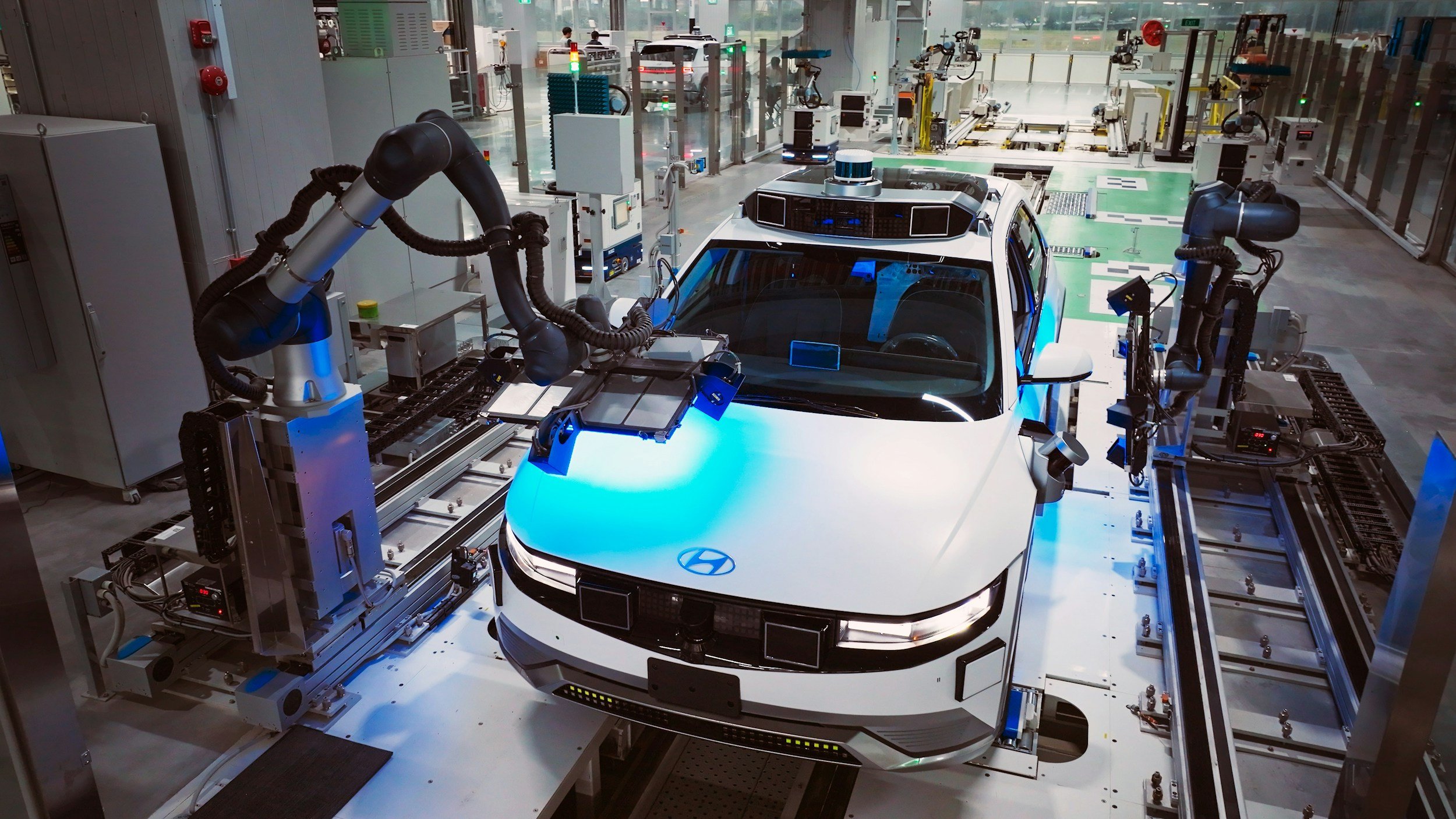
Modern manufacturing is evolving fast, and one of the most transformative technologies leading the change is the laser welder. Once seen as a standalone precision tool, it’s now becoming a core part of intelligent, connected production systems that integrate robotics, sensors, and machine learning (ML).
This convergence marks the next phase of Industry 4.0: autonomous, data-driven factories capable of optimizing performance, quality, and cost in real time. In this article, you’ll explore how combining laser welding with robotics and ML is redefining manufacturing—and why staying ahead of these trends will be essential for future-ready businesses.
Current State of Laser Welding Automation
Robotic Integration in Laser Welding
Laser welding is ideally suited to robotic automation. Robotic arms with 3- to 6-axis control deliver unmatched precision and consistency, ensuring repeatable results for every weld. You’ll already see these systems in automotive, aerospace, and metal fabrication plants, where precision, repeatability, and cycle time matter most.
Benefits include:
Higher throughput thanks to continuous, repeatable motion.
Improved consistency—robots remove the variability of manual work.
Access to complex geometries, including 3D and curved joints.
For industries facing labor shortages or scaling production, robotic laser integration also cuts dependence on manual welding skills while improving traceability and quality control.
Machine Learning and AI in Laser Welding
ML and AI have entered the welding floor, transforming laser systems from static tools into intelligent machines. These algorithms continuously monitor in-process signals—like thermal, acoustic, or optical data—to detect defects and automatically adjust parameters.
That means fewer trial-and-error calibrations and faster setup times. Machine learning can also predict weld penetration and adapt beam power or speed dynamically, reducing scrap rates and maintaining uniform quality even when materials vary.
Smart Sensors and Data Infrastructure
Modern welding cells now include advanced sensors—thermal cameras, spectrometers, and acoustic monitors—that gather data in real time. Combined with edge computing and industrial IoT (IIoT) connectivity, they form a closed feedback loop capable of instant self-correction.
Digital twins—virtual replicas of real welding systems—can simulate and optimize performance remotely, enabling predictive maintenance and faster troubleshooting.
Emerging Trends and Capabilities
Adaptive Parameter Optimization
Machine learning enables welding systems to learn from production data. By analyzing parameters like beam intensity, gas flow, and travel speed, ML models can predict weld quality outcomes and automatically adjust settings for each material or joint type.
Instead of manually tuning parameters for different alloys or thicknesses, algorithms do it on the fly, improving productivity and reducing setup waste.
Fully Autonomous Welding Cells
The ultimate goal of this evolution is the self-optimizing welding cell—a combination of robots, sensors, and ML models working in concert. These systems can:
Detect material variations or part misalignments.
Adjust laser power or trajectory automatically.
Improve with each production cycle through data-driven learning.
This approach transforms your laser welder from a fixed tool into a smart manufacturing asset capable of continuous improvement.
Handling Material and Geometry Complexity
Advanced automation also extends the range of materials and shapes you can handle. Robots equipped with laser welders can join dissimilar metals (like copper and aluminum), thin foils, and complex curved joints—tasks that were once slow or impossible using traditional techniques.
Less heat input means less distortion, cleaner joints, and minimal post-processing.
Remote and Cloud-Enabled Welding
With the growth of 5G and IIoT, remote welding management is now practical. Engineers can monitor weld quality, tweak parameters, or run diagnostics across global sites—all in real time. Cloud-based platforms also allow for centralized data storage, supporting performance tracking, predictive maintenance, and AI model updates.
Workforce Transformation
As automation and ML take over repetitive tasks, your workforce shifts from hands-on welding to system oversight and data management. Tomorrow’s welding professionals will combine mechanical knowledge with skills in robotics, programming, and analytics, making training and upskilling crucial for staying competitive.
Industry Impacts and Applications
Automotive and E-Mobility
The automotive industry is already leading the adoption curve. Robotic laser welding is now essential for battery pack assembly, EV chassis manufacturing, and high-volume precision joining. ML-enabled systems monitor parameters continuously to prevent micro-defects in critical welds, ensuring durability and safety.
Aerospace and High-Precision Manufacturing
In aerospace, accuracy and reliability are non-negotiable. Robotics paired with ML ensures consistent, high-integrity joints in titanium or nickel alloys, where even microscopic flaws can lead to performance issues. Laser welders also help meet stringent quality assurance requirements through complete data logging and traceability.
Smart Factories and Mass Manufacturing
Factories embracing Industry 4.0 use robotic laser welders as part of flexible production lines. They’re capable of switching between product variants quickly without extensive reprogramming, thanks to adaptive algorithms that minimize setup times and scrap.
Quality Assurance and Traceability
Machine learning makes every weld traceable. Integrated sensors log data points—from beam power to environmental temperature—creating a digital record for compliance and predictive maintenance. This transparency not only enhances quality assurance but also helps identify and eliminate process inefficiencies before they become costly.
Key Considerations for Adoption
Capital and Integration Costs
Yes, robotic laser systems and AI integration require significant initial investment. However, these systems pay for themselves through reduced defects, less downtime, and higher throughput. Long-term ROI is driven by efficiency and quality gains, not just labor savings.
Data Availability and Model Accuracy
ML models rely on high-quality, labeled data. Without robust datasets, prediction accuracy suffers. Start small—collect and clean sensor data, then build ML models gradually for key processes before scaling factory-wide.
Operator Training and Skills Shift
Training your team is essential. Operators will transition into automation supervisors and data analysts, overseeing robots, managing sensor data, and interpreting ML feedback.
Cross-functional training programs can help bridge the gap between traditional welding expertise and digital manufacturing know-how.
Material and Process Variability
Real-world production involves imperfections—surface contamination, geometry deviation, variable fit-up. Your ML systems must be robust enough to adapt to these fluctuations. Partner with technology suppliers who offer ongoing model updates and remote monitoring support.
Maintenance and Cybersecurity
As your systems get smarter, they also become more connected—and potentially more vulnerable. Regular software patching, access controls, and network segmentation are now part of welding maintenance strategies, along with optical calibration and sensor checks.
Why Choose Denaliweld for Next-Gen Laser Welding
For manufacturers aiming to lead the smart-manufacturing revolution, Denaliweld provides a pathway forward.
Denaliweld’s laser welder portfolio is engineered for seamless integration with robotic systems and AI platforms. Their advanced optics, precision control, and automation-ready design make each system a natural fit for Industry 4.0 environments. Beyond equipment, Denaliweld supports your transition through training, data integration guidance, and technical support, helping you leverage ML-driven welding with confidence and scalability.
Conclusion
The fusion of laser welding, robotics, and machine learning represents one of the most exciting frontiers in manufacturing. By combining the speed and accuracy of laser welders with the adaptability of AI and the precision of robotics, factories can achieve unprecedented productivity, quality, and flexibility.
The next generation of manufacturing won’t rely on intuition—it will rely on intelligent systems that learn, predict, and improve. Investing now in automation-ready solutions like those from Denaliweld positions your business at the forefront of this transformation—ready for smarter, faster, and more resilient production.
HOW DO YOU FEEL ABOUT FASHION?
COMMENT OR TAKE OUR PAGE READER SURVEY
Featured





KANE Footwear expands its sustainable recovery portfolio with the Revive OB, an open-backed performance shoe engineered from Brazilian sugarcane-based foam to deliver hands-free convenience, biomechanical support and lower-impact manufacturing.