
What Research Reveals About Choosing the Right Mountain Destination
PAGE
By PAGE Editor
Choosing a mountain is rarely just geography. Some chase a childhood summit; others just need air that feels clean again. Science now confirms what we always sensed: the right one chooses you, too.
The Unspoken Rules of Age, Income, and Ambition
We like to think we choose mountains based on beauty alone. Research suggests otherwise. A significant 2024 study examining destination selection factors confirmed that our demographics are often quietly steering the ship.
Younger travelers are far more likely to chase adventure and physical challenge, prioritizing personal achievement and novelty.
Older travelers consistently gravitate toward restoration, familiarity, and ease of access.
Income influences how we travel but not why; higher earners may book premium lodging, yet they rate landscape, atmosphere, and sense of escape just as highly as budget travelers do.
Why "Good" Crowds and "Bad" Crowds Are Not the Same Thing
Crowding is complicated. We say we hate it, yet we also want to know the trail is popular for a reason. Recent research across three Asian peaks revealed that our tolerance for congestion depends heavily on what is crowded.
Climbers on Mount Fuji resented congestion on trails and at summits; it felt like queuing, not climbing.
On Mount Kinabalu and Yushan, similar densities were accepted as part of a shared, social adventure.
A Japanese study found that a busy trail in golden October feels festive; the same trail in July feels like a car park.
These findings explain why certain classic routes remain beloved despite their popularity. Consider a summit course for Mont Blanc, designed to offer one of the safest and most complete ways to climb. Moving with others toward the same high goal creates something solitude cannot: shared rhythm, quiet camaraderie, the reassurance that you are following footsteps generations have taken before. On Mont Blanc, the crowd is evidence that you have chosen well.
The Hard Science of Safety, Weather, and Real-Time Decisions
There was a time when choosing a mountain involved a map, a forecast, and hope. That era is ending. A 2025 study utilizing remote sensing data and structural equation modeling has introduced something long overdue: data-driven, real-time decision-making for mountain tourism.
Among all variables analyzed: elevation, precipitation, temperature, infrastructure, visitor satisfaction, and safety facilities emerged as the most powerful predictors of a positive decision outcome.
Precipitation had a stronger statistical influence on decision scores than even visitor density. Weather does not just affect your comfort; it fundamentally reshapes how you perceive the entire experience.
The study divided terrain into four priority zones based on environmental vulnerability, allowing management teams to intervene before conditions become dangerous.
Training, Acclimatization, and the Mont Blanc Equation
Few mountains expose the gap between ambition and preparation quite like Mont Blanc. At 4,810 metres, it is not technically the hardest climb in the Alps, but it is ruthlessly unforgiving of poor judgment. This is where research meets real-world consequences.
Guiding operators now emphasize that success on Mont Blanc is rarely about summit day; it is about the week before.
A typical course now includes deliberate acclimatization days, crampon practice on mixed terrain, and preparatory climbs such as the Breithorn at 4,165 metres.
Even experienced alpine climbers benefit from rehearsing fundamental skills, efficient movement on rock, ice axe arrest techniques, and risk management in a controlled environment before the main event.
Seasonal Windows and the Timing Trap
You can choose the perfect mountain and still get it entirely wrong if you arrive in the wrong month. Research from the Indian Himalayas, a region with one of the most diverse altitudinal ranges on earth, demonstrates that seasonal transformation is not cosmetic; it fundamentally alters the nature of the experience.
A trek like Deoriatal-Chandrashila offers very different rewards in different seasons: snow in winter, wildflowers in spring, crisp visibility in autumn. None of these versions is objectively superior. They are simply different.
The mistake is assuming a mountain offers the same experience year-round. Veteran trekking organizations now advise that when forced to choose between a preferred mountain and the correct season, you should prioritize the season.
A lesser-known peak at its optimal time will nearly always outperform a famous one visited out of sync with its natural rhythms.
What We Actually Remember
There is a temptation to treat mountain destination selection as a logistics problem. Elevation gain. Pack weight. Permit windows. These things matter, certainly. But the research circling back to satisfaction tells a simpler story.
Across multiple studies, the strongest predictor of whether a mountaineer would return to a destination or recommend it to a friend was not summit success.
It was whether they felt safe, whether the huts were welcoming, and whether the experience aligned with their internal motivation.
That internal motivation varies: some seek adventure, others seek solace, others seek quiet connection with companions or with themselves.
We like to believe we chase peaks. Often, we are actually chasing the version of ourselves that emerges when we are among them. The right mountain destination, research suggests, is not the one that looks best on Instagram. It is the one that leaves you feeling, days later, like you left something behind and brought something better home.
HOW DO YOU FEEL ABOUT FASHION?
COMMENT OR TAKE OUR PAGE READER SURVEY
Featured




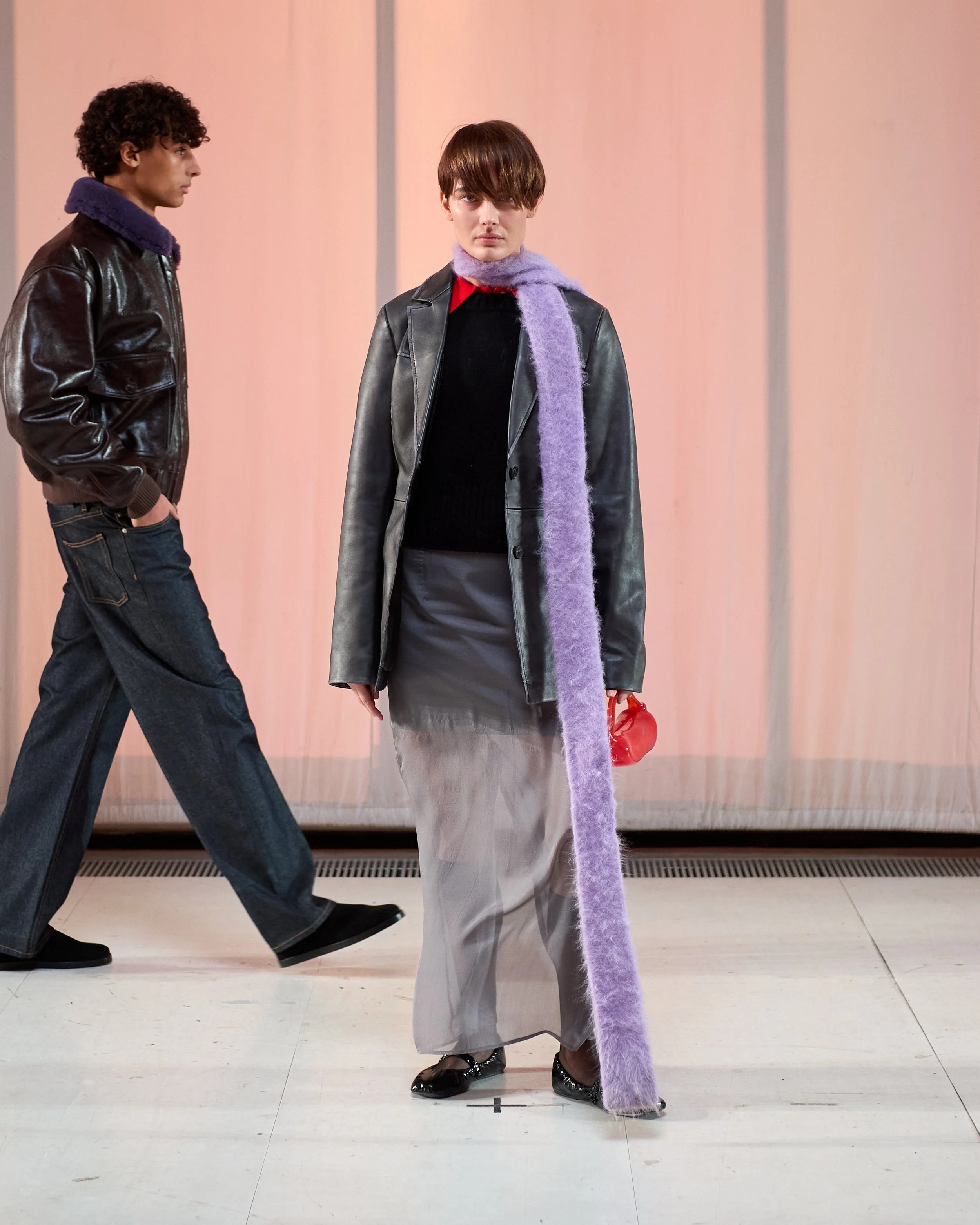
Libertine’s Fall/Winter 2026 collection transforms the grandeur and architectural precision of Sanssouci Palace into a richly embroidered, intellectually infused wardrobe that marries historical opulence with Hartig’s signature storytelling.