
From Office to Date Night: The Best Day-to-Night Dresses for 2026
PAGE
By PAGE Editor
There's a specific kind of panic that hits around 5:47 PM. You're still at your desk, your dinner reservation is at 7:30, and you're staring down at an outfit that screams "quarterly review." Going home to change isn't happening. You know it. Your Uber estimate knows it.
This is the problem nobody solved until the day-to-night dress quietly became the most important item in the modern woman's closet.
Not the boring sheath your mom wore in 2009. Not a cocktail dress you're awkwardly wearing to work with a cardigan thrown over it like a costume. We're talking about dresses designed from the ground up to shift context — pieces that look intentional at noon and magnetic at nine, without a full wardrobe change in a restaurant bathroom.
And in 2026, designers are finally getting this right.
The Shift Nobody's Talking About
Here's what's actually driving this: women aren't dressing for one event per day anymore. A McKinsey report found that over 80% of shoppers planned to spend the same or less on fashion heading into 2025. Spending is down. But expectations? They're up. We need individual pieces to cover more ground.
The Spring/Summer 2026 runways reflected this. Vintage-inspired slip dresses showed up at Ferragamo, Chloé, and Rodarte — not as evening-only pieces, but as versatile wardrobe anchors meant to move through a full day. Marie Claire's fashion editors noted designers are "dressing with intention" this season, building clothes for real schedules, not imaginary ones where you have two hours between work and dinner to completely reinvent yourself.
At the same time, the capsule wardrobe movement has gone from Pinterest aspiration to genuine lifestyle shift. The logic is simple: instead of owning 68 garments (up from 28 in the 1990s) and wearing each one 7 times before it hits the donation bin, own fewer pieces that actually earn their place. A dress that handles Tuesday's client meeting AND Friday's wine bar? That's not a compromise. That's peak efficiency.
What Makes a Dress Actually Work Day-to-Night
Most "versatile dress" roundups just list pretty dresses and call it a day. But if you've ever tried to wear a bodycon dress to work or a boxy shift dress on a date, you know versatility isn't about the label — it's about specific design choices.
After years of trial, error, and one deeply regrettable wrap dress incident at a company holiday party, here's what actually matters:
The neckline does the heavy lifting. A V-neck or a clean square neck reads professional with a blazer over it, then instantly shifts mood when the blazer comes off and a pendant necklace goes on. Crew necks tend to stay stuck in "office" mode. Anything too plunging forces you into the cardigan-as-armor strategy, which never looks intentional.
Midi length is non-negotiable. It's the one hemline that works seated at a conference table, walking across a parking garage, and sitting on a bar stool — all without you adjusting, tugging, or thinking about it. The SS26 runways confirmed this: the midi isn't going anywhere.
Structure above, movement below. The dresses that transition best have a fitted or defined waist (wrap, belted, darted) with a skirt that has enough flow to feel different when you're walking into a restaurant versus walking into a meeting room. An A-line or soft pleated skirt reads professional during the day and romantic at night, almost by accident.
Fabric weight sits in the middle. Too light and it looks like sleepwear. Too heavy and you can't move freely or stay comfortable through a long evening. A mid-weight crepe, ponte, or textured knit hits the sweet spot. This is where most affordable brands fail — they default to flimsy polyester that photographs well on a website but reads "costume" in real life. RIHOAS is one of the few accessible brands that actually invests in this problem; their design team sources thousands of fabrics per season specifically hunting for that middle-ground weight and drape, which is why their midi dresses tend to hold their silhouette from morning coffee to last call.
The color tells two stories. Deep jewel tones — emerald, burgundy, sapphire, rich navy — look authoritative under office lighting and sensual under candlelight. It's the same dress, but the ambiance does the restyling for you. This tracks with 2026's color direction: Marie Claire and Who What Wear both flagged jewel tones and earthy neutrals as the dominant palettes this season, and it's specifically because they perform across contexts.
Five Dress Silhouettes That Actually Pull This Off
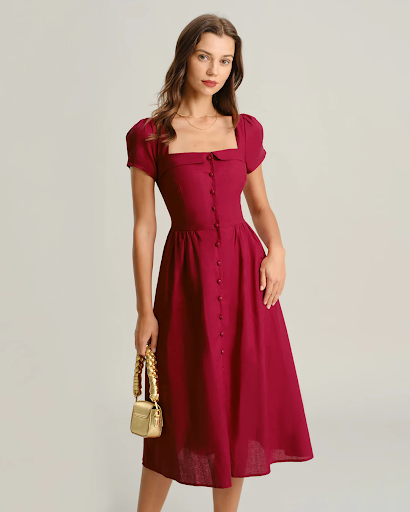
The fitted-bodice midi with an A-line skirt. This is the MVP. Structured on top, fluid below. Add a blazer and loafers for daytime. Remove the blazer, swap for heels and a statement earring at night. It's a two-move transformation and it works every single time. Look for one in a solid jewel tone with details that read slightly elevated — subtle ruching, interesting sleeve construction, a thoughtful neckline. Nothing trendy enough to date itself by spring.
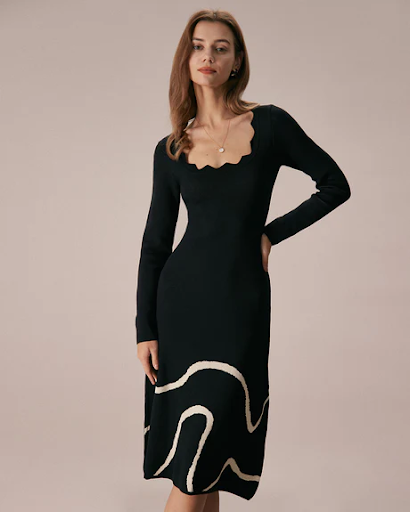
The knit midi dress. 2026's quiet winner. A fine-gauge knit in cream, camel, or black gives you this beautiful fluid silhouette that moves between contexts without trying. Belt it during the day for structure. Let it hang loose at night with a silk scarf and gold jewelry. The key is finding one in a fabric with enough weight to drape properly without clinging to everything — merino or a viscose-wool blend, not cheap acrylic.
The shirt dress (rethought). The classic shirt dress had a frumpy reputation for years, but the 2026 version is different — slightly oversized through the body, cinched with a leather belt, and usually in a fabric like cotton-linen that has natural texture. Button it up for work, undo the top two buttons and add a layered necklace for evening. Roll the sleeves. It's the most effortless transformation on this list.
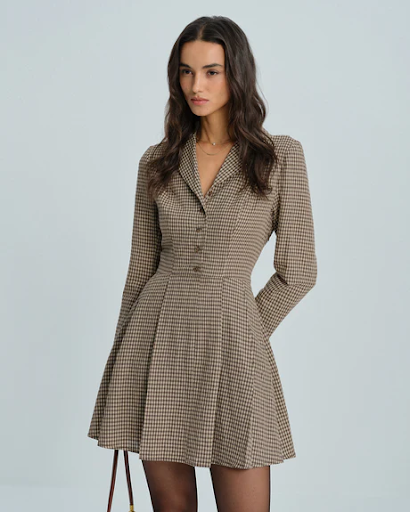
The vintage-inspired slip dress with a blazer system. Slip dresses were everywhere on the SS26 runways (Chloé, Rodarte, Ferragamo), and the smartest way to wear them in real life is as a modular system. A satin or georgette slip in a muted tone becomes work-appropriate under a structured blazer with the right shoe. After hours, shed the layer and let the dress do what it was designed to do. This one takes a bit more styling confidence, but the payoff is enormous.
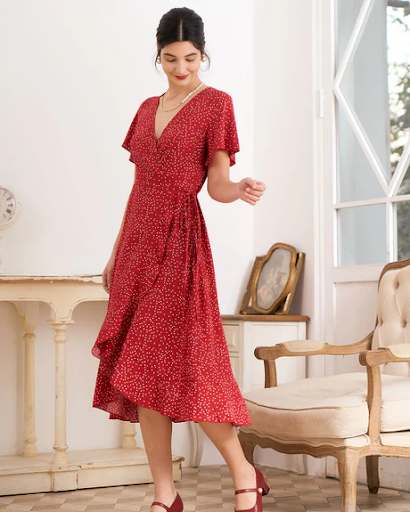
The wrap dress — yes, still. It flatters virtually every body type, the V-neck shifts easily between settings, and the defined waist means it never reads shapeless. The 2026 update: look for versions in textured fabrics (crepe, jacquard, subtle ribbing) rather than the classic jersey. Texture adds visual interest that makes it look more considered, less "default."
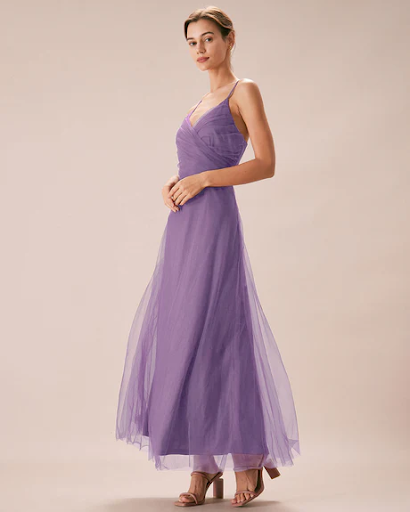
The 3-Minute Evening Upgrade Kit
You don't need a suitcase of backup options stashed under your desk. You need three small things in your bag:
A pair of earrings that are slightly bolder than what you'd wear to work. Not chandelier-level — just noticeable. A thin gold hoop or a small pearl drop during the day; swap to something with a bit more presence at night.
A heel or elevated flat in a compact style you can actually carry. Pointed-toe mules or slingback kitten heels fold relatively small and change the entire posture of an outfit. If heels aren't your thing, a sleek loafer in a richer material (patent, suede) does the same job.
One lipstick in a shade slightly deeper than your daytime color. This takes eleven seconds and the impact is disproportionate. A berry or wine shade on someone who's been wearing a nude lip all day rewrites the entire visual impression.
That's it. Three items, three minutes, completely different energy.
The Real Math Behind "Versatile"
Let's talk about what day-to-night dressing actually saves you. If a single dress replaces a separate work outfit AND a separate evening outfit, and you do this even twice a week, you're effectively doubling the utility of that garment. Over a year, that means fewer total pieces bought, less closet clutter, less decision fatigue, and less waste.
The average garment today gets worn fewer than 10 times before it's discarded. A dress that works across contexts might get worn 40, 50, even 80 times over its life. At that rate, even a $90 dress costs roughly a dollar per wear — which is less than you spend on the coffee you're drinking while you decide what to change into.
The global secondhand market (now valued at $260 billion) is growing partly because people are tired of clothes that only work for one narrow purpose. The future of a smart wardrobe isn't owning more — it's owning pieces that do more.
Stop Changing, Start Transitioning
The best-dressed woman at dinner tonight isn't the one who went home and put on a completely different outfit. She's the one wearing the same dress she had on at 2 PM, but she pulled her hair down, changed her earrings, and put on a slightly darker lip.
That's not cutting corners. That's knowing exactly what she's doing.
Find the dress that makes this possible for you — one with the right neckline, the right length, the right fabric weight, in a color that performs under fluorescent lights and candlelight alike. Build your evening-upgrade kit. And the next time that 5:47 PM panic hits, smile, because you've already solved it.
You've been ready since this morning.
HOW DO YOU FEEL ABOUT FASHION?
COMMENT OR TAKE OUR PAGE READER SURVEY
Featured



While you might be overflowing with creative ideas for your next fashion line, your financial situation might be struggling to keep pace.